You know the feeling. It's 8:30 PM. Bedtime. But your child? They're still "on". Busy in their head. Fidgeting with their legs. Have another question. And one more. And one more.
You say: "You need to sleep now." But that must... that doesn't work. Worse, it makes it worse.
Recognizable? Then you're not alone. Many parents of children between 7-12 years see this. Children who can't "switch off". A head full of the day. Stimuli. Thoughts. Everything that happened.
The good news? There's a gentle, playful way to help your child find rest. Without force. Without must. Only may.
Yin yoga for children.
Question 1: What Is Yin Yoga for Children Exactly?
Short answer: Yin yoga for children is a quiet, playful form of yoga where your child holds a pose for 1-3 minutes. It helps to find rest in the head and be present in the body.
Extended answer: Most yoga you know is yang — moving, doing, being active. Yin yoga is the opposite. In yin yoga for children, you hold a pose for 1-3 minutes, lie or sit mostly on the ground, and your child may dream, fantasize, feel.
- What is yin yoga for children?
- Yin yoga for children is a gentle form of kids’ yoga where poses are held for 1–3 minutes. Instead of active movement, your child learns to rest, feel and be present — ideal when the head is full of stimuli.
Question 2: Does My Child Need to Be Flexible to Do Yin Yoga?
Short answer: No, absolutely not. Your child isn't flexible to do yin yoga. Your child does yin yoga to become more supple — in body and head.
Flexibility is a byproduct of yin yoga, not a requirement.
Question 3: How Long Should My Child Hold a Pose?
Short answer: 1-3 minutes is ideal for children (7-12 years). Start with 1 minute and slowly build up.
Question 4: What's the Difference Between Yin Yoga and Regular Yoga for Children?
Short answer: Regular children's yoga is active and moving (yang). Yin yoga is quiet and static (yin). Both are valuable. Yin yoga specifically helps with rest, sleep, and a busy head.
Question 5: Is Yin Yoga Suitable for Every Child?
Short answer: Yes, yin yoga is suitable for almost every child (7-12 years). It's even ideal for children who have trouble sitting still, sleeping, or processing stimuli.
- What age is yin yoga suitable for?
- Yin yoga is especially suitable for children aged 7 to 12. At that age they can hold a pose briefly, while the playful approach still fits. Children who struggle with sitting still or processing stimuli often benefit most from this quiet form.
Question 6: What Are the Benefits of Yin Yoga for Children?
Physical benefits: Better sleep, less restlessness, more supple body, better posture, calmer breathing.
Mental/emotional benefits: Less stimuli, better concentration, emotional balance, self-awareness, less worrying.
Question 7: Can Yin Yoga Help If My Child Won't Sleep?
Short answer: Yes, yin yoga is one of the most effective tools for better sleep in children that I know. It calms the nervous system and helps the head "switch off".
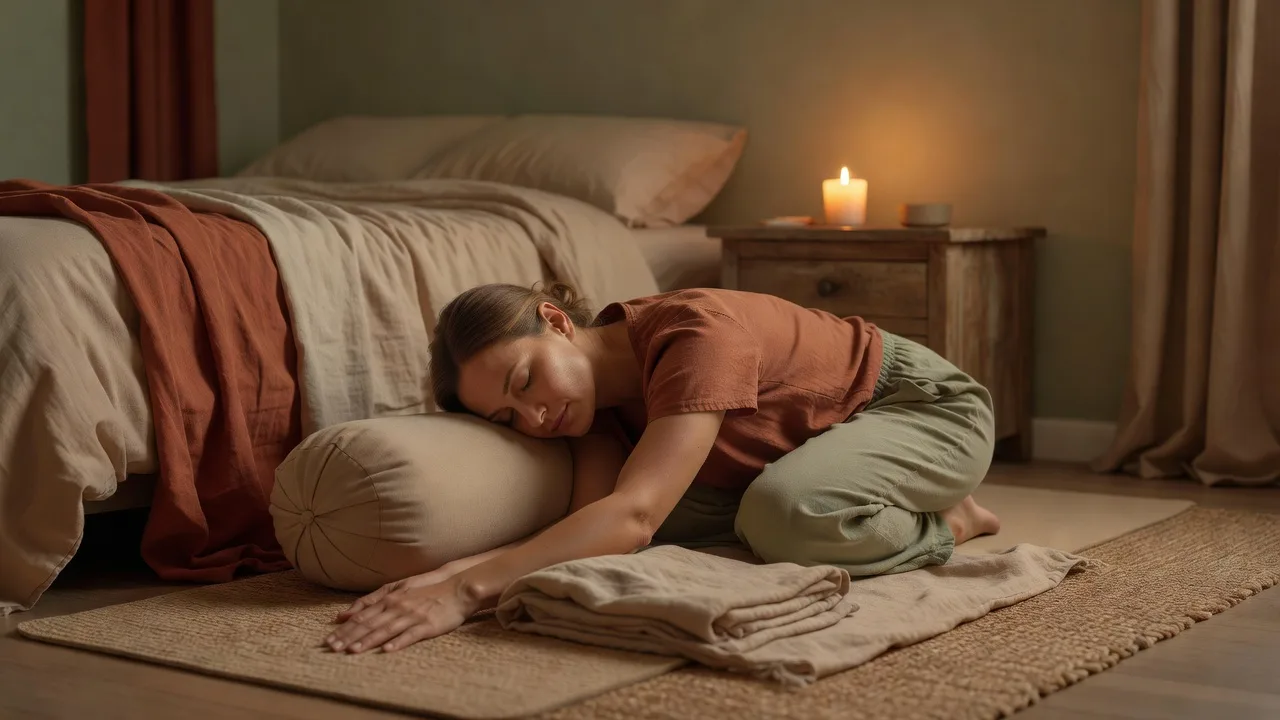
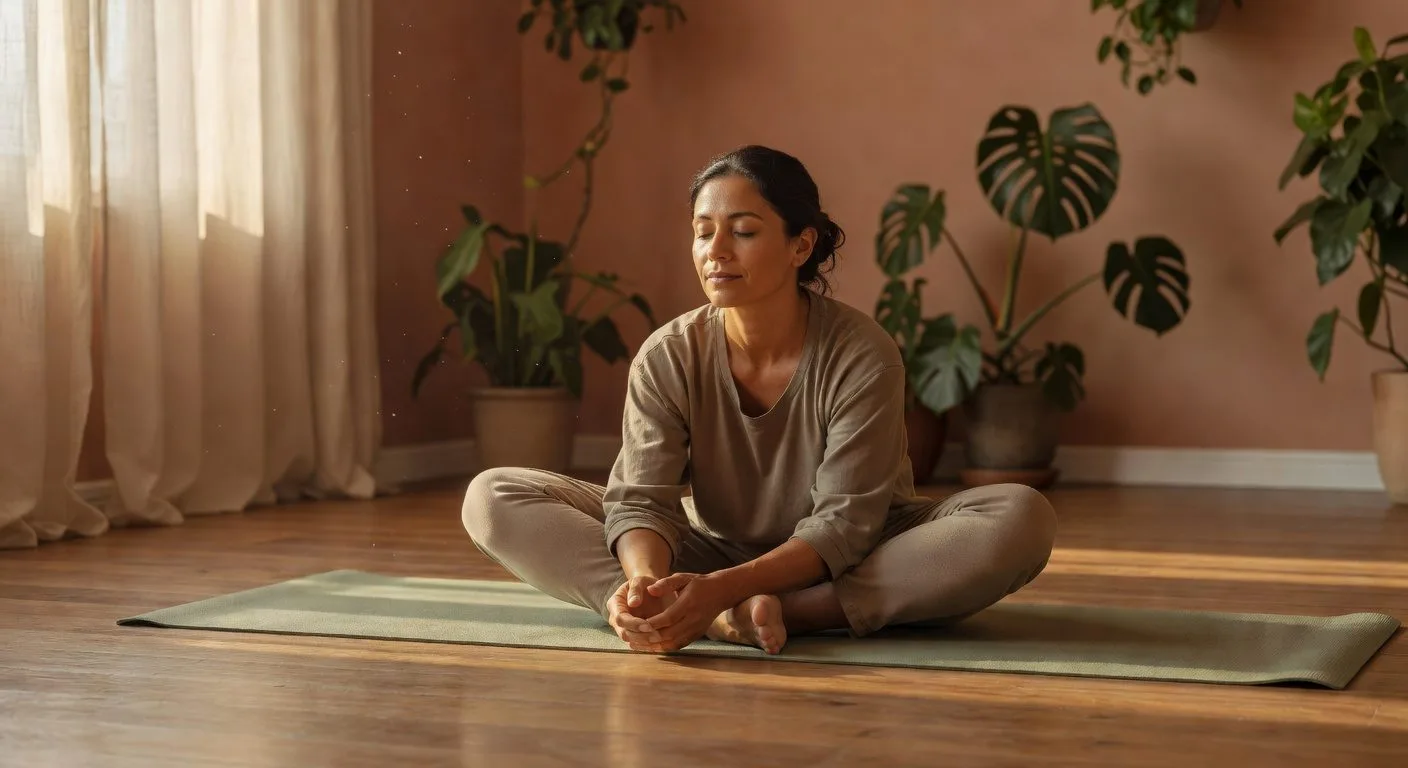
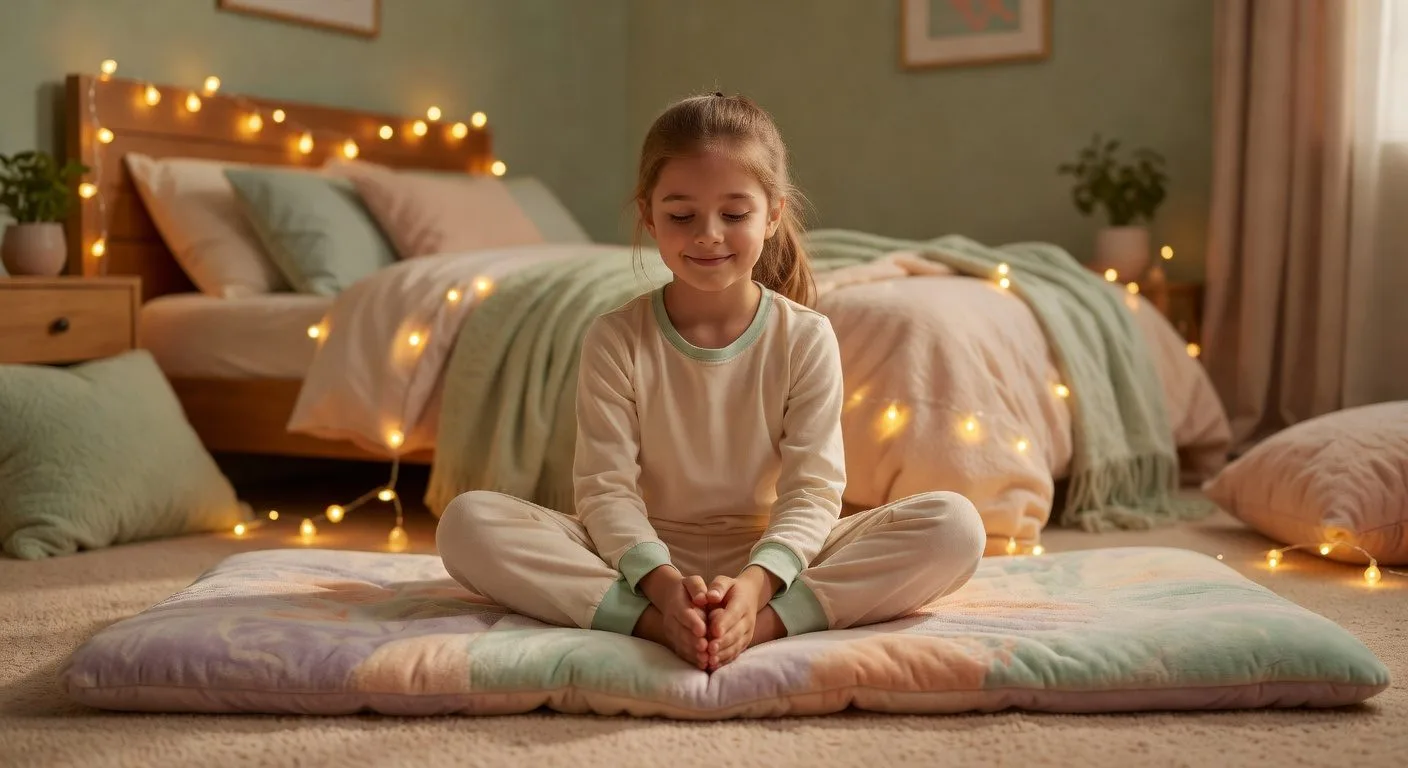
3 poses for sleep: Child's Pose (2 min), Butterfly (2 min), Legs Up The Wall (3 min).
- How does yin yoga help with restlessness and sleep in children?
- Yin yoga calms the nervous system through slow poses and gentle attention to breath and body. Restlessness eases and the head can switch off more easily — especially when bedtime is hard because of a busy mind or restlessness.
Question 8: How Often Should My Child Do Yin Yoga for Results?
Short answer: 3-4x per week for optimal results. 2x per week for maintenance. Even 1x per week helps. Consistency is more important than duration.
Question 9: Which Yin Yoga Poses Are Good for Children?
5 best poses: Child's Pose, Butterfly, Cat-Cow, Legs Up The Wall, Sleeping Swan.
Question 10: Can My Child Do Yin Yoga at Home Without Experience?
Short answer: Yes, absolutely. Yin yoga is one of the best forms of movement to start at home. You need no experience, no expensive equipment, and no class.
Question 11: What If My Child Doesn't Want To?
Short answer: Don't force. Make it playful. Call it "quiet time" or "rest game". Start with 30 seconds. Build up slowly.
Tip: Do it together. Children mirror what they see. If you do yin yoga, they'll want to join.
Question 12: Where Do I Start?
Step-by-step plan:
- Choose a quiet moment (not right after school)
- Make a cozy spot (pillows, blanket, dim light)
- Start with 1 pose for 1 minute
- Build up to 3 poses of 2 minutes
- Keep it playful — no pressure
Free resource: Our 30 Days Home Closing the Day program includes yin yoga sessions suitable for children.
🧸 Private Yoga Sessions For Your Child
Want personal guidance to start yin yoga?
Spiriators Private Yoga offers 1-on-1 sessions (your child + Tessa), tailored, at home or online, focused on rest, sleep, and being present.
👉 More information: Private Yin Yoga at Spiriators
First introduction: Free 15 minutes (online) to see whether it fits.
With love,
— Tessa
📖 Read More
- Yin Yoga at Spiriators
- Types of Yoga: Yin, Hatha & Vinyasa (pillar)
- Take the free Yin Check
- Yin Yoga: sinking into trust
Go deeper: Read our pillar pages on yoga and breathwork, explore yin yoga, or join a retreat to deepen your practice.