Retreats · Yoga · Breathwork · Silence
What is a retreat? Meaning, 5 forms and costs
A retreat is a period in which you deliberately step away from your daily surroundings to reflect, recover or grow. Our format: co-travel. No mandatory silence, no spiritual charge. Deliberately making space so something inside you can shift — not an escape, but a reset. This guide covers the meaning, 5 forms, costs, duration, aftercare and how to choose. Looking mainly for the difference with a holiday? Read retreat vs vacation.
What is a retreat, in short?
A retreat is a period in which you deliberately step away from your daily surroundings to reflect, recover or grow. Our format: co-travel. Formats range from a silent weekend to a yoga week or a longer nomadic setup. This is a guide to meaning, forms and costs, not a promise of cure.
Quieter page?
Table of contents
At Spiriators
In this guide we compare the main retreat formats — silence, yoga, breath, spiritual, nomadic — with realistic price ranges. Our own offer is mainly nomadic co-travel: you travel with Tessa and Johannes (small group), yin and breath in their rhythm. Not a classic resort package for every form above.
To nomadic co-travel →Start today
You don't need to finish the whole guide first. Choose, feel, then take a real step.
- 01
Read: how to choose a retreat
Seven sharp questions in how to choose a retreat that fits you — so you don't book the wrong week.
- 02
Explore nomadic co-travel
Does a longer rhythm reset fit? Explore co-travel with Tessa & Johannes — yin, breath, rotating locations.
- 03
Book a free intro call
Still unsure? Book a no-pressure intro call — we'll see together if it fits.
What is a retreat really?
- What is a retreat?
- A retreat is a period in which you deliberately step away from your daily surroundings to reflect, recover or grow. Our format: co-travel. Usually a weekend to several weeks. The word comes from the Latin retrahere (to withdraw). Not a vacation: you make space so something inside you can move.
A retreat is a defined period of reflection and recovery in which you withdraw from daily life — away from stimuli, roles and pace — to reconnect with what lies beneath the noise.
In practice, a retreat can take many forms. A weekend of silence in a monastery. A week of yoga by the sea. Ten days of vipassana meditation. Or a longer period traveling with coaches who live the same rhythm as you, in changing places.
What all good retreats share: you deliberately create space so something inside you can move that normally gets no chance. That is not a luxury — within our method, retreat is one of the strongest levers for real change.
A good retreat is not an escape. It is an investment in yourself. You step out of your normal life for a while, so you can return with more clarity, peace and direction. Whether you are mainly looking for rest, want to break old patterns, or need a fundamental change of course — there is no 'best' retreat. There is only the retreat that fits where you are right now.
Want to go deeper? Read also retreat vs vacation — the real difference or 7 questions to choose the right retreat.
The 5 main types of retreats
Each form has its own power, risks and target group. Here you read what you can really expect, who it works for, and when you are better off choosing something else.
Silence retreat (Vipassana / Monastery)
Intensity: High (silent, internal) · 5 to 10+ days (sometimes longer) · €250 – €1.200 (often donation-based or low cost)
Complete or near-complete silence for 5 to 10+ days. No talking, often no eye contact, strict rhythm of meditation, contemplation and simple meals. You are literally alone with yourself — without distraction. This is confronting, often deeply supportive, and for many one of the most powerful experiences that exist.
What you experience
Hours of silence, inner storms, deep peace that can arrive after days, confrontation with your own mind, simplicity, sometimes physical discomfort — and for many people eventually more peace that does not come from outside.
What it delivers
Radical rest, clarity about what really matters, room to see old thought patterns, and often a new relationship with silence and yourself. No guarantee, but what people often take home.
Risks & downsides
Can be overwhelming if you have never been alone with yourself for long periods. Not suitable in acute psychological instability.
Truly suitable for?
People who are overstimulated, suffer from burnout or chronic stress, and need radical silence and deep self-inquiry. Often people with some meditation or inner work experience.
When absolutely not
People who have never been alone with themselves without distraction, or who are currently in an acute crisis or unstable phase. A full silence retreat can then be too much.
Yoga retreat
Intensity: Low to medium · Weekend to 10 days · €450 – €2.000
Daily yoga (yin, restorative, vinyasa or hatha), meditation, nature and healthy food at a fixed beautiful location. Often a mix of movement and rest. Accessible and for many a pleasant first introduction to retreat energy.
What you experience
Multiple yoga sessions per day, healthy meals, moments of silence, nature, sometimes workshops or massages. You get into your body and breathe again.
What it delivers
Often more relaxation, calmer sleep, more supple body, mild clarity and the feeling that you are 'living in yourself' again.
Risks & downsides
Often stays on the surface if you have deeper emotional or existential questions. Can be 'nice' without anything essential shifting.
Truly suitable for?
Beginners and people who mainly need relaxation, movement, recovery and a gentle form of deepening. Ideal as a first retreat experience.
When absolutely not
People looking for deep emotional breakthroughs, trauma work or fundamental identity shifts. A yoga retreat is usually too mild for that.
Breathwork retreat
Intensity: High (emotional + physical) · 3 to 7 days · €350 – €1.500
Intensive breathwork sessions (mainly connected breathing) in a group setting, often combined with yoga, meditation or integration work. Can lead to deep emotional space, physical breakthroughs, insights and sometimes catharsis. Very powerful — supportive, not a therapy substitute.
What you experience
Long breath sessions (1-2 hours), sometimes with music, touch or hold space. Emotions, memories, physical sensations — and often a feeling of 'coming home in your body' after the session.
What it delivers
Room for emotional release, more contact with your nervous system, tension that may let go, and often a feeling of 'I am more myself again'. Pace and depth differ per person.
Risks & downsides
Can be very intense and sometimes destabilizing if there is no good integration and aftercare. Not suitable as a first experience for people without an inner work background.
Truly suitable for?
People who are ready for deep emotional processes, already have some experience with inner work (therapy, previous retreats, etc.) and are looking for breakthroughs.
When absolutely not
People who have never worked with their emotions, or who are currently in a vulnerable or acute phase. Good, experienced guidance is absolutely essential here.
Spiritual / Transformation retreat
Intensity: Very high (existential + spiritual) · 7 to 21 days · €800 – €3.000+
Deep inner work with a spiritual or existential layer. Often with a fixed teacher or in a monastery/ashram setting. Think intensive meditation, inquiry, rituals, silence and sometimes plant medicine context (not with us). It is about identity, meaning and 'who am I really?'
What you experience
Long sitting meditations, 1-on-1 with a teacher, deep questions that turn everything upside down, sometimes rituals or ceremonies, and a feeling that your 'small self' is temporarily in the background.
What it delivers
Can support fundamental shifts in how you see yourself and the world. Less identification with stories, more presence — sometimes a 'before I was this' feeling. Integration at home shapes what stays.
Risks & downsides
Can be existentially disorienting. People can have difficulty with 'normal' reality after returning home. Strong aftercare and integration are crucial.
Truly suitable for?
People who have already done multiple retreats or years of inner work and are now ready for a deeper layer — identity, meaning, non-duality or spiritual awakening.
When absolutely not
People who are still looking for basic peace or emotional stability. This form is for advanced practitioners and can destabilize if the foundation is not yet there.
Nomadic retreat (Co-traveling)
Intensity: High (long + deep + moving) · 7 to 30+ days · €1.800 – €4.500 (including accommodation, meals and daily guidance)
You travel with two coaches for 1 to 4 weeks (or longer) across changing locations around the world. Breathwork and yin yoga are daily rituals. The combination of deep inner work + changing environment + small group + continuous guidance makes this one of the most powerful forms for deep support and integration — not a promise of 'lasting transformation', but intensive rhythm + aftercare.
What you experience
Daily breathwork + yin yoga, changing locations (often 3-7 days per place), traveling, nature, 1-on-1 conversations, integration circles — and the experience that old patterns become easier to see because your rhythm and environment move with you (not magically impossible to hold on to).
What it delivers
Deep support for regulation and identity questions. Many return with more clarity and a different rhythm — not as a 'guaranteed new person', but with more room to carry a different life. Plus: a longer aftercare relationship.
Risks & downsides
Longer absence from home and work. Can be intense because there is little 'pause' — you live the process literally. Requires openness to uncertainty and movement.
Truly suitable for?
People who want deep support in a transition, are open to a longer process, and do not need a fixed location. Often people in a major transition or who have already done multiple retreats.
When absolutely not
People who mainly want to recharge, need a lot of certainty and structure, or who currently do not have the space to be away for 7-30 days. Also not if you are mainly looking for 'fun' or 'relax'.
Classic retreat versus nomadic retreat (co-traveling)
Both have value. The question is not which is better — but which fits the depth and type of change you are seeking.
| Classic retreat | Nomadic retreat (co-traveling) | |
|---|---|---|
| Duration | Weekend to 7 days | 7 to 30+ days |
| Location | One fixed place | Changing locations while traveling |
| Program | Fixed schedule, set times | Organic rhythm, space for what arises |
| Group | Often 12-25 people | Maximum 6 people |
| Guidance | Different teachers per session | Two coaches traveling continuously |
| Depth & integration | Reset, often back to old patterns | Time to truly settle out of patterns + aftercare |
Nomadic co-traveling is not a 'longer version' of a classic retreat. It is a different way of living and changing — explore co-travel.
Which retreat fits which need?
An honest comparison of all five forms on the criteria that truly matter.
| Criteria | Silence | Yoga | Breathwork | Spiritual | Nomadic (Co-travel) |
|---|---|---|---|---|---|
| Best for | Radical rest & self-inquiry | Relaxation + mild depth | Emotional space / breakthroughs | Identity & meaning | Deep support + life on the road |
| Intensity | High (silent) | Low to medium | High (emotional) | Very high (existential) | High (long + deep + moving) |
| Duration | 5–10+ days | Weekend–10 days | 3–7 days | 7–21 days | 7–30+ days |
| Group | Often 10–30 | 8–20 | 6–15 | 5–15 | Max 6 |
| Aftercare | Often limited | Limited | Important | Crucial | Very strong (longer bond) |
| Price (indicative) | €250 – €1,200 | €450 – €2,000 | €350 – €1,500 | €800 – €3,000 | €1,800 – €4,500 |
| First time? | Difficult | Good entry | Only with experience | No | Possible (with openness) |
Ready for the next step?
Nomadic co-travel — a new form of retreat
Not one week of sitting still, but weeks of living in a different rhythm with daily breathwork and yin yoga. From one week, at rotating locations.
"I got to experience a wonderful retreat with Tessa and Johannes. Learned a lot about myself and how to deal with setbacks in life. The co-traveling was fantastic. Beautiful, inspiring places and great company. Truly recommended!"
— Erwin F
When does which form fit you?
There is no 'best' retreat. There is only the retreat that fits where you are right now and what you dare to face. Here is an honest guideline:
Silence retreat
Choose this if you truly want to come to rest and are overstimulated. Not as a first experience for most people. Only if you have already done some inner work and are ready for radical silence.
Yoga retreat
Good entry point if you mainly need relaxation, movement and mild deepening. Ideal if you have never been on retreat and want to taste it.
Breathwork retreat
Only if you are ready for deep emotional processes and already have some experience with inner work. Can be deeply supportive, but also destabilizing without good aftercare.
Spiritual / Transformation retreat
For advanced practitioners. Choose this only if you have already done multiple retreats or years of inner work and are ready for existential or spiritual depth. Can be disorienting after returning home.
Nomadic retreat (co-traveling)
Choose this if you want deep support in a transition and are open to a longer, more intense process with daily practice and movement. Especially powerful if you are in a major transition or have already done multiple retreats. Not if you mainly want to recharge or need a lot of certainty — and no promise of 'lasting change', but intensive rhythm + aftercare.
Still in doubt? First read our article How to choose a retreat that truly fits you — with 7 concrete questions that help you scan yourself.
What does a day look like during nomadic co-traveling?
A nomadic retreat is not a fixed program. It is a living rhythm that adapts to the place, the group and what arises. Here is a realistic example of what an average day can look like:
- 07:30 – 09:00 — Breathwork session (connected breathing or regulatory). Often outside or in a light space.
- 09:30 – 11:30 — Yin yoga + integration. Long holds, sometimes with guidance or 1-on-1.
- 12:00 – 13:30 — Shared lunch, often local and fresh. Time for silence or conversation.
- 14:00 – 18:00 — Free time / nature / reflection / 1-on-1 conversations. Sometimes move to a new location.
- 18:30 – 20:00 — Evening ritual: integration circle, journaling, light breath or silence. Dinner.
- 20:30 – ... — Own time. Early nights are normal — the nervous system needs rest.
Every 3 to 7 days we move to a new place. That is not 'tourism' — it is a deliberate way to loosen patterns.
Aftercare & integration: where real transformation begins
This is the most underestimated factor when choosing a retreat. The experience itself is valuable. But the integration — that is where it sticks or fades.
- What is integration after a retreat?
- Integration is the process where retreat insights and nervous-system shifts land in ordinary life — home, work, relationships. Without aftercare and conscious integration the effect often fades within weeks; with integration the change sticks.
Many people feel very clear after a strong retreat. At home they often fall hard back into old patterns, the same inbox, the same relationships, the same stress. Without aftercare the effect fades very quickly.
What good aftercare includes:
- Follow-up moments (calls or sessions) 2-6 weeks after the retreat
- Concrete integration assignments or rituals you can do at home
- Access to a small community or group that has done the same journey
- Possibility of 1-on-1 follow-up (breathwork coaching or conversation) if it is heavy
- Honesty about the 'dip' that often comes 2-4 weeks after returning home
With nomadic co-traveling we deliberately build a longer relationship. The coaches who travel with you often remain involved after the journey. That is not marketing — that is how real integration works.
What does a retreat cost approximately?
Prices vary widely depending on duration, location, comfort level and the experience of the facilitators. Here is a realistic indication (per person, including accommodation and meals, excluding flights):
- Weekend / short retreat: €200 – €600
- Week retreat (yoga, silence, breathwork): €450 – €1.800
- Spiritual / transformation retreat: €800 – €3.000+
- Nomadic retreat (1–4 weeks, everything included): €1.800 – €4.500
Don't just look at the price, but especially at what you get: experience and trauma-sensitivity of the facilitators, group size, aftercare and whether the retreat truly matches what you need. A cheap retreat without aftercare can ultimately be more expensive than a more expensive one with real integration support.
Practical things to consider
The quality of the facilitator(s)
This is by far the most important criterion. Ask about experience, training, and how they handle emotional processes or trauma. A good facilitator is transparent, calm, and not afraid to answer difficult questions. Always ask: 'What do you do if someone becomes overwhelmed or dissociates?'
- What is trauma-informed guidance?
- Trauma-informed guidance means facilitators recognize signs of overwhelm, dissociation or re-experiencing, never force, and have a plan B if someone becomes dysregulated. It’s about safety and pace — not ‘pushing deeper’.
Group size
The smaller the group, the more personal attention is possible. Above 15–20 people it often becomes harder to truly be seen when things get heavy. With us maximum 6.
Red flags
Too-good-to-be-true promises ('your life will change in one week'), no clear information about the facilitator's background, no recent reviews from real participants, very large groups without personal attention, pressure to book quickly with 'limited spots', and especially: no room for individual guidance when things get emotionally heavy.
Deepen your knowledge — retreats, breathwork & nomad life
For those who want more than the overview — our most-read background articles:
A retreat that travels with your life
Our nomadic retreat — we call it co-traveling — is no weekend escape. It's a period where you step into our rhythm, in changing places around the world, with breathwork and yin yoga as the daily thread. Not just a retreat — a breathing adventure with real aftercare.
Discover nomadic co-traveling →Why a retreat works — from a neurological view
A retreat is not a luxury pause. Research shows that stepping out of your daily context literally opens your brain to change — combined with breathwork and presence that effect accelerates.
Context-Dependent Memory
Your habits and stress responses are tied to your environment. The same kitchen, the same chair, the same route automatically activates the same patterns. Change the context, and the brain gets room to form new responses.
Source: Godden & Baddeley (1975), British Journal of Psychology.
Fresh Start Effect
A clear 'break' — a new week, a new place, a retreat — measurably increases motivation to change behavior. Your brain marks the moment as a starting point, which makes new intentions stick better.
A nomadic retreat deepens this effect even further — through Habit Discontinuity and Environmental Enrichment.
Read why nomadic works deeper →Frequently Asked Questions
Guided by
The people behind this guide
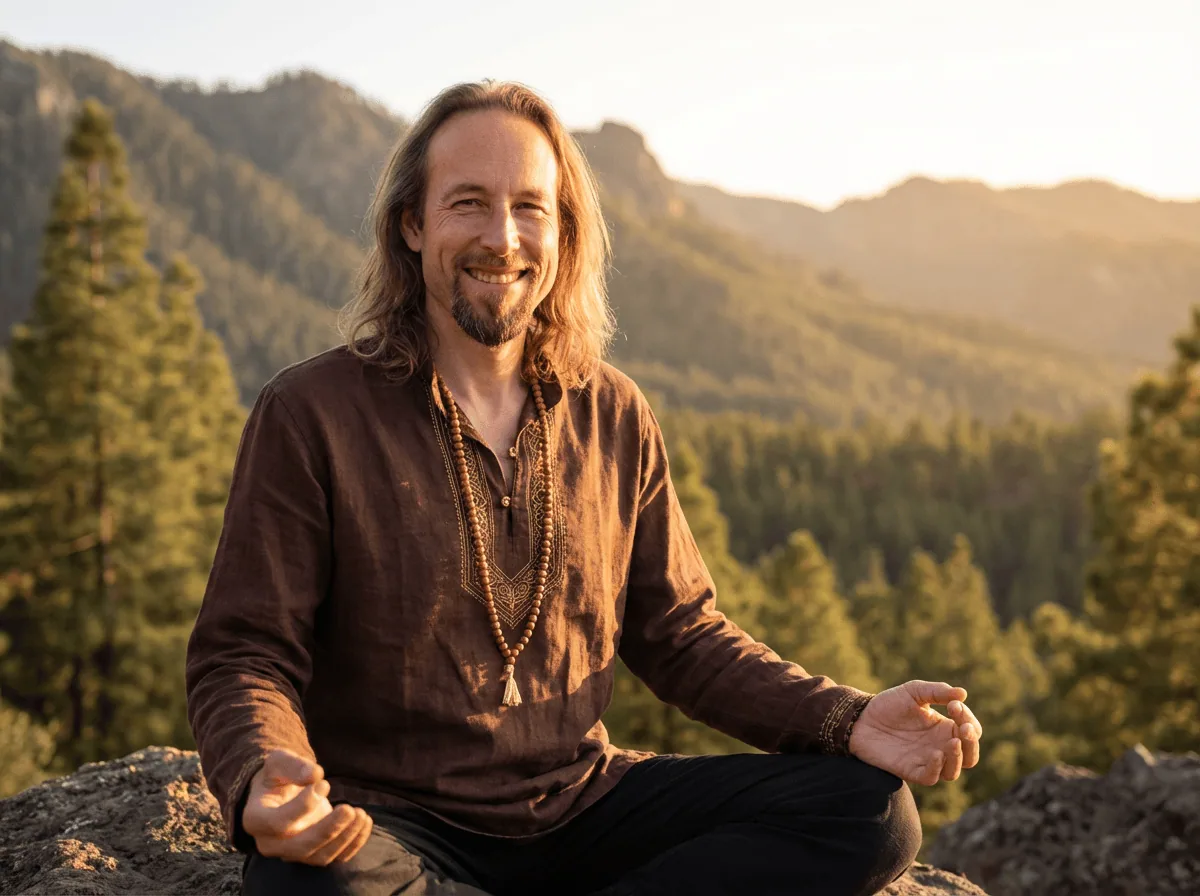
Johannes Huijbregts
Navy · Transformation coach 2016 · Breath coach 2021 · 1:1 €60
Johannes Huijbregts: navy officer → transformation coach → breath coach connected breathing. Online 1:1 breathwork €60, alongside care, not instead of it.
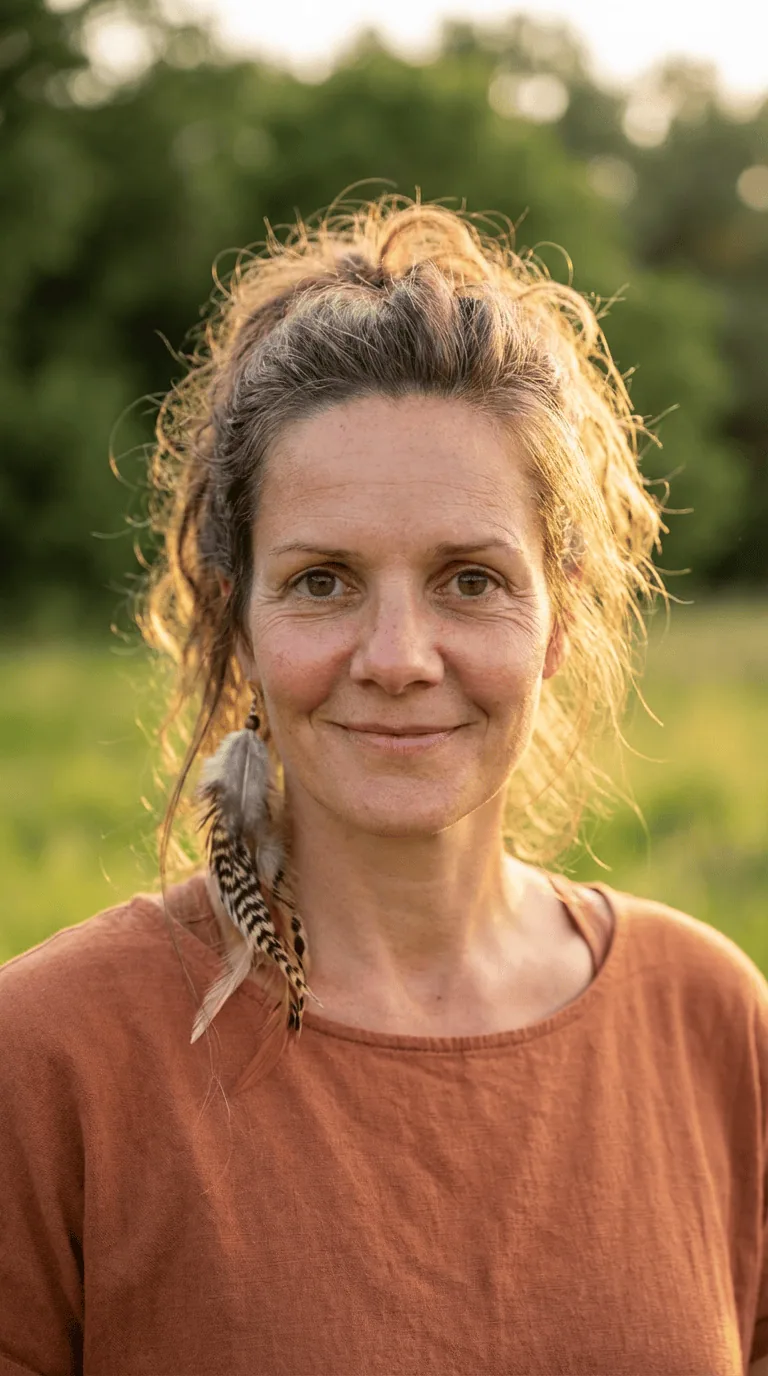
Tessa Frunt
Yin/Hatha/Vinyasa · ing. HBO Movement Technology · MRC Doorn · Adem en Stem · YinYoga.com
Tessa Frunt: Yin/Hatha/Vinyasa teacher and ing. in Movement Technology. Online yin 1:1 (€60): a full class or a focus on posture and ease. On YinYoga.com.
Sources & scientific authority
Historical and cultural background of retreats: Wikipedia — Retreat (spiritual).
Cyclic sighing reduces stress faster than mindfulness: Balban et al. (2023) — Cell Reports Medicine.
Meta-analysis: mindfulness-based programs and mental health: Khoury et al. (2015) — Journal of Psychosomatic Research.
Intensive meditation retreats and brain structure: Tang, Hölzel & Posner (2015) — Nature Reviews Neuroscience.
Meta-analysis: yoga for stress and well-being: Pascoe & Bauer (2015) — Journal of Psychiatric Research.
Polyvagal theory — foundation for recovery through safety: Porges (2009) — Cleveland Clinic Journal of Medicine.
We only reference sources we have personally studied and that are relevant to the practice we teach.
Free Tools
Can't plan a retreat yet? Start now.
Two free tools to experience a mini-reset today — at home, at the office or on the road.
Breathing Timer
Visual breathing timer with session goals and presets (Box Breathing, 4-7-8, Coherent breathing, Energize & more). Works offline.
Open the timer →Nomad Reset Calculator
Personal day-by-day plan for jet lag, sleep debt and screen stress. Includes breathing exercises.
Calculate your reset →Install as app
Add Spiriators to your home screen for fullscreen one-tap access.
Show me how →Ready to make space — in real life?
Our retreat is nomadic co-travel: yin + breath, small group, price by arrangement. First 30 minutes: do place and period fit?