In a world that revolves around performance, working harder, and always being "on," Yin Yoga offers a radically different path. No intensity. No goals. Only surrender and trust. If you're looking for deep relaxation, stress relief, or a way to release stored emotions, then Yin Yoga might be exactly what you need.
What Is Yin Yoga Exactly?
- What is yin yoga?
- Yin yoga is a slow, meditative yoga form where you hold poses for three to five minutes or longer. Instead of muscular effort, surrender is central: you let gravity and time reach the deep connective tissue.
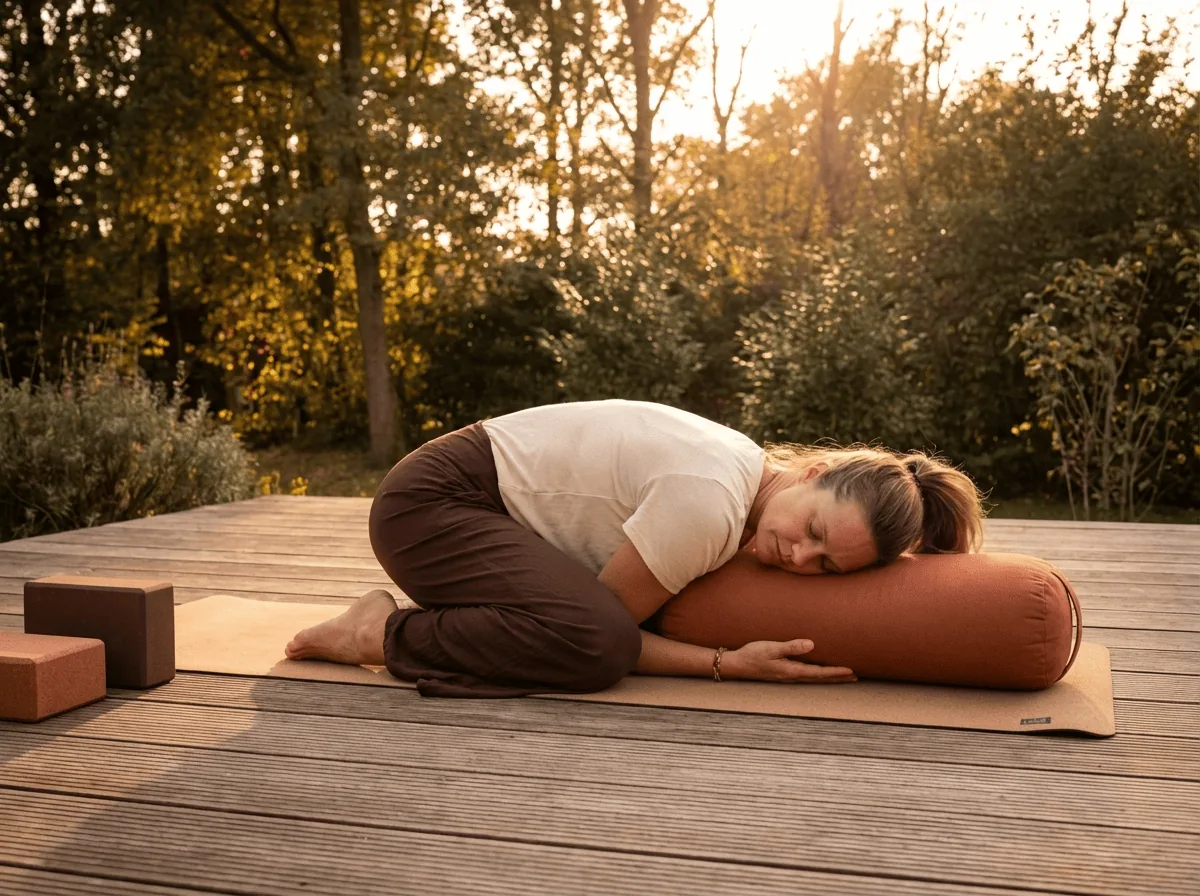
Yin Yoga is a slow, meditative form of yoga where you hold poses (asanas) for three to five minutes or longer. Unlike dynamic yoga forms like Vinyasa or Ashtanga, Yin focuses on the deep connective tissue: your fascia, ligaments, joints, and bones.
The origins of Yin Yoga lie in the Taoist tradition and Chinese medicine. The concept of Yin and Yang – the balance between passive and active, soft and hard, still and dynamic – forms the basis of this practice. The founder of modern Yin Yoga, Paul Grilley, combined Taoist yoga with Western anatomy insights.
The Difference Between Yin and Other Yoga Forms
In most yoga forms, you work actively with your muscles. You build strength, improve flexibility, and raise your heart rate. These are Yang practices: active, dynamic, and warming.
Yin Yoga is the opposite. You consciously relax your muscles and let gravity do the work. By staying in a pose for a long time, you reach the deeper layers of your body – the connective tissue that is normally not addressed.
"You don't have to get anywhere. You don't have to achieve anything. You can simply be who you are, exactly as you are."
The Science Behind Yin Yoga
Scientific research shows that Yin Yoga has measurable effects on our body and mind. When you stay in a pose for a long time, something special happens with your fascia – the network of connective tissue that surrounds and connects your entire body.
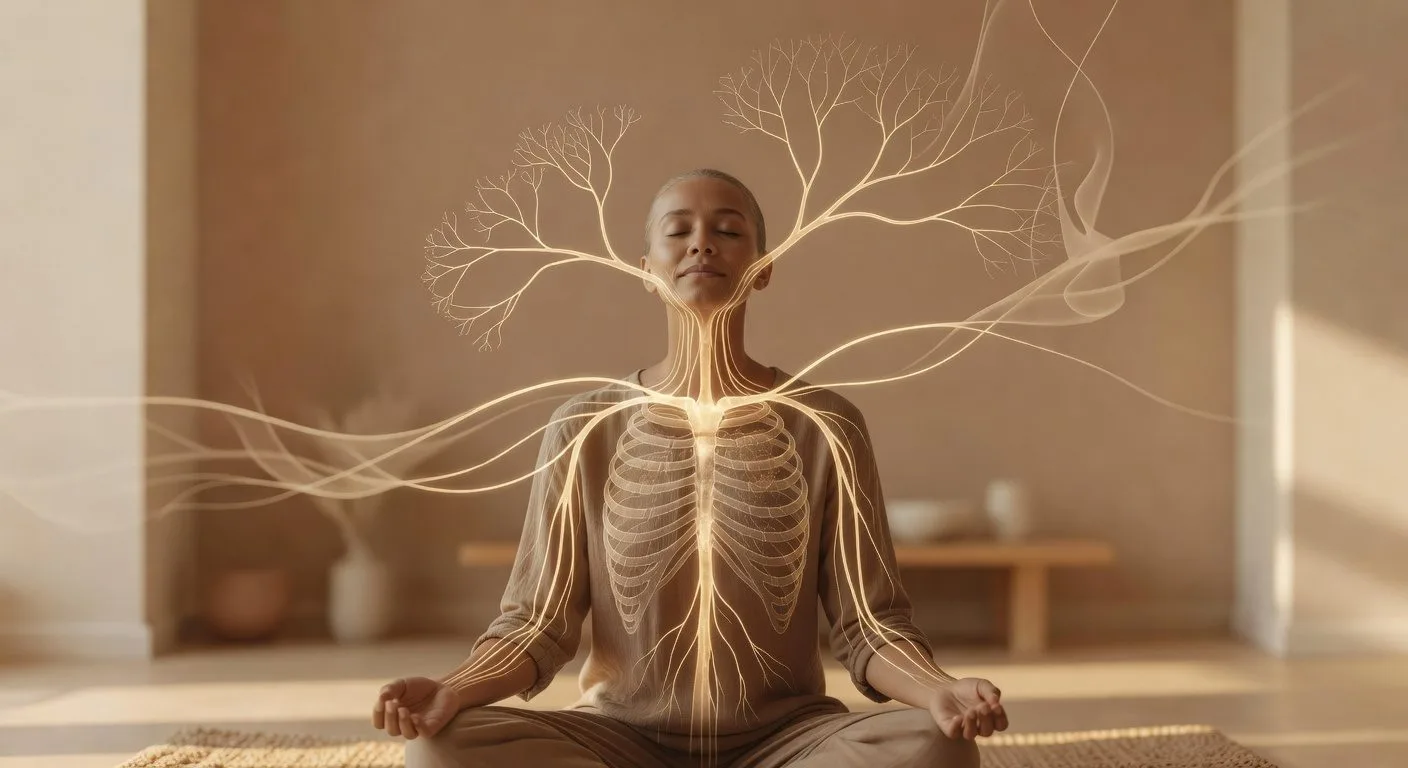
Fascia is not just structural tissue. It contains more nerve endings than your muscles and plays a crucial role in your proprioception (body awareness) and interoception (perceiving internal signals). When fascia becomes tense or adhered, this can lead to pain, limited mobility, and even emotional blockages.
Connective Tissue: Where Emotions Live
- What is yin yoga for connective tissue?
- Yin yoga for connective tissue works on fascia, ligaments, and joints through long, gentle stretches. By staying still for minutes, yin yoga connective tissue work gets time to hydrate and release — including tension and emotions stored there.
Our connective tissue – the fascia – is more than just physical tissue. It's a storage place for experiences, memories, and emotions. Fears we've tucked away. Grief we haven't felt. Tension we hold onto.
This concept, known as somatic storage, is supported by research on the mind-body connection. Trauma experts like Peter Levine and Bessel van der Kolk have shown how emotional experiences literally nestle in our bodies.
In Yin Yoga, we stay in poses for a long time – three to five minutes or more. This gives the connective tissue time to slowly release. Not forced. Not pushed. But gently, in its own tempo.
What happens when connective tissue releases:
- ✦ Stored emotions get space to safely release
- ✦ Old tension patterns can dissolve
- ✦ Your nervous system comes to rest (parasympathetic activation)
- ✦ Space is created for new energy and vitality
- ✦ Your joints become more supple and healthy
My Unique Approach: Quotes and Words
- What does sinking into trust mean in yin yoga?
- Sinking into trust — yin yoga surrender — means stopping the push and letting the body settle into the pose. Yin yoga trust is not passivity: it is actively releasing control so tension can melt instead of being fought.
In my Yin sessions, I combine the poses with carefully chosen quotes and words. Not to fill your head, but to open your heart.
As your body sinks into a pose, the words sink into your consciousness. They work as gentle invitations to go deeper. Deeper into the pose. Deeper into yourself. Deeper into life.
This combination of physical surrender and mental guidance makes each session a complete experience. You're not just working on your body, but also on your inner landscape.
The Five Principles of Yin Yoga
To practice Yin Yoga effectively, there are five important principles:
- Find the appropriate depth – Don't go to your maximum immediately. Start at 60-70% and let your body decide if you can go deeper.
- Be still – Once you're in the pose, stop moving. Relax your muscles and surrender to gravity.
- Hold the pose for a long time – Minimum 3 minutes, often 5 minutes or longer. This is essential to reach the connective tissue.
- Come out of the pose slowly – After sitting still for a long time, your body is vulnerable. Move carefully and mindfully.
- Take a neutral pose between poses – Give your body time to integrate before moving to the next pose.
"In the stillness of Yin, you don't find what you're looking for. You find what you always were."
The Benefits of Yin Yoga
Regular Yin Yoga practice offers countless benefits for body and mind:
Physical benefits:
- Improved flexibility and mobility of joints
- Healthier fascia and connective tissue
- Better blood circulation and lymphatic drainage
- Relief from chronic pain and tension
- Improved posture and body awareness
Mental and emotional benefits:
- Deep stress relief and relaxation
- Better sleep quality
- Increased self-awareness and mindfulness
- Emotional release and processing
- More inner peace and balance
- Improved focus and concentration
Who Is Yin Yoga Suitable For?
Yin Yoga is for anyone who:
- Is tired of always performing and being "on"
- Holds tension in the body (neck, shoulders, hips)
- Wants to learn to trust instead of control
- Wants to make space for emotions that ask for attention
- Is looking for deep, lasting relaxation
- Seeks balance alongside an active lifestyle or sports practice
- Is recovering from injuries or burnout
You don't need experience with yoga. Yin Yoga is accessible for beginners and offers depth for advanced practitioners at the same time.
Experience It Yourself
Words can describe what Yin Yoga is, but the real magic is in the experience. In that moment when you feel your body sinking. How your breath slows down. How your thoughts become quieter.
Combine Yin Yoga with breath coaching for an even deeper experience. The breath and body work together to release stored emotions.
With love,
— Tessa
📖 Read More
- Yin Yoga at Spiriators
- Types of Yoga: Yin, Hatha & Vinyasa (pillar)
- Take the free Yin Check
- Breathwork: always a beginner
Go deeper: Read our pillar pages on yoga and breathwork, explore yin yoga, or join a retreat to deepen your practice.