Online yin yoga class · 1-on-1 with Tessa
Online yin yoga class, 1-on-1 with Tessa
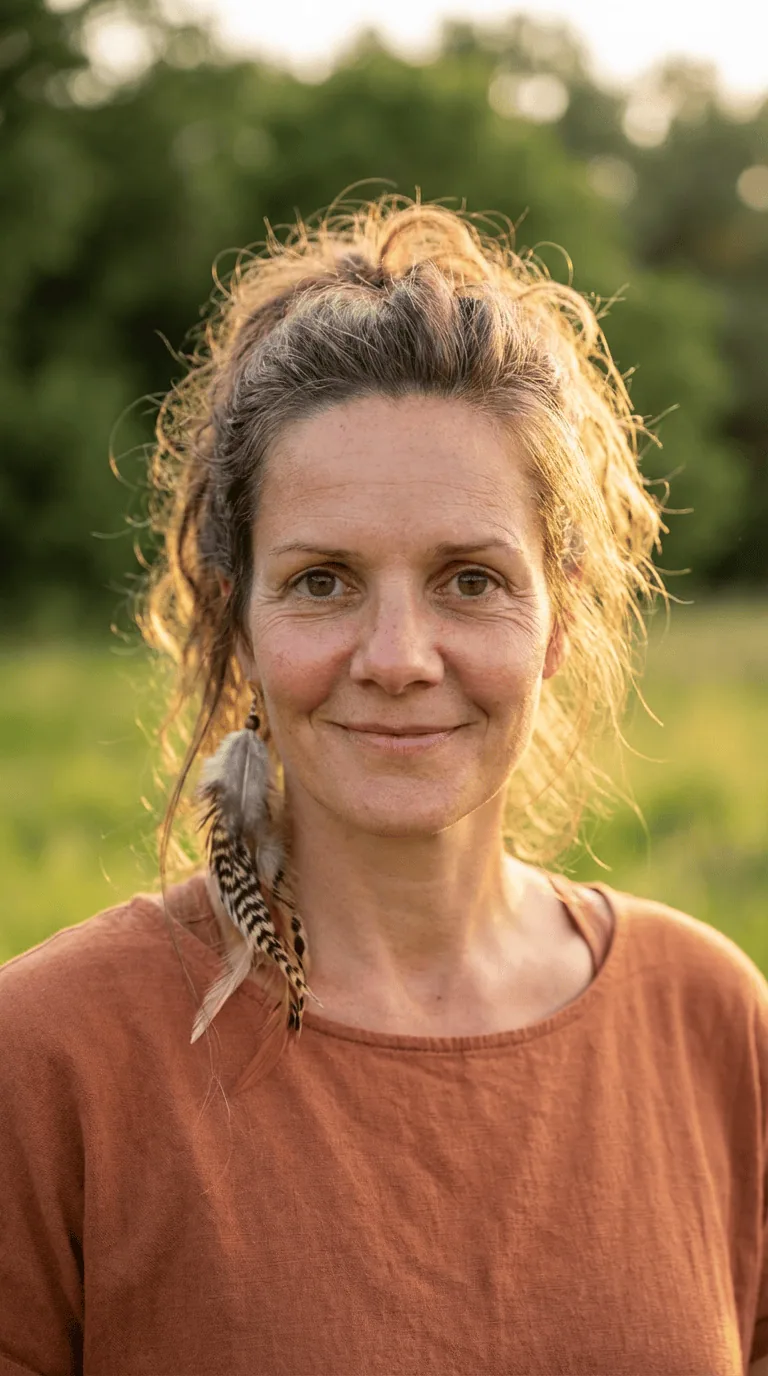
Online yin yoga class, 1-on-1 with Tessa: private via video, not a subscription. For rest, posture and space in the joints.
Prefer to practise on your own? Free yin yoga videos.
- 30 minutes
- Via video
- No obligations
What is Yin Yoga, in short?
Yin yoga is a slow, passive style: you hold poses for several minutes, often with props. The pace is calmer than dynamic yoga and focuses on deeper layers of muscle and connective tissue — many people also notice more space in the joints. Suitable for many beginners — if you respect limits and check with a doctor when unsure.
Quieter page?
Table of contents
At Spiriators
Yin with us is 1:1 online with Tessa — yin teacher and ing. movement technologist (HBO, MRC Doorn, New Nature Yoga). Sixty minutes for €60: a full yoga class, or a class with more emphasis on posture and ease. Both doors open. Often with coaching. Yoga is not medical care; for injuries or mental-health concerns check with a doctor. Intro is no-obligation.
Book the yin intro →Start today
You don't need to finish the whole page first. Feel, check, then take a real step — today.
- 01
Watch a free yin video
Start with Tessa's yin yoga video on YouTube — feel what stillness and long holds do with your body.
- 02
Take the free Yin Check
20 questions, 5 minutes: discover whether yin is your form — with personal tips.
- 03
Book a free intro call
Ready for guidance? Book a no-pressure intro call — we'll see together what fits.
What is Yin Yoga & Breath?
Yin yoga is a slow, still form of yoga where you hold gentle poses for three to five minutes to stretch connective tissue, calm the nervous system, and release stored tension in body and mind.
Your connective tissue (fascia) gets the longer time it needs to release tension. Your breath becomes your anchor. And whatever has become stuck there — stress, emotions, old patterns — gets space to move. This is yoga where nothing has to happen, only presence.
The combination with breathwork makes this practice solidly supportive. The yoga form creates space in the body; breathwork helps regulate the nervous system. Together, many people experience more calm than in a class without breath focus. After one yin session people often already feel noticeably less restlessness — not a promise, but what we often hear.
Tessa is a yin yoga teacher and ing. movement technologist. She keeps it soft — no perfection, no performance — and often combines yin with personal 1:1 coaching: first space in the body, then clarity in the here-and-now. A full yoga class and a class with emphasis on posture or ease both stay open.
This is not a regular yin class. It is yin + breath — and where needed personal coaching — as one whole. That fits within our method: yin as space to land.
For Whom?
Yin yoga & breath is especially powerful if you:
- Feel chronically exhausted and deep tension in your body
- Sleep poorly or wake up often at night
- Have a busy mind that won't quiet down
- Recognize hormonal or burnout symptoms
- Feel that stress settles in your hips, shoulders or belly
- Want support for stiffness, posture or ease in the joints — without a physio promise
This is not light relaxation exercise. It is a deep, sometimes confronting practice. If you're looking for a quick workout or superficial relaxation, this is probably not the right place for you.
When Yin Yoga Is Not (Yet) The Right Fit
Honest is honest: yin yoga is powerful, but not the right choice for everyone at every moment. When in doubt, always consult your doctor or therapist.
- —Acute injuries or recent surgery — wait for medical clearance.
- —Severe hypermobility (EDS, HSD) — long holds can overload joints; choose supported/restorative instead.
- —Late-stage pregnancy — some poses need modification; work 1:1 with a certified teacher.
- —Acute psychosis, unregulated PTSD or dissociation — stillness and bodywork can be triggering without therapeutic support.
- —You want a workout or quick results — yin works slowly; start with other styles on our yoga hub.
Not sure if yin fits right now? Book a free intro — or first compare all styles on our yoga hub.
What Do We Offer?
Three ways to work with Yin Yoga + Breath. Private 1:1 often with personal coaching; Chakra Journey and the challenge at your own pace.
Private Yoga — 1:1 Online
Yin, Hatha or a combination — often combined with personal coaching. 60 minutes live via video. First feeling in the body, then conversation where it helps. Tailored, without forcing.
€60
More info →Chakra Journey — Yin + Breath
7 sessions, 7 chakras. A structured journey with yin yoga and breathwork. Deep, with room for insights — at your own pace. For those who really want to go deeper.
€79
More info →30 Days Challenge
Daily short sessions (15-30 min) via email. Week 1 free. Then an affordable way to bring the practice structurally into your life. Ideal to start or deepen.
Week 1 free
More info →Ready for the next step?
Ready for 1:1 Yin with Tessa
Already know yin is the style you need now? Start with a free intro or take the Yin Check first.
"Tessa forces nothing, but invites. And in the silence of a yin pose, sometimes more happens than just talking."
— Claire van Nunen
Yin Yoga for Connective Tissue and Emotions
Stress settles. Not just in your head. In your body. In your connective tissue.
Yin yoga works supportively there. Slow, sustained pressure on your fascia — the tissue that surrounds your muscles and organs. Tension settles there; many people also experience emotional charge in those places.
- What is fascia?
- Fascia is the connective-tissue network that wraps muscles, bones and organs. It doesn’t stretch in seconds but in minutes — that’s why Yin holds poses for 3–5 minutes. Many people then notice more space; that is practice language, not a proven medical mechanism.
By holding poses for 3-5 minutes, you give your connective tissue time to ease. Breath often deepens, the nervous system calms — and what felt stuck may get a little more room.
No mystical promise: a body-based practice where many people notice calm and space returning. Your body learns: I am allowed to rest.
Yin Yoga for Sleep, Stress and Hips
Your nervous system has two modes: on and off. Fight or flight, and rest and digest.
Stress keeps you in "on". For years. Until your body forgets how "off" works.
Yin yoga invites downshifting. Slow poses. Deep breathing. Silence. Your parasympathetic system gets room; via the vagus nerve tension can ease. In research and practice we often see lower stress markers (e.g. calmer heart rate) — supportive, not a medical cortisol promise.
- What is the vagus nerve?
- The vagus nerve is the main nerve of your parasympathetic system — your body’s ‘off’ switch. Yin invites it through stillness, long holds and slow breath, so sleep, restlessness and stress can shift physically — supportive, not treatment.
Many people sleep more calmly, feel less restlessness and learn to land again — pace differs. Yin supports that recovery from tension; it does not treat burnout or insomnia as medical care.
5 Basic Yin Yoga Poses
Most yin yoga exercises revolve around five basic poses. No complex flow, no strength. Just depth. You hold each pose for 3 to 5 minutes — long enough to move past the muscles and actually reach the connective tissue.
1. Butterfly
Seated, soles together, knees fall outward. Targets hips and lower back — where many people unconsciously hold tension.
2. Child's Pose
Knees wide, torso forward, forehead on the mat. Opens the hips and calms your nervous system within a minute. A safe pose to begin with.
3. Dragon
Deep lunge, back knee on the floor. Intense for hip flexors — especially if you sit a lot. Emotion often surfaces here; that's normal.
4. Sleeping Swan
One leg bent in front, the other straight back, torso melting forward. Known as 'pigeon pose' in other styles. Deep hip opener.
5. Reclining Twist
On your back, knees to one side, head to the other. Massages organs and releases the lower back. Ideal closing pose before sleep.
How often per week?
For maintenance: 2-3x per week, 20-30 minutes. For stress or sleep issues: a daily short session of 10-15 minutes often works better than one long one. Consistency beats duration.
Tip: pair these poses with deep belly breathing. The breath activates your vagus nerve — that's what sets yin yoga apart from 'just stretching'.
Yin yoga compared to other yoga styles
Which yoga fits your nervous system right now? A short comparison on intensity, focus and effect.
| Style | Intensity | Focus | Nervous system effect |
|---|---|---|---|
| Yin | Low · passive | Connective tissue & fascia | Strong parasympathetic (rest) |
| Restorative | Very low · supported | Full relaxation | Calming, recovery |
| Hatha | Medium · active | Muscles & breath | Balance sym/parasym |
| Vinyasa | High · dynamic | Strength & flow | Activating (sympathetic) |
Source: Cramer et al. (2014, 2019). Full comparison of 8 styles: types of yoga.
Deepen your knowledge of yin yoga
Practical guides and background on the practice — from sleep and burnout to trauma-informed work.
Frequently Asked Questions
Sources & scientific authority
Yin yoga in the scientific literature: Wikipedia — Yin yoga.
Meta-analysis on yoga & clinical outcomes: Cramer et al. (2014) — Depression and Anxiety.
Yoga, HRV and GABA — effect on mood and stress: Streeter et al. (2010) — Journal of Alternative Medicine.
Fascia research (connective tissue) — foundation of yin: Schleip & Müller (2013) — Journal of Bodywork and Movement Therapies.
Effect of slow breathing on the autonomic nervous system: Zaccaro et al. (2018) — Frontiers in Human Neuroscience.
Polyvagal theory & regulation: Porges (2009) — Cleveland Clinic Journal of Medicine.
We only reference sources we have personally studied and that are relevant to the practice we teach.
Free Tools
Not sure if yin is really your form?
Take the Yin Check (20 questions, 5 min) or use the breathing timer during your yin poses.
Yin Check — does yin suit you?
20 questions, 5 minutes: discover whether yin yoga is your form — with personal tips.
Start the Yin Check →Breathing Timer
Visual breathing timer with session goals and presets (Box Breathing, 4-7-8, Coherent breathing, Energize & more). Works offline.
Open the timer →Install as app
Add Spiriators to your home screen for fullscreen one-tap access.
Show me how →Explore further
Our pillar pages
How we work
- Actively listening
- Adaptive
- Authentic
- Committed
- Growth
- Humor
- No-nonsense
- Non-judgmental
What Participants Say
"Unfolding. That word covers what Tessa's lessons mean to me. For years I've followed her online, and in all that time I've slowly untangled things that had settled deep inside me: emotions, thoughts, beliefs I didn't even know I carried. It's a path from unconscious to awareness. Sometimes gentle, sometimes painfully honest. But always real. Tessa guides that process with a calm that gives you trust. She forces nothing, but invites. And in the silence of a yin pose, sometimes more happens than just talking. For anyone ready to unfold a little: I highly recommend Tessa."
Claire van Nunen
Yin Yoga • Google review
"Really lovely yoga classes where Tessa gives clear and calm instructions from a beautiful place, turning the whole thing into an inspiring experience. Highly recommended."
Yashodra
Yin Yoga • Google review
"I'm very happy with Spiriators — the 30-day yin yoga at home course suits me really well."
Tonnie Huijbregts
30-Day Challenge • Google review
What's your next step?
Intro call for yin with Tessa
30 min · video · we check whether yin 1:1 fits your body