Breathwork guide · Connected breathing · Breath coach
Breathing Exercises & Breathwork — the complete guide
Breathing exercises are among the fastest ways to support your nervous system with stress, sleep issues or overstimulation — supportive, not a medical reset. Breathwork is the umbrella for dozens of conscious forms: connected breathing, pranayama, Wim Hof, rebirthing, breath scarcity, and more. The power is rhythm and attention — settling for minutes into calm you rarely reach with thinking alone. Here you read which techniques exist, what science says, and which form fits you.
What is breathwork, in short?
Breathwork is the umbrella term for conscious breathing techniques — from calm nasal breath and box breathing to more intense connected breathing. People often use it for tension, sleep rhythm or focus. Techniques differ a lot in intensity; what is mild for one person is too much for another.
Quieter page?
Table of contents
At Spiriators
This page is our guide: techniques side by side, with nuance. Self-practice with the free breathing timer. For deeper 1:1 guidance Johannes (breath coach) works online at €60/hour — coaching, not medical treatment; intensive breath always needs screening. Unsure? Start mild or book an intro.
To breathwork coaching 1:1 →Start today
You don't need to finish the whole page first. Breathe, build a rhythm, then take a real step — today.
- 01
Open the free breathing timer
Start with box breathing or 4-7-8 in the breathing timer — feel within minutes what rhythm does to your nervous system.
- 02
Follow the 21-day at-home schedule
Build a simple at-home practice over 21 days — short, doable, without intensive solo sessions.
- 03
Book a free intro call
Ready for guidance? Book a no-pressure intro call — we'll see together which breath form fits.
What is breathwork?
Breathwork is the umbrella term for conscious breath techniques that, via a changed breathing rhythm, directly influence the nervous system, emotions, and body. Under that umbrella fall dozens of forms — from ancient yogic pranayama to modern therapeutic methods like connected breathing, rebirthing, holotropic breathwork, and the Wim Hof method.
What all these forms share: they use breath consciously as an instrument for change. What's special is that breath is the only autonomic system you can consciously steer. You can't slow your heart rate on command, you can't adjust digestion — but you can adjust your breath. And through that breath you directly influence heart rate, blood pressure, immune response, and emotional state.
At Spiriators, Tessa and Johannes work as certified breath coaches with multiple forms: connected breathing (our core specialty), pranayama, Wim Hof, rebirthing, box breathing, 4-7-8, and conscious breath scarcity. Which technique we choose depends on your goal, moment, and nervous system — within our method, breath is the first lever.
Breathwork vs breath coaching — what's the difference?
The terms are often used interchangeably but mean different things. Breathwork is the technique itself — the exercise, the session, the form. Breath coaching is the broader track in which a certified coach guides you: intake, personal plan, sessions, integration, home exercises, and aftercare.
Put differently: breathwork is what happens on the mat. Breath coaching is the journey around it — including your context, goal, history, and translating what the sessions surface into your daily life.
Breathwork
The technique or method itself (connected breathing, pranayama, Wim Hof, breath scarcity, rebirthing). Available solo, in group, or in a retreat.
Breath coaching
Guided track with Johannes (breath coach & transformation coach). Personal, focused on change: breath + coaching, with integration and aftercare. View breath coaching →
Connected breathing — what we specialize in
Connected breathing (conscious connected breathing) is a continuous, circular breath form: inhale and exhale flow into each other without pause, usually through the mouth, deeper than normal. A session lasts 45 to 60 minutes and is always guided one-on-one or in small group.
What happens: through continuous breathing without pausing, the CO₂-O₂ balance shifts slightly, the thinking brain moves to the background, and the body gets space to release stored tension, emotion, or pattern. People cry, laugh, shake, sigh — or lie completely still. All is welcome. We hold the space.
Both Johannes and Tessa are certified breath coaches and have worked with this form for years — individually, in retreats, and in our nomadic tracks. Connected breathing is our core, but we also use other forms where appropriate: pranayama, box breathing, 4-7-8, slow nasal breathing, and conscious breath scarcity (breath holds). Which form we choose depends on your goal, moment, and nervous system.
Emotional release
Held grief, anger, or tension gets space without analysis.
Beyond thinking
The continuous rhythm quiets the mind, opens access to deeper layers.
Integration
After every session there is time and space to land what surfaced.
Which breath technique fits you?
Breathwork is not monolithic. Here you see the five most common forms side by side — so you understand which form fits which goal.
| Connected | Holotropic | Wim Hof | Box / 4-7-8 | Pranayama | |
|---|---|---|---|---|---|
| Pace | Continuous, no pause | Fast & intense | Cyclic + retention | Structured, calm | Variable, guided |
| Purpose | Emotional release | Altered states | Vitality & cold | Stress & focus | Spiritual practice |
| Guidance needed | Yes, always | Yes, always | Recommended at start | Nee | Preferable |
| Session length | 45–60 min | 2–3 uur | 10–15 min | 5–10 min | 15–30 min |
Breathwork & your nervous system
Understanding why breathwork works requires one concept: the autonomic nervous system. It has three states — and your breath switches directly between them. Want to practice this briefly first? Use the breathing timer.
- What is the vagus nerve?
- The vagus nerve is the longest cranial nerve and a switch between stress and recovery. A long, slow exhale invites it — which is why breathwork can support heart rate, tension and how you feel within minutes. Supportive, not a medical switch.
Sympathetic (gas)
Fast, shallow chest breathing activates fight-flight. Short sessions (Wim Hof, kapalabhati) use this consciously for energy and alertness.
Parasympathetic (brake)
Slow, long exhale through the nose activates the vagus nerve. Brings rest, recovery, digestion, and sleep. Box breathing and 4-7-8 live here.
Ventral vagal (connection)
In polyvagal regulation language: sense of safety, openness, connection. Connected breathing can support moving here — beyond surface relaxation, toward integration. Not a medical model.
- What is polyvagal theory?
- Polyvagal theory (Stephen Porges) describes how your autonomic nervous system shifts between danger, shutdown and safe connection. Breathwork steers that shift: from fight-flight toward ventral vagal — the felt sense of safety and openness.
Ready for the next step?
Ready for 1:1 breathwork with Johannes & Tessa
Johannes and Tessa both guide breathwork — connected breathing opens; coaching helps you integrate. Start with a free 30-minute intro — no obligations.
"Lovely, kind people. They listen well and are honest even when it's not what you want to hear."
— Kayleigh Huijbregts
What a connected breathing session looks like
Intake (10 min)
Short check-in: how is this moment, what's alive, what's your intention. No analysis — just a direction.
Build-up (5 min)
You lie on a mattress, eyes closed. We build the rhythm: continuous in- and out-breath through the mouth, no pause. Deep but without forcing.
The heart of the session (30–40 min)
The rhythm carries you. Music supports. What surfaces is welcome — tears, movement, images, silence. We stay beside you, with touch or words where needed.
Integration (10–15 min)
Breath returns to normal. You stay lying down, in silence. Then space for what you want to share — or not. A glass of water, a walk outside, a short conversation.
The science behind breathwork
Breathwork is not alternative hype. It's one of the fastest-growing research fields within psychophysiology. Four core studies our work is grounded in:
Slow breathing & the nervous system
Zaccaro et al., 2018 — Frontiers in Human Neuroscience
Systematic review of 15 studies: slow breathing (<10 breaths/min) increases HRV, activates the vagus nerve, and shifts the nervous system from sympathetic to parasympathetic.
Read study →Breathwork reduces stress and anxiety
Fincham et al., 2023 — Scientific Reports (Nature)
Meta-analysis of 12 RCTs (785 participants): breathwork interventions significantly reduce stress (effect size 0.35), anxiety (0.32), and depressive symptoms (0.40) — comparable to mindfulness, sometimes stronger.
Read study →Connected / circular breathing & mental wellbeing
Brown & Gerbarg, 2005 — Journal of Alternative Medicine
Sudarshan Kriya (a cyclic, continuous-breath form related to connected breathing) shows significant reductions in depression, PTSD symptoms, and cortisol. Mechanism: vagal activation + cortical reorganization.
Read study →Polyvagal theory & emotional regulation
Porges, 2011 — The Polyvagal Theory
Breath is the only autonomic system we can consciously steer. Via the ventral vagal branch, breathing influences our capacity for safety, connection, and emotional regulation — regulation language that helps explain why breath can support tension (not medical trauma treatment).
Read study →When breathwork is (currently) not the right choice
Honesty first: deeper breath forms like connected breathing aren't for everyone or appropriate at every moment. Below you read when we advise against — or first ask consultation with your doctor.
In doubt? Book a free intro. We listen, ask questions, and honestly say if breathwork doesn't fit now — or which milder form does.
Breath scarcity — the power of consciously breathing less
Breath scarcity (breath holds, retention, intermittent hypoxia) sounds counterintuitive: why would breathing less be good for you? The answer lies in CO₂ tolerance. Most people chronically over-breathe and breathe shallowly — which raises CO₂ sensitivity and keeps the nervous system on low alert. Through short, controlled breath holds you train the body to stay calm as CO₂ rises.
Although breath scarcity can feel deeply uncomfortable or even frightening, breath coaches use it intentionally. It temporarily alters consciousness, disrupts habitual thought patterns, pulls you out of your head, and opens access to suppressed emotions or deeper layers of the unconscious. Breathing through that uncomfortable moment teaches your nervous system that safety doesn't depend on constant control.
The measurable effect is called the BOLT score (Body Oxygen Level Test) — popularized by Patrick McKeown (Buteyko method). A higher BOLT correlates with calmer breathing, better sleep, less panic, more focus, and even improved athletic performance.
Johannes explains why breath scarcity works and how to build it safely — watch the video on the breathwork coaching page.
Watch the video on breathwork coaching →Benefits of conscious breath scarcity
- What is HRV?
- HRV (heart rate variability) measures how flexibly your heart rate moves with breath and nervous system. Higher HRV points to better stress resilience; conscious breathing — especially slow rhythms and breath scarcity — can measurably improve HRV.
Does intensive breathwork produce DMT in your brain?
A widely repeated claim in the breathwork world is that intensive forms — connected breathing, holotropic, rebirthing — release endogenous DMT (N,N-dimethyltryptamine) in the pineal gland. DMT is the same compound that causes the well-known visions in ayahuasca. It would explain why people during deep sessions can experience images, colors, memories, or even mystical states.
Honest about the science: DMT was demonstrated in mammalian brains in 2013 (Borjigin et al., University of Michigan), and traces have been measured in human cerebrospinal fluid. But that breathwork specifically triggers DMT release isn't yet firmly proven — there's no published RCT measuring endogenous DMT during a breath session. The altered state people experience is measurable and partly explained by shifts in CO₂/O₂, mild cerebral hypocapnia, vagal activation, default mode network suppression, and endorphin release.
Possible benefits
- Deep insights, breakthroughs or mystical experience without substances
- Temporary suppression of the thinking brain — access to the unconscious
- Room for held tension, emotion or old patterns (supportive, not trauma treatment)
- Legal, drug-free and fully in your own control
Possible drawbacks & risks
- Scientific evidence for DMT release is limited — don't overstate the claim
- Overwhelming without experienced guidance (panic, dissociation, re-experiencing)
- Not suitable with psychosis sensitivity, bipolar (manic phase), or unprocessed trauma without framing
- Integration is essential — a strong experience without aftercare can destabilize
Breathwork + Yin Yoga — our combined approach
In our retreats and tracks, we often combine breathwork with Yin Yoga. Reason: they amplify each other. Yin creates space in connective tissue and can move tension or emotion; connected breathing supports regulation and release. Supportive together — not a promise that one session 'liberates' you.
In practice and in reviews, the combination is often experienced as more supportive for stress and unease than either alone — more room for HRV and parasympathetic calm. Not a guarantee, and why we combine them.
4-7-8 breathing for sleep — the technique explained
The 4-7-8 breath is a simple evening technique, developed by Dr. Andrew Weil based on classical pranayama. By making your exhale twice as long as your inhale you invite the vagus nerve — your nervous system can shift from 'alert' to 'rest'. Many people fall asleep faster or settle deeper; not a sleep medicine, but support for winding down.
The 4-7-8 technique in 4 steps
- Inhale quietly through your nose for 4 counts.
- Hold your breath for 7 counts.
- Exhale through your mouth for 8 counts, with a soft 'whoosh' sound.
- Repeat 4 cycles. With experience: up to 8 cycles, maximum 2x per day.
Lying in bed, eyes closed, after screens are off — you often drift off in cycle 2 or 3. Doesn't work right away? Don't force it. The effect builds after 4-6 weeks of consistent practice, as Weil's clinical observations show.
Box breathing in English — quick explanation
Box breathing (also 4-4-4-4 or 'square breathing') works with equal counts: 4 in, 4 hold, 4 out, 4 empty hold. Unlike 4-7-8, box breathing is primarily for daytime focus and calm — not specifically for sleep. Navy SEALs use it for focus under pressure; useful for you before a meeting or presentation.
→ Read the full 4-7-8 guide with research·→ Comparison: box breathing vs 4-7-8 vs Wim Hof
Deepen your knowledge
Our most-read articles on breathwork and the nervous system:
Frequently asked questions about breathwork
Guided by
The people behind this practice
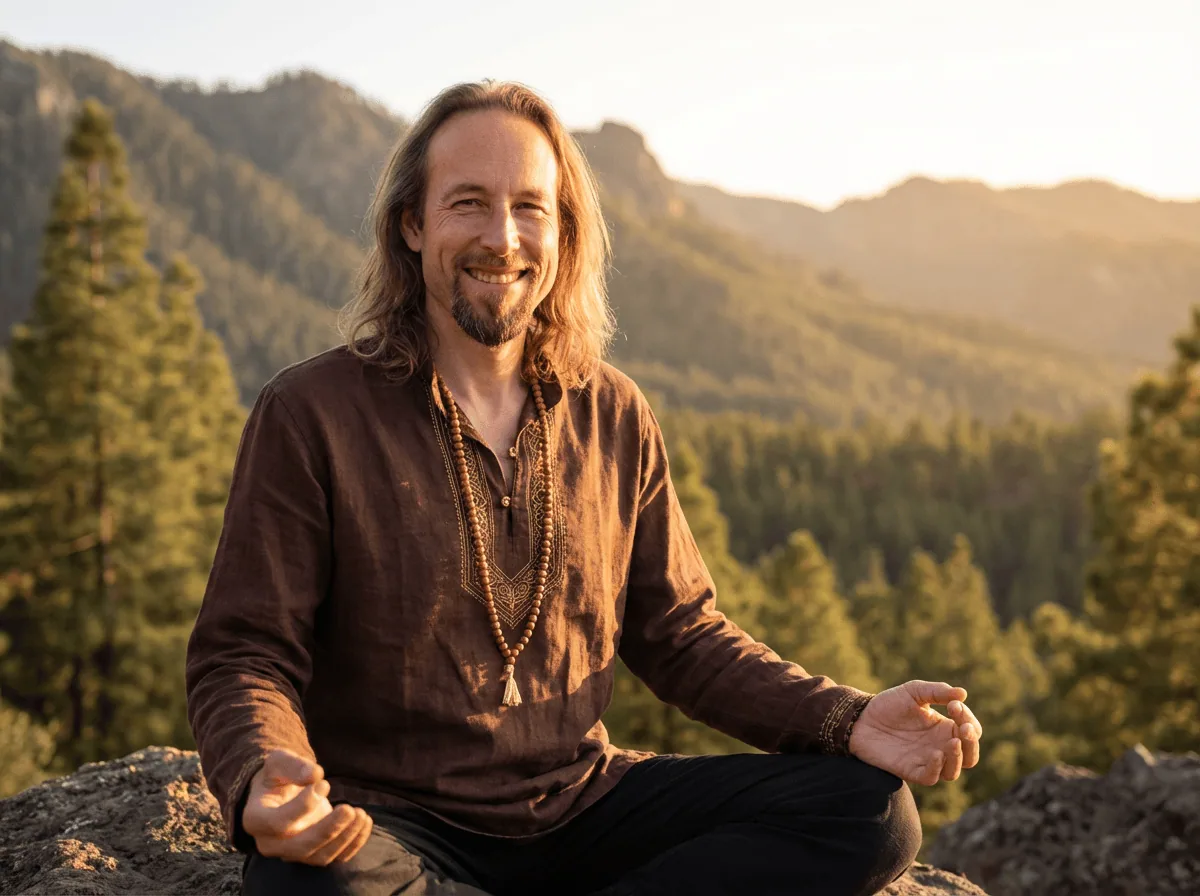
Johannes Huijbregts
Navy · Transformation coach 2016 · Breath coach 2021 · 1:1 €60
Johannes Huijbregts: navy officer → transformation coach → breath coach connected breathing. Online 1:1 breathwork €60, alongside care, not instead of it.
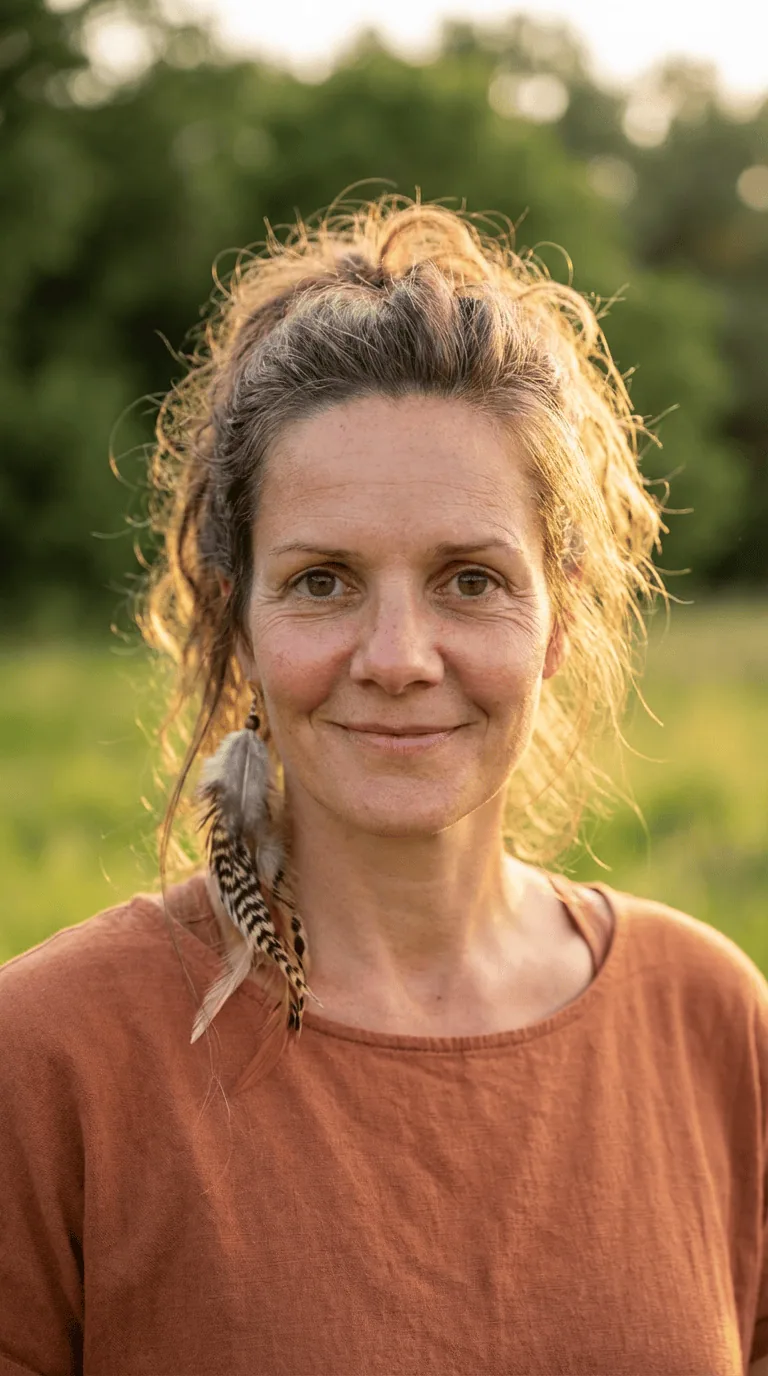
Tessa Frunt
Yin/Hatha/Vinyasa · ing. HBO Movement Technology · MRC Doorn · Adem en Stem · YinYoga.com
Tessa Frunt: Yin/Hatha/Vinyasa teacher and ing. in Movement Technology. Online yin 1:1 (€60): a full class or a focus on posture and ease. On YinYoga.com.
Sources & scientific authority
Effect of slow breathing on the autonomic nervous system: Zaccaro et al. (2018) — Frontiers in Human Neuroscience.
Meta-analysis: breathwork and mental health: Fincham et al. (2023) — Scientific Reports / Nature.
Polyvagal theory — neurobiology of safety: Porges (2009) — Cleveland Clinic Journal of Medicine.
Sudarshan Kriya & yogic breathing for stress, anxiety and PTSD: Brown & Gerbarg (2005) — Journal of Alternative & Complementary Medicine.
Cyclic sighing reduces stress faster than mindfulness: Balban et al. (2023) — Cell Reports Medicine.
Wim Hof Method — research on autonomic nervous system influence: Kox et al. (2014) — PNAS.
Buteyko method & breath volume in asthma: Bruton & Lewith (2005) — Complementary Therapies in Medicine.
We only reference sources we have personally studied and that are relevant to the practice we teach.
Free Tools
Not sure which breath form fits?
Take the Breath Check or use the breathing timer — no account, no email.
Breath Check — which breath form fits?
Free check: discover whether connected breathing, regulation or another form fits you.
Start the Breath Check →Breathing Timer
Visual breathing timer with session goals and presets (Box Breathing, 4-7-8, Coherent breathing, Energize & more). Works offline.
Open the timer →Install as app
Add Spiriators to your home screen for fullscreen one-tap access.
Show me how →Ready to meet your breath?
Book a free 30-minute intro. We listen to what's alive and look together whether breathwork fits — and if so, which form.