Yin yoga for stress isn't a trendy wellness claim — it's a proven way to activate your parasympathetic nervous system and measurably lower chronic stress. Twenty minutes in supported poses is enough to shift your body from fight-or-flight into rest-and-recover mode. No empty mind required. No meditation experience needed. Just lie down, breathe, and let the science do the rest.
Why Your Body Is Craving Stillness
You lie awake, heart pounding, as if something is chasing you — but it's just your own nervous system, still screaming from a day that never stopped.
Sound familiar? That moment when you finally get into bed and your body refuses to switch out of "everything under control" mode. Your breathing is shallow. Your muscles are wound tight. Your mind is running in circles. And everyone says: "Just try to relax." As if that's a switch you can flip.
Yin yoga for stress works differently. You don't need to empty your mind. You don't need to "relax on command." You lie in a pose, you breathe, and your body does the work. Twenty minutes. That's all it takes to measurably activate your parasympathetic nervous system — your rest-and-recover mode. And the science confirms what you already feel: yin yoga significantly lowers state anxiety immediately after each session.
What Happens When Stress Takes Over
- Allostatic load
- Allostatic load is the cumulative wear and tear of chronic stress on your body: cortisol stays elevated, heart rate never fully recovers, and repair stays incomplete. Gentle, slow yin yoga can reduce that load through improved vagal tone.
Stress isn't your enemy. It's a survival mechanism that works beautifully when a tiger is chasing you. The problem? Your nervous system can't tell the difference between a tiger and a deadline, an argument with your partner, or an overflowing inbox. Sympathetic activation — fight or flight — is the same circuit whether the threat is real or perceived.
And here's where it gets quietly dangerous: when that circuit stays active day after day, your body settles into a chronic state of readiness. Cortisol stays elevated. Your heart rate never fully recovers. Your digestion runs on low. You sleep shallowly. And the worst part? You get used to it. You think: "This is just who I am." But it's not.
Research on the psychoneuroimmunology of yoga shows that gentle, slow yoga practice reduces allostatic load — the cumulative wear and tear of chronic stress — through improved vagal tone. That's the scientific way of saying: your body gets a chance to actually recover.
Why Yin Yoga Instead of Just Meditating?
- Deep rest in yin yoga
- Deep rest in yin yoga is a parasympathetic shift from long-held, passive poses — without cognitive focus. You do not need to visualise or “relax on command”; your body moves from fight-or-flight toward rest-and-recover while you simply stay.
This is the point where most people give up. "I've tried meditating. I can't do it. My mind is too busy." And that's exactly why yin yoga works differently.
Meditation is all about cognitive focus: observing thoughts, counting breaths, trying to concentrate. But when your nervous system is overloaded, that focus takes more energy than you have. It's like asking a drained battery to work harder.
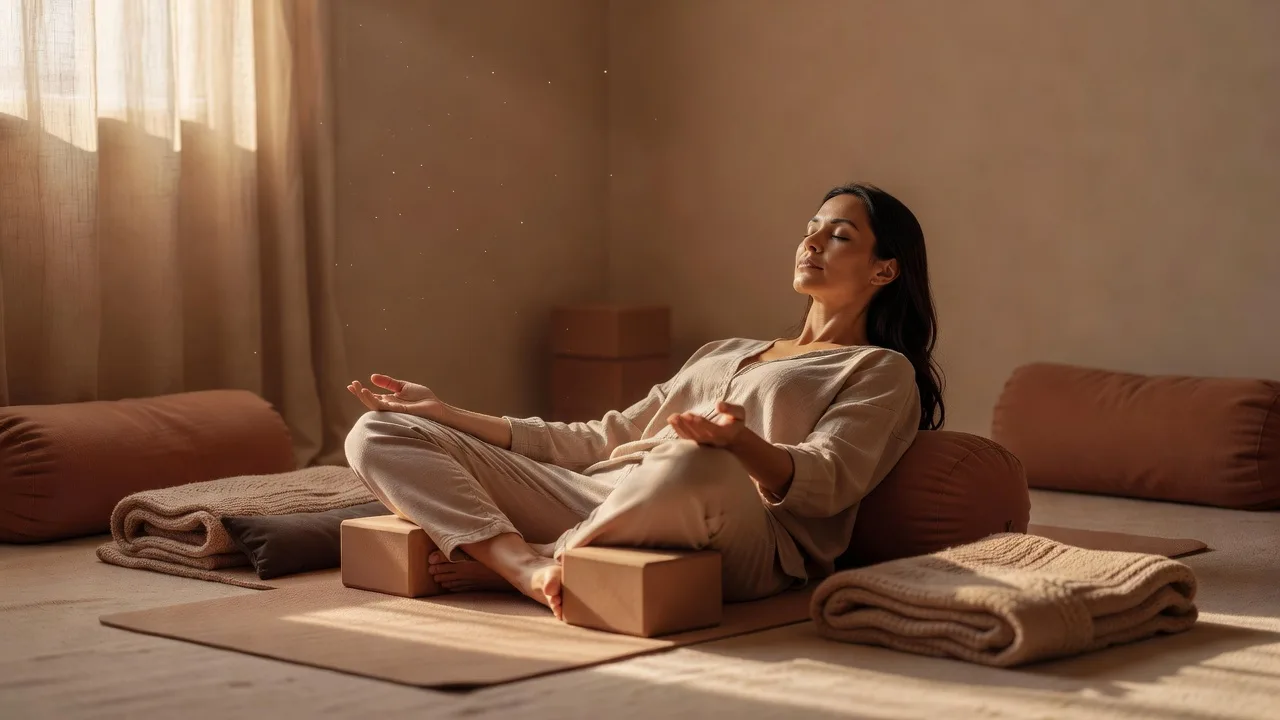
Yin yoga works from the outside in. You take a pose. You support your body with cushions, blankets, blocks. You stay. And while you're just — lying there — all sorts of things happen beneath the surface.
Crosswell et al. (2024) describe in their "deep rest" model how long-held, passive poses shift the nervous system from sympathetic to parasympathetic dominance — without requiring any cognitive effort. You don't need to understand anything. You don't need to visualize anything. You just need to stay lying down.
Pro-tip: Got a busy mind and meditation doesn't work? That's exactly when yin yoga becomes your entry point. You don't need to stop your thoughts — you give your body permission to rest, and your mind follows naturally. Try it in our Yin Yoga sessions.
How 20 Minutes Resets Your Nervous System
- Parasympathetic nervous system
- The parasympathetic nervous system is your rest-and-recover mode: it lowers heart rate, deepens breathing and makes recovery possible. Twenty minutes of yin yoga is often enough for a measurable parasympathetic shift, even on a stressful day.
Twenty minutes. That's enough. Not thirty, not sixty. Twenty. Why? Because the research clearly shows that short, regular interventions are more effective than long, sporadic sessions. A systematic review of 13 RCTs demonstrates that yoga already significantly reduces perceived stress in stressed adults, even with short sessions. Twenty minutes is the sweet spot: long enough for a parasympathetic shift, short enough to sustain on a stressful day.
Here's what happens in those twenty minutes:
| Minute | What Happens |
|---|---|
| 0-4 | Your body lands. Heart rate drops, breathing deepens. The transition from "doing" to "being" begins. |
| 4-8 | The vagus nerve gets stimulated by gentle pressure on chest and belly. Parasympathetic activity measurably increases. |
| 8-16 | Fascia begins to release. Emotional storage sites in hips and shoulders start to unlock. |
| 16-20 | Integration. Your nervous system processes the release and settles into rest mode. This is where the real reset happens. |
And the best part? This is stackable. Twenty minutes today beats sixty minutes once a month. Consistency wins over intensity. Every session builds on the last.
The 20-Minute Yin Reset: 5 Poses You Can Do Right Now
No experience needed. No fancy props — a few cushions and a blanket will do. Set a timer, put your phone away, and give your body twenty minutes.
1. Supported Child's Pose (Balasana) — 4 minutes
Knees wide, big toes touching. Place a large cushion or bolster under your chest, forehead on your hands or a block. Breathe slowly into your belly. This is the pose that immediately signals "safe" to your nervous system. You're small, supported, held. Your parasympathetic system activates within seconds.
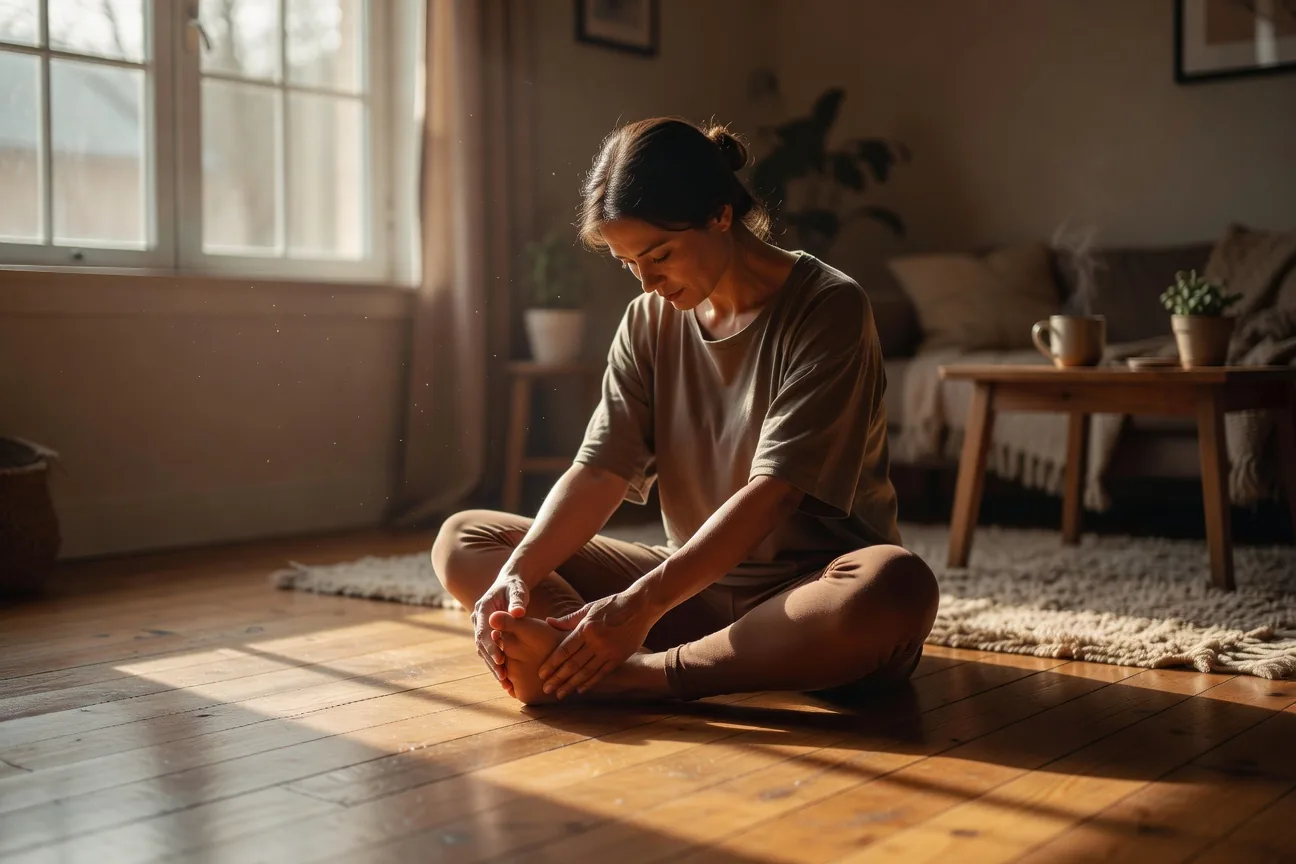
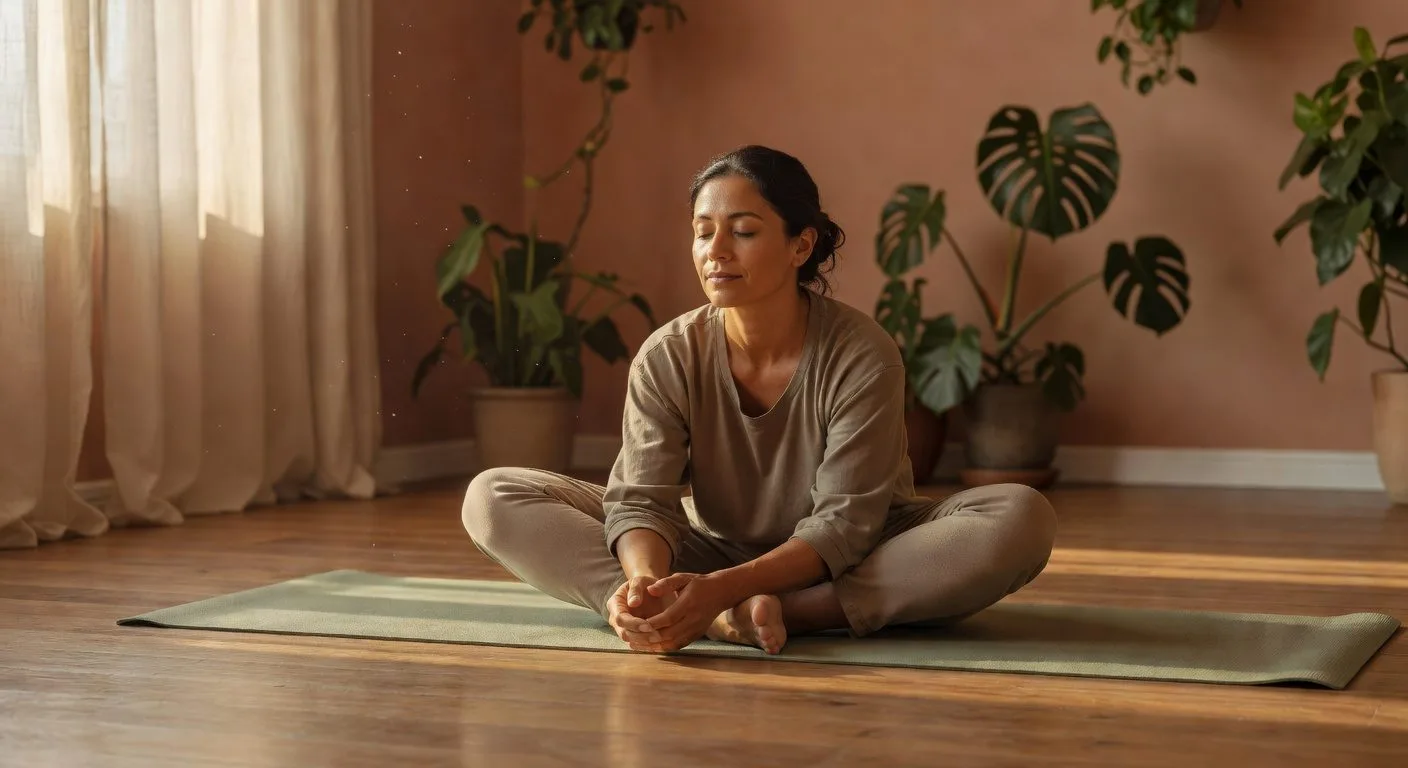
2. Butterfly Pose (Baddha Konasana, supported) — 4 minutes
Sit with the soles of your feet together. Place a cushion under each knee, fold forward over a bolster or thick pillow. This is where many people feel emotional — hips are one of the primary storage sites for tension. Let it come. You don't need to resolve it. Just being with it is enough. Want to understand more about how fascia holds and releases emotions? Read our blog on yin yoga, fascia and emotional release.
3. Dragon Pose (low lunge, Yin-style) — 4 minutes (2 per side)
Low lunge with your back knee on the mat. Hands on a block or cushion. Keep your hips low and breathe into the hip flexor. This stretches the iliopsoas — the muscle directly connected to our fight-flight response. If you feel trembling here, that's good. That's tension releasing.
4. Sphinx Pose (Salamba Bhujangasana) — 4 minutes
Lie on your belly, forearms on the mat, shoulders far away from your ears. This gentle backbend opens your chest and stimulates the vagus nerve through soft belly pressure. Within one to two minutes, you'll feel your breathing deepen. That's your nervous system switching gears.
5. Savasana with bolster under knees — 4 minutes
This isn't a cooldown. This is where integration happens. Lie on your back, bolster under your knees, blanket over your belly, eye pillow optional. Your body processes the release from the previous poses and lands in parasympathetic state. This is the moment you feel: "Oh. This is what rest feels like."
Pro-tip: Lengthen your exhale to 5-7 seconds. That doubles the vagal effect. And use your props actively — yin isn't stretching, it's supported "being present." The more support you give yourself, the deeper the release.
Science-Backed: What the Research Shows
This isn't just a feeling. It's measurable. And that matters, because plenty of people say: "Yoga, isn't that a bit woo-woo?" No. Yin yoga works on your nervous system, and you can measure it.
A randomized controlled trial of 48 women during COVID-19 showed that yin yoga significantly reduces state anxiety — not after weeks of practice, but immediately after each session. Every time you get on your mat, something measurable happens in your body.
And the systematic review by Schleinzer et al. (2024) confirms this on a larger scale: across 13 RCTs and over a thousand participants, yoga shows a significant effect on perceived stress, especially in people who are already stressed. Exactly the group that needs it most.
Yin Yoga vs. Other Stress Interventions
Not every method works for everyone. Here's a comparison of the most common stress-reduction approaches:
| Method | Time Investment | Cognitive Effort | Immediate Effect |
|---|---|---|---|
| Yin yoga (20 min) | 20 minutes | Low — lie down and breathe | Yes — measurable parasympathetic shift |
| Meditation | 10-30 minutes | High — focus required | Often after weeks |
| Breathing exercises | 5-15 minutes | Medium — counting/ratios | Yes, but less deep release |
| Walking | 30+ minutes | Low | Medium — depends on pace |
| Progressive relaxation | 15-20 minutes | Medium — following sequences | Yes — muscle groups |
What makes yin yoga unique is the combination of low cognitive effort and deep physical release. You don't need to think, count, or visualize. You just need to lie down and breathe. And when you have a busy mind — and let's be honest, with stress you always have a busy mind — that's exactly what you need.
Read our in-depth guide on yin yoga and breathwork: what science says for more background on the biological mechanisms at work.
How Often Should You Practice?
Research suggests two to three times per week for sustained stress reduction. But even once a week shows a measurable effect. The key isn't duration — it's consistency.
Three times twenty minutes per week. That's one hour. Less time than a single episode of a series. And the difference between "surviving" and "living" might live in that one hour.
Start small. Fifteen minutes if twenty feels like too much. Even ten minutes in supported child's pose on a stressful workday does more than nothing. And if you want to go deeper, check out our 7 vagus nerve stimulation exercises — they pair perfectly with yin yoga.
What If 20 Minutes Isn't Enough?
Sometimes twenty minutes isn't enough. Sometimes you need a whole week. A week where your body gets the time to not just reset, but truly recover. To breathe deeply. To release tension and trauma that's been stored for years.
That's exactly what a retreat does. Not a vacation — an intentional pause where your nervous system gets the space to shift from "surviving" to "thriving." And if you prefer one-on-one work, breathwork coaching is a powerful path to reach deeper layers of stress and tension through the breath.
Whatever you choose — twenty minutes on your mat, a week at a retreat, or a session with a coach — the most important thing is that you start. Not tomorrow. Not when things calm down. Now. Because your nervous system isn't waiting until you have time.
Key Takeaways
- Yin yoga activates your parasympathetic nervous system — measurably, proven, immediately after each session
- Twenty minutes is the sweet spot: long enough for a shift, short enough to sustain on a stressful day
- You don't need to empty your mind — you lie in a pose, you breathe, your body does the work
- The 5-pose routine (Child's Pose, Butterfly, Dragon, Sphinx, Savasana) is a complete reset in 20 minutes
- Consistency beats intensity: 3×20 min per week is more effective than 1×60 min per month
- Yin yoga works through vagal stimulation and fascia release — it's not placebo, it's biology
Ready to experience what yin yoga can do for your nervous system? Try a free yin yoga session and feel it for yourself. Twenty minutes. That's all you need to begin.