Yesterday I turned 50 — and somewhere between the cake and the silence, something clicked that tilts our life. What I discovered is not only about us: nomadic living is an invitation to anyone who feels the familiar has become too small. This is the story of how stepping out of your comfort zone literally rewires your brain — and your life.
A year and a half in a cocoon
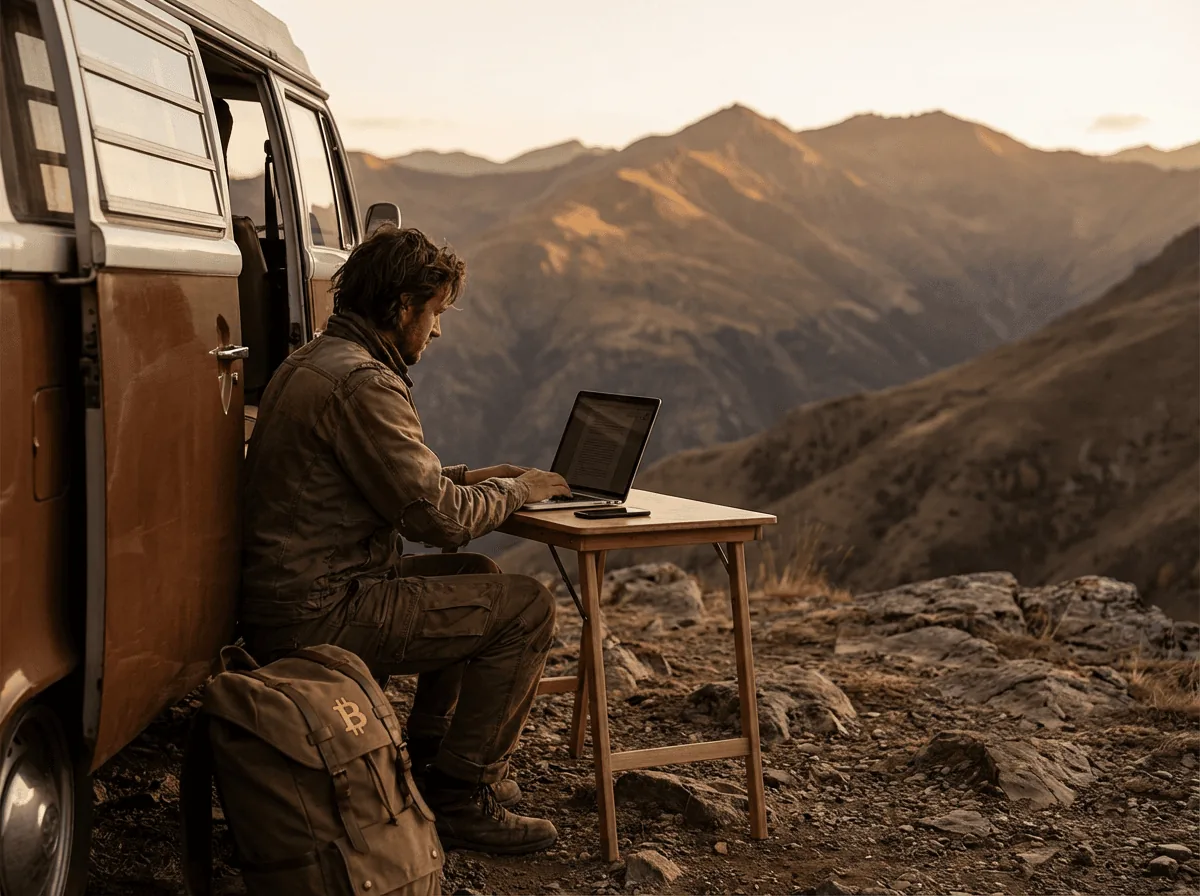
For the past year and a half, Tessa and I travelled through Europe in our camper. From the rugged coasts of Portugal to the peaceful lakes of Slovenia, from the mountains of Switzerland to the olive groves of Greece. Beautiful. And still: we were in a cocoon.
A period of hibernation, searching for our new direction without realising it. We gave online sessions, helped people with relationships and addictions, but something was missing. A deeper layer. Screens turned out to be a boundary — not a channel.
"Sometimes you have to get lost first to find yourself. Our cocoon wasn't stagnation — it was preparation."
The butterfly breaks out
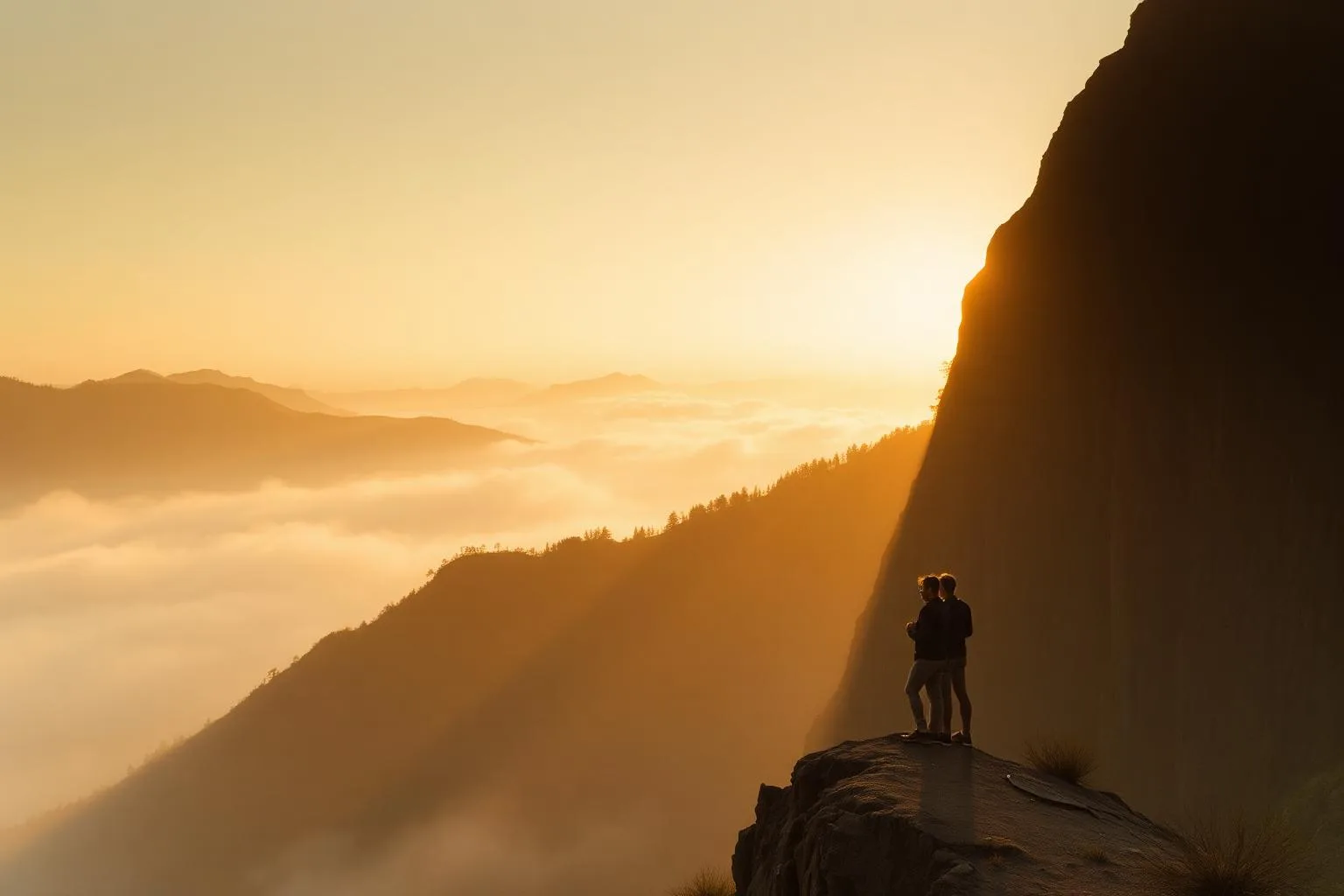
On my 50th, everything fell into place. The camper is for sale. Not because we're stopping travelling — quite the opposite. We're going truly nomadic. The whole world. We'll probably start in India, where spirituality and daily life flow into each other seamlessly.
And the best part? You can come with us. This is not a retreat for a week and back home. This is an invitation to live, breathe and grow together — outside your familiar reference points.
What is nomadic travel with us?
- What is nomadic travel with us?
- Nomadic travel with us means days or weeks living inside our rhythm — with breathwork, yin yoga, and coaching in daily life, not in a one-hour weekly slot. Nomadic living as guidance means immersion: a new environment, ongoing presence, and transformation outside your familiar walls.
No one-hour session per week. No Zoom call from your familiar living room. But days, sometimes weeks, moving together inside our rhythm. You're not a client, not a guest — you become temporarily part of our daily life, with guidance that arrives whenever life itself arrives.
In practice that means: breathwork and yin yoga as morning anchors, coaching moments that surface during a walk or dinner, and long silences where your nervous system can finally drop. Prefer to build an online foundation first? Start with our 30-day challenge before you travel.
How it differs from traditional coaching
- No artificial session setting, but real life moments as material.
- Continuous guidance instead of weekly hours.
- Breathwork, yoga and coaching integrated into daily routines.
- A new environment that forces old patterns to soften.
- Transformation at a cellular level through total immersion.
Why a new environment works: the science
- What is neuroplasticity in new environments?
- Neuroplasticity is your nervous system’s ability to form new connections based on experience. In new environments — scents, rhythms, stimuli — the brain must be alert again; that makes change more neurologically available than in the same living room.
The power of nomadic living lies in one principle: you are completely removed from your normal grooves. At home we get stuck in patterns. The same routines, the same triggers, the same walls — literally and figuratively. Your brain knows every corner of your house, every route to work, every reaction of your partner.
Once you step into a completely new environment — new scents, sounds, rhythms — your brain has to be alert again. This phenomenon is called neuroplasticity: the ability of your nervous system to form new connections based on experience.
Research by Wittmann et al. (2007) in Neuron shows that new, unfamiliar stimuli measurably release more dopamine in the hippocampus — precisely the area where new memories and learning patterns are consolidated. Translation: travel is not a luxury for your psyche. It is fuel for change.
Your defense mechanisms soften
What we see in practice: when your familiar environment falls away, so do the defense mechanisms you built there. Your mind grows quieter. Your heart gets room to speak. Emotions that stayed below the surface at home rise up — exactly what is needed to truly come home in your own body.
"You can't stay the same person in a completely new environment. Change becomes inevitable."
What you can concretely expect
Every day is different, but there are steady anchors:
- Daily breathwork and yoga with Tessa — starting every morning with connected breath and movement opens your body for what may come.
- Personal coaching at natural moments — no agenda blocks, but depth during a walk, while cooking, or under the stars.
- Living, eating and exploring together — you are part of our rhythm, not a spectator.
- Space for silence and integration — not every moment is filled. Time to be, to process, to just watch the sunset.
- Transformation you take home — no vacation effect that fades, but changes that have landed in your nervous system.
Who this is for — and who not
Nomadic travel with us asks for courage and openness. It's for you if:
- You feel your life isn't right and you want to know why.
- Online sessions don't go deep enough for what you need.
- You're ready for a radical reset.
- You're willing to look differently at yourself and your relationships.
- You want to feel what it really means to live.
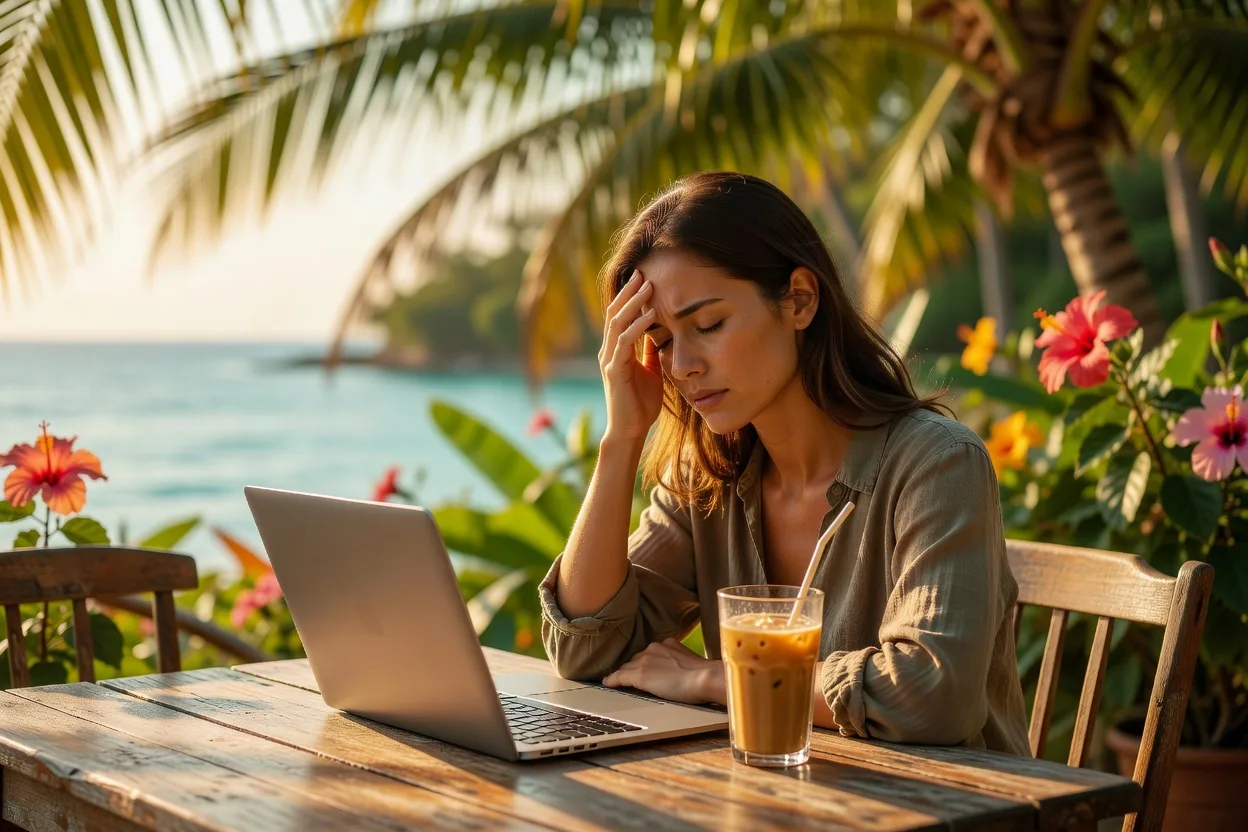
It is not a fit during acute psychiatric crisis without professional care, when physical resilience is lacking, or when you mostly want vacation. Read our honest inventory of digital nomad burnout warning signs before you leave — nomadic living is not automatically healthy.
The shadow side of nomadic living — honestly
- What is digital nomad living in this context?
- Digital nomad living means working and travelling without a fixed home base — often online. In this context the digital nomad is not a lifestyle hype: travelling with us asks for anchors, intention, and honesty about burnout signals, or nomadic living becomes escape.
We've seen enough travellers use the spiritual travel story to run away. From patterns, responsibilities, or themselves. Meta-analysis on social isolation and mortality (Holt-Lunstad et al., 2015) shows that becoming disconnected is as harmful as obesity or smoking. Nomadic life without an anchor becomes escape behaviour.
That's why we work in blocks, with clear intention, and with a return moment. And why in the intake we also discuss the fear that hides beneath the drive for freedom — because one rarely comes without the other.
Why India as our second destination
India is not a random starting point. Thailand was our first destination, where we learned the nomadic rhythm and took the first steps of the new Spiriators path. Now India is calling — one of the few countries where spirituality isn't a separate compartment but woven into daily existence, from morning rituals by the river to the way people greet each other with "namaste". For anyone used to the Western split between "work" and "inner life", that's a shock through which transformation quietly seeps.
Extra benefit: the contrast is big enough to genuinely recalibrate your nervous system. Sounds, colours, scents, pace — everything is different. Precisely that makes the mental scripts you held at home stop working temporarily. You have to feel again what rest is, what overstimulation is, what connection is. Uncomfortable and freeing at the same time.
We consciously don't pick the classic ashram format. No rigid daily schedule, no dogma, no mandatory silence. Instead: daily breath coaching, yin yoga at sunrise, and long conversations over chai. India as teacher — not as monastery.
Practical: what a day looks like
An average travel day starts with 45 minutes of breathwork and movement, followed by a slow breakfast with the group. Mornings are for depth (coaching, a temple visit, a walk with a prompt). Afternoons are open — for rest, journaling, or simply doing nothing, which for most people is already the hardest exercise. In the evenings we cook together, share what surfaced that day, and close with a short meditation or silent walk.
What you take home
The biggest fear we hear: "sounds great, but what if the effect fades the moment I'm back home?" Fair question. Research on habit formation and context-dependence (Wood & Rünger, 2016) shows that 45% of our daily behaviour is automatic and strongly linked to our physical environment. That's exactly why a single retreat often doesn't stick.
Traveling with us works differently because for two to four weeks you can't use your autopilot. New patterns get time to encode neurologically before you return. And because we work with an explicit re-entry track — two online integration sessions in the weeks after you come home — you get a bridge instead of a cliff.
What people concretely take home: a daily breath routine that happens by itself, a lighter nervous system that recovers faster from stress, clarity about which early signs of exhaustion they were ignoring at home, often a concrete decision about a relationship or work choice, and sometimes — for those seeking it — the first step toward their own nomadic entrepreneurship.
"You don't come back as someone else. You come back as a fuller version of who you always were."
This is just the beginning
I write this with excitement and gratitude. 50 years. A year and a half of cocoon. And now this. The butterfly is out of the cocoon — and he invites you to fly along.
Where are we going? Thailand opened the door, India is calling now, and the universe may have more plans. And that is exactly the point of nomadic living: you follow the flow, you trust the process, you embrace the unknown.
If this resonates — if you feel this might be for you — I invite you for a conversation. No sales pitch, but a real meeting. To feel if there's a click, if our energies match, if this could be your next step.
— Johannes