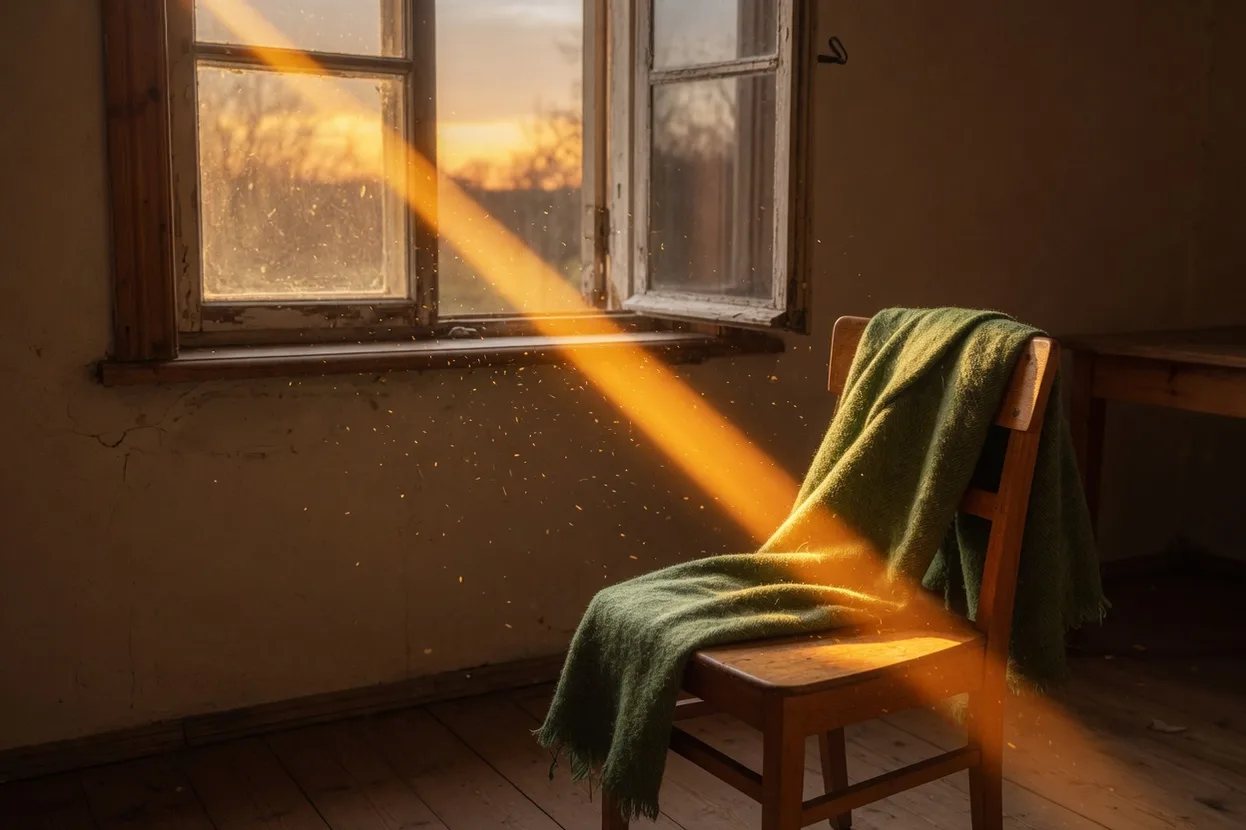
The window is half open. The light is too sharp for the chair sitting under it.
You pull the blanket higher. Not because you are cold. Because the late-afternoon gold pricks your skin as if someone turned the dimmer the wrong way. Outside it is an ordinary day. Inside everything is too much. Too bright. Too meaningful. Too little room to land.
Spiritual awakening gets sold as light, love and euphoria. In practice it can feel like overstimulation, fatigue, headache and an identity crumbling while you still have groceries to buy.
I am not writing this as a promise. I am writing it as a guide. People walk in with shine in their eyes and sand in their nerves. They have a retreat behind them, or a week of intense breathwork, or a night when something larger looked back. And now the light hurts.
Yesterday I stood in that strip of sun myself. The floor was warm. My coffee was already cold. I thought: this is exactly what people describe. They call it awakening. I call it dose. Same body. Different words.
What spiritual awakening does to your nervous system
Spiritual awakening is a period when your self-image, senses and nervous system shift faster than your identity can hold.
- Spiritual awakening
- Spiritual awakening is a period when your self-image, senses and nervous system shift faster than your identity can hold. Light, meaning and connection can increase while fatigue, overstimulation and old patterns rise at the same time.
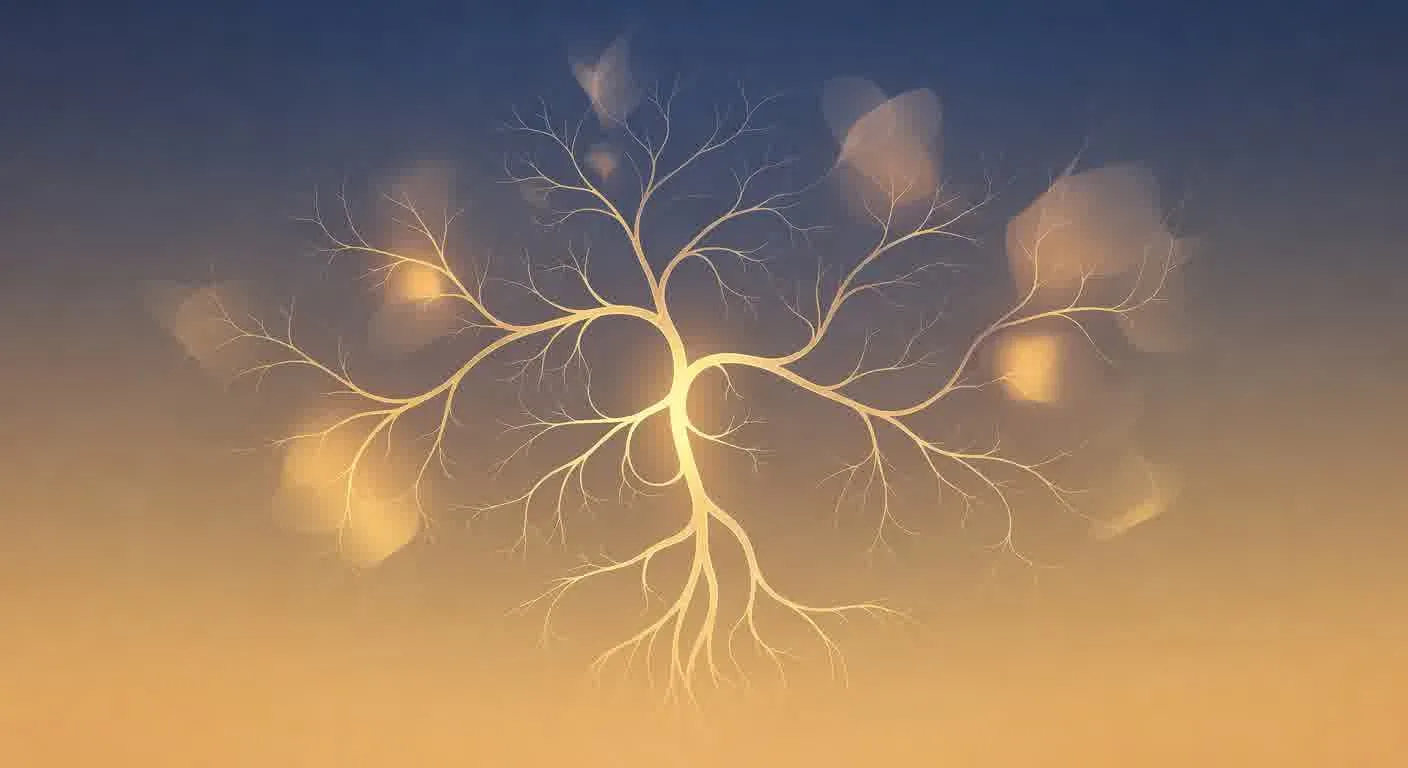
The body does not treat that peak as poetry. It treats it as dose. Too much input. Too little container. Your heart rate climbs for no clear reason. Sound turns sharp. A kitchen conversation feels like a concert hall.
That is not proof you are broken. It is a nervous system taking in more light than it can turn into rest. If you know a little polyvagal theory, you recognise the switch: from safe contact into fight or flight, or into that quiet collapse where you feel nothing.
Johannes said it last week, while we closed the windows against midday sun on Karimunjawa: the light is not the problem. The room is too small. Exactly that. People then book another workshop. Another breath session. As if more voltage repairs the fuse.
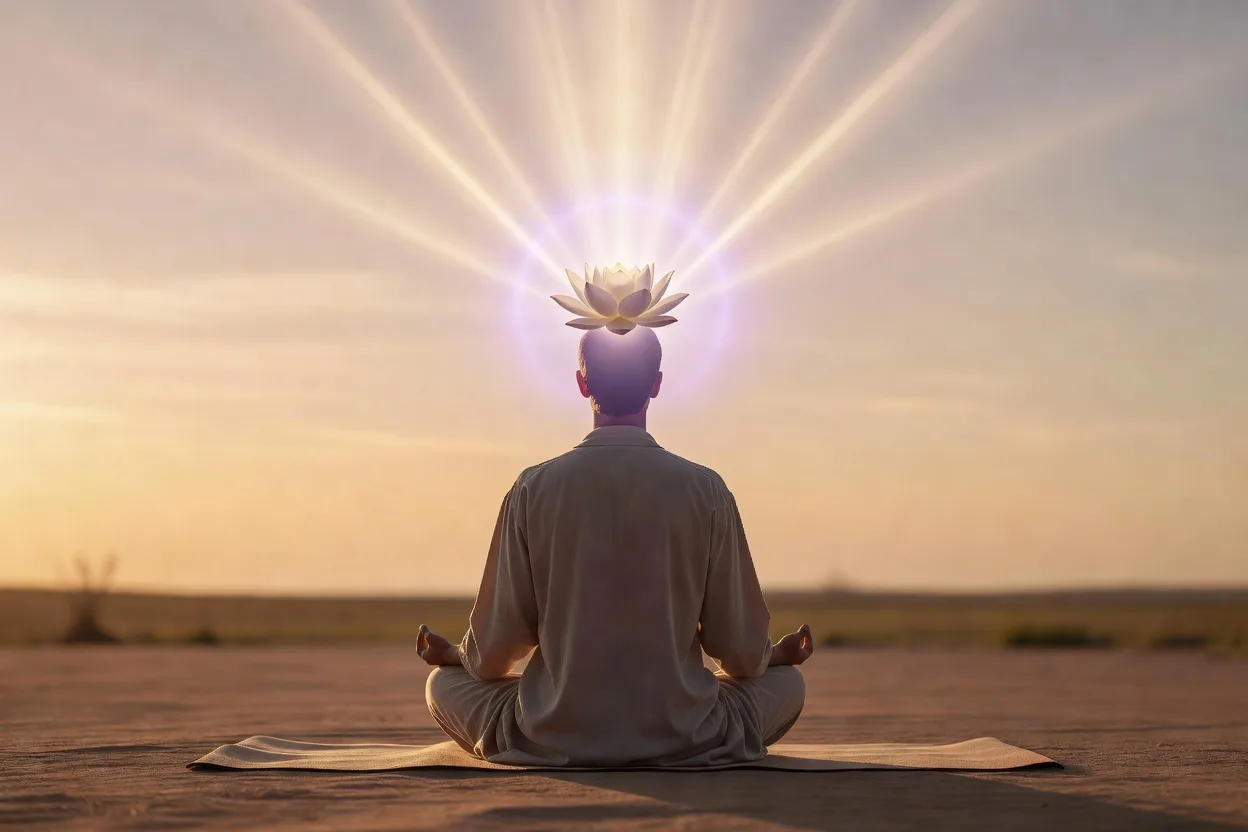
The crown chakra often gets described as a gate in this phase. Fine as an image. In the body it feels more like a skull gone too thin for the weather. You want to open. Your system asks for thickness. Wall. Weight.
Sometimes the peak comes after silence. Sometimes after a fight. Sometimes after a week when you finally felt what you had packed away for years. The story around it may be large. The breath stays short. That contrast scares people. Fear of doing it wrong. Fear of going mad. Fear that if they stop practising, the light will leave.
The light rarely leaves because you skip a day of meditation. What does leave when you have no floor: sleep, appetite, humour, the ability to answer a message without crying.

When light becomes painful in the body
A spiritual crisis is awakening that floods daily functioning.
I notice it first in small things. Someone eats only fruit for three days because solid food feels too coarse. Someone sleeps two hours, wakes in tears, and calls it a breakthrough. Someone cannot stand the fan. The fabric of a T-shirt. The tap of a spoon.
Physical: fatigue that coffee does not touch. Headache behind the eyes. Heat waves. Trembling in hands or jaw. Digestion that stalls. Palpitations the GP cannot explain. Emotional: crying in the supermarket. Emptiness after a moment of clarity. Anger that fits no story. Mental: your name still fits. Your story does not.
| Layer | What you notice | What the body asks |
|---|---|---|
| Physical | Fatigue, headache, heat, trembling, light sensitivity | Less input, more weight, protect sleep |
| Emotional | Crying, emptiness, anger, waves without a plot | A witness, no extra opening, no analysis marathon |
| Mental | Identity loosens, meaning shifts, old roles crack | Simple facts: eaten, slept, saw someone |
Kundalini-like phenomena are often more bodily than a quiet mystical peak. Heat along the spine. Trembling. Pressure in the head. People google until three in the morning. The body does not want an encyclopaedia. It wants a floor.
Always rule out heart, thyroid or infection medically before you name everything spiritual. That is not disbelief. That is respect for the body that has to carry the light.
I once watched someone book three retreats in a row because the first did not feel "deep enough". After the third she could not walk into her own kitchen. Too many tiles. Too much echo. We did not add another exercise. We made soup. Pan, onion, time. Her nervous system dropped only when something heavy sat in her hands.
Integration or crisis: the room or the flood
Integration means you eat, you sleep at least a little, you keep an appointment, and you know the neighbour may see the world differently. Crisis means that drops. No sleep. Paranoia. Voices that give orders. No longer able to care for yourself.
- Spiritual crisis
- A spiritual crisis is awakening that floods daily functioning: sleep, work, relationships or reality testing fall away. It is not proof you are broken. It is a signal that the nervous system needs guidance and grounding instead of more intensity.
Research on adverse effects of meditation shows a wide range: many people notice unpleasant side effects, a smaller share gets real functional harm. The range is wide because studies measure differently. It does not prove that your peak is an illness. It does prove that sitting still is not automatically gentle.
In recovery stories, awakening sometimes shows up as a turning point: more hope, more self-trust, less walking away. A study among people in 12-step aftercare saw that link. Limitation: that is a specific group, not proof for every night vision on a yoga mat.
Then the existential dip before it. Identity falling away. Hopelessness. As if the old story is already dead and the new one has no chair yet. Qualitative research among former substance users describes that darkness before a spiritual turning point. Not an RCT. Not a universal law. A recognisable rhythm: first the empty room, then the window.
If you are unsure, seek medical and grounded spiritual support. Not only one of those. And not another retreat if you already cannot eat. Read how the nervous system stores memory in the body if you need a map. Awakening often touches the same layer as old survival.
Pro-tip: Track three facts for two days: eaten, slept, spoke with someone. If both days stay empty, this is not a spiritual test. This is a moment for extra support.
Doubt here is not weakness. Doubt is a reality check. If someone close says you have changed and you can still hear that sentence without the world tilting, you are probably still in integration. If every sound becomes an order, the room is underwater.
Grounding spiral: dose down, container up
What helps when the light is too bright? Less intensity. More room. Short grounding: feet, heaviness, slow exhale, yin yoga or lying down instead of extra breathwork. Stopping is not failure. It is dose.
If your breath stays high and fast, try the free breath check. Not to prove you have awakened. To see whether your system still has a rhythm.
- Stop the dose. Cut extra meditation, extra breath sessions and workshops for 48 hours. Notice whether sleep and appetite return.
- Feet anchor. Three minutes. Heels, toes, floor. Five slow exhales. Stop if dizziness increases.
- Shadow chair. Ten minutes in a dimmer corner. Not in the window. Let the nervous system meet less input.
- Yin container. One lying pose, three to five minutes, blanket on top. No deep stretch. The goal is weight, not opening.
- Reality check. Three facts from today. Two empty days? Seek 1:1 support, medical or through breathwork coaching.
Pro-tip: If you are already flooded, a deep connected breath is extra voltage. Choose lying down, a blanket, a short exhale. A timer can join: the free breathing timer on a low, slow setting, not a peak protocol.
Sometimes sixty minutes of guidance is enough to turn the dimmer down. Sometimes a thirty-minute conversation via contact is the reality check you no longer dare to run alone. If this lands, you do not need to make the light harder. You may make the room larger.
I say this to people who fear that grounding will push them "back" into their old life. Grounding does not push you anywhere. It gives you a chair. From a chair you can still look at the window. You just stop falling out of it.
Key takeaways
- Spiritual awakening can hurt because the nervous system overshoots while an old identity falls away.
- Pain, fatigue and emotional spikes can belong to breakthrough, not automatically to illness.
- Integration keeps eating, sleeping and reality testing more or less intact. Crisis floods functioning.
- Rule out medical causes before you name everything spiritual.
- Help is lowering the dose: feet, shade, yin as container, not another workshop.
- Two empty days without sleep, food or contact is a signal to seek support, not to practise harder.
The window can stay open. The blanket can stay too. Light that hurts does not ask for harder faith. It asks for a chair that can hold the weight.