Breath · Presence · Psychology · Yin Yoga
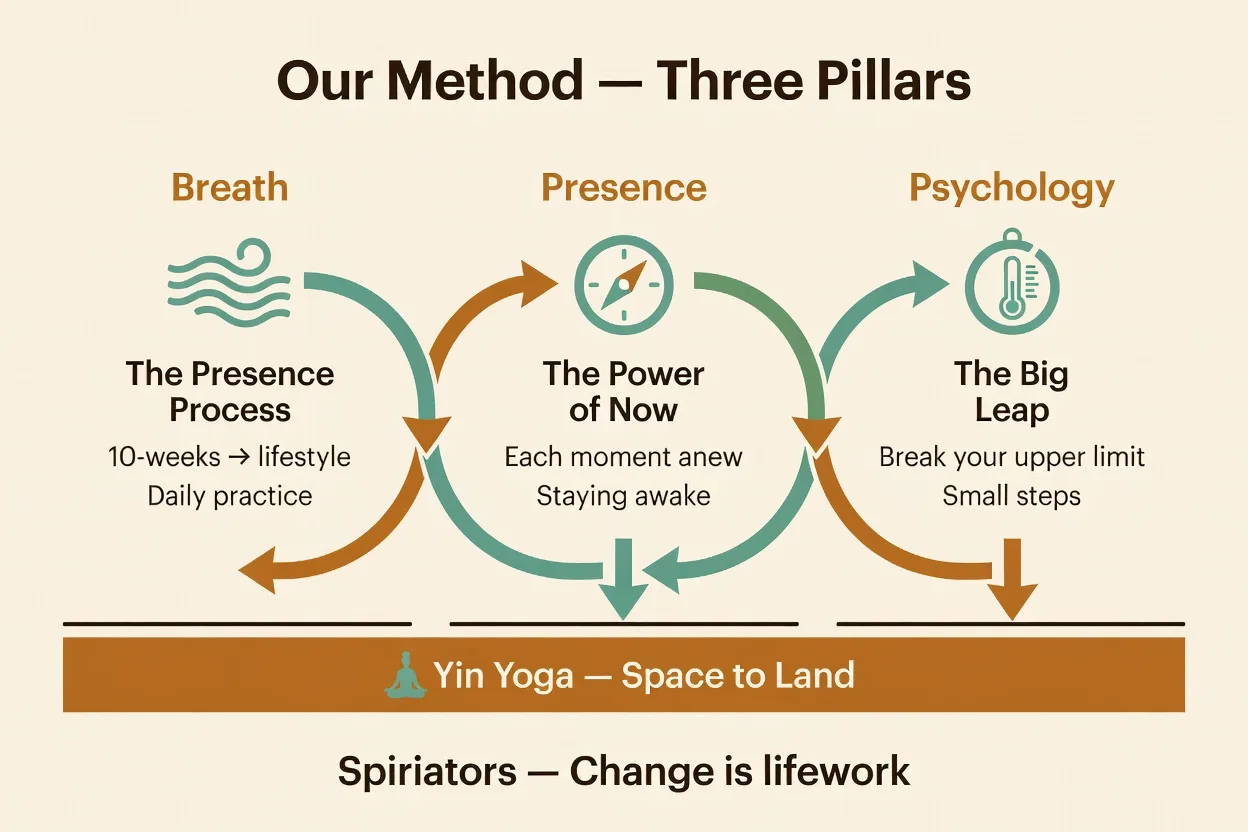
Our Method: Breath as Practice, Presence as Compass, Psychology as Insight
First week: ten minutes of breathing, a small rhythm, no programme. Most notice within 2–4 weeks more calm, less reactivity, better sleep. Depth comes after: breath, presence and psychology — with yin as support. The books sit lower, as framework, not lesson one.
What do you notice in the first weeks?
Today ten minutes of breathing, this week a rhythm. Most notice within 2–4 weeks more calm, less reactivity, better sleep. The method itself: breath, presence and pattern-insight — with yin as support. Not a one-off programme you tick off.
Quieter page?
Table of contents
How to start tomorrow
You don't need to finish reading the three pillars first. Breath is the door — start there. Presence and insight follow once your body joins in. Most notice within 2–4 weeks more calm, less reactivity, better sleep.
- 01
Today: 10 minutes of breathing
Open the free breathing timer and choose connected breathing. No setup, no account — just start.
- 02
This week: build a rhythm
Follow the 21-day breathwork schedule — small, progressive, at home. Consistency over intensity.
- 03
When you want to go deeper: guidance
Start with the free Breath Check quiz (2 min) to discover your breathing style, book a no-pressure intro call, or go straight to breathwork coaching. No pressure — only when your body already says yes.
At Spiriators
In practice: 1:1 breathwork with Johannes or yin with Tessa (€60), or co-travel with us. The books (Presence Process, Tolle, Big Leap) are inspiration, not dogma and not a medical protocol. Coaching and yoga do not replace therapy or a doctor — for acute care we refer on.
Book the intro call →The Philosophy — Change is Lifework
Lasting change rarely comes from one session, one weekend, or one resolution. Deep support asks for a way of practicing — no quick fixes, no "30 days to a new you". At Spiriators, we work with three pillars that you don't apply once, but that you live. Day in, day out. Not because you have to, but because it can deepen.
We start from a simple but profound stance: you are already whole — that's how we see it. It's not about fixing, but about remembering what is already there: making space for what lies beneath the noise, the stress, and the old patterns. That's the foundation of how we work and live: not as perfect examples, but as people who practice daily, sometimes fail, and then begin again. Coaching and practice — not therapy, not treatment.
Our coaching method builds on three pillars: breath as daily practice (Michael Brown's The Presence Process), presence as compass (Eckhart Tolle's The Power of Now), and psychology as insight (Gay Hendricks' The Big Leap). Three books, three teachers, one thread: depth comes from living it, not knowing it. You can read The Presence Process and understand it, but if you don't breathe daily, nothing changes. You can summarize The Power of Now, but if you don't practice seeing through your ego, it remains theory. You can name your upper limit problem, but if you don't dare to stay when it feels good, you keep sinking back.
Yin yoga plays a supporting role here. Sometimes you need silence to hear what the breath opens. Sometimes you need long holds to feel where tension sits that your mind can't name. Yin isn't a main pillar — it's the space where the other three can land. Tessa's yin yoga classes and our nomadic retreats use yin not as a "bonus", but as a vessel: the place where the work of the three pillars can settle.
Breath
Daily practice, not a crisis tool
Presence
Your compass in the now
Psychology
Insight into your patterns
Yin Yoga
Silence to land
Breath as Lifestyle — The Presence Process
Michael Brown's The Presence Process isn't a book you read and put away. For us it's a blueprint for a way of breathing that can support and deepen your life — not because it's magical, but because it's consistent. The 10-week process Brown describes is not a course you finish with a certificate. It's the beginning of a new practice style.
Here's how it works: over 10 weeks, you practice daily with conscious connected breathing — a continuous rhythm of breathing in and out without pause. Each week has its own theme, its own layer. What begins as a physical exercise can slowly become a way of being. The breath can open doors your mind kept closed. Old emotions may move. What was stuck may flow — supportive, no guarantee of release.
But this is where it doesn't stop. After 10 weeks, you're not "done". The breath you practiced in those weeks becomes the breath you carry. The rhythm you built becomes your new normal. This is exactly the difference between a tool and a practice: a tool you pick up when needed, a practice you live. Connected breathing isn't a pill you take when stressed. It's a ritual you live.
- What is connected breathing?
- Connected breathing is a continuous breath without pause between inhale and exhale. Active inhale through the belly, passive exhale through relaxation. It invites the vagus nerve and can open access to tension or emotion that conscious thinking doesn't reach as quickly.
At Spiriators, we use connected breathing as our core practice. Not because it's the only form, but because it's one of the most direct paths to your nervous system. You can't direct your heartbeat. You can't control your digestion. You can direct your breath. Through that breath you can support heart rate, tension and emotional state — wellness, not medical treatment. This isn't esoteric — it touches psychophysiology.
In our own life, this practice is woven into our days. Twice a day — upon waking and before sleep — we take 10 to 15 minutes for connected breathing. Not as discipline, but as ritual. It's the moment the day begins and the moment the day lets go. What came up during the day is allowed to be. What was stuck is allowed to move. Sometimes it's quiet, sometimes it's intense. For us, it's almost always needed.
Want to start breathing yourself? Our free breathing timer helps you get started — with preset rhythms for connected breathing, right in your browser.
Connected breathing — also called rebirthing or circular breathing — invites the vagus nerve, can help release held tension, and research links it among other things to lower stress and mood symptoms Little (2025). Supportive, not a treatment claim for depression or PTSD. Science tells part of the story; the rest you feel when you practice.
Presence as Compass — The Power of Now
Eckhart Tolle's The Power of Now and A New Earth aren't spiritual self-help books. They're manuals for waking up. Presence — being in the now — isn't a concept to discuss. It's a way of life you choose anew every day. Not as achievement, but as reminder: am I here, or am I in my head?
Tolle's core message is radically simple: you are not your mind. The voice in your head that judges, compares, postpones, and fears — that's not you. That's your ego. And the ego isn't an enemy to fight, but a pattern to see through. The moment you see it, it loses its grip. The moment you're no longer it, space opens. That space, that's presence.
- What is the pain-body?
- The pain-body is the accumulation of old emotional pain that surfaces whenever it's triggered. It's not who you are — it's an energy field that moves through you when it's fed. Recognizing it is the beginning of breaking through.
Another core concept from Tolle is the pain-body: the accumulation of old emotional pain that surfaces whenever it's triggered. The pain-body isn't who you are — it's an energy field that moves through you when it's fed. Recognizing it is the beginning of breaking through. Not by analyzing it, but by seeing it without merging with it.
Mindfulness-based training — the scientific support under presence — often shows reduction of stress and burnout-related symptoms in meta-analyses Fend et al. (2025). In our coaching, we don't translate Tolle's teaching into theory — we translate it into practice. How do you stay present when your partner triggers you? How do you recognize the pain-body when it flares up, instead of going along with it? How do you stay in the now when stress increases? How do you recognize the ego's voice without fighting it? These are the questions we ask ourselves daily and bring into coaching — support, not a cure for burnout.
And here too: we're not perfect. We catch ourselves regularly back in our heads, reacting from ego again, going along with the judging voice. But that's exactly the practice — not preventing it, but noticing it. And when we catch ourselves, we can usually laugh about it. That laughter is presence. That noticing is presence. The breath that brings you back to the now is presence.
Presence isn't a destination. It's a compass. It doesn't point to "someday when I've achieved this" — it points to here, to now, to this breath. And the compass only works when you consult it. Daily. Moment by moment.
Experience It Yourself
Feeling helps more than reading
The three pillars we describe here aren't theory — they're a way of life we practice ourselves daily. Start breathing today, or schedule a no-obligation intro call. No sales pitch, no pressure.
"It wasn't about fixing. It was about coming back to what was already there."
— Spiriators cliënt
Psychology as Insight — The Big Leap
Gay Hendricks' The Big Leap introduces a term we actively use in our coaching: the upper limit problem. It's perhaps the most uncomfortable insight there is: you don't sabotage yourself when you fail, you sabotage yourself when things are going well.
Here's how it works: we all have an internal thermostat that determines how much success, love, happiness, and connection we allow ourselves. The moment we rise above that threshold, we feel discomfort. Not because something is wrong, but because it's unfamiliar. And so we unconsciously find ways to sink back to what's familiar — picking a fight, getting sick, doubting, procrastinating. That's the upper limit problem.
Breaking through your upper limit isn't "being brave once". It's restructuring your life. It's recognizing when you feel discomfort because things are going too well — and choosing to stay instead of sinking back. That sounds simple, but it may be the hardest thing there is. Because your upper limit feels like safety. Going back feels like home. Staying feels like getting lost.
Our research shows something remarkable: there are very few coaches actively using this term. That's no coincidence. The upper limit problem is uncomfortable because it confronts you with your own resistance to happiness, success, and depth. It's easier to work on "more self-confidence" or "better boundaries" — that stays within the familiar thermostat.
Research confirms what Hendricks describes: self-sabotage occurs precisely at the approach or attainment of success, not at failure Kim et al. (2019). In our coaching, we don't work on symptoms. We work on recognizing your upper limit — and daring to cross it, again and again, until it becomes the new normal. With small steps. Not “make a big leap” — that's exactly what triggers the upper limit problem. But: stay in the discomfort just a bit longer. Breathe through it. And notice you don't fall. That's how you raise the thermostat step by step.
- What is the upper limit problem?
- The upper limit problem is the internal thermostat that determines how much success, love, and happiness you allow yourself. The moment you rise above that threshold, you feel discomfort and unconsciously sabotage yourself to sink back to what's familiar.
Hendricks also introduces the concept of the Zone of Genius — the place where your unique talent and your deepest contribution meet. Most people live in their Zone of Competence (where you're good) or Zone of Excellence (where you excel), but avoid their Zone of Genius (where you're irreplaceable). Why? Because that zone lies beyond the upper limit. To get there, you have to move through the discomfort.
This isn't theory for us either. We recognize our own upper limit, notice when we shrink back, and bring ourselves forward with small steps. Sometimes an old pattern laughs around the corner. Sometimes it's scary. But the breath helps — you can't breathe through an upper limit and simultaneously sabotage yourself.
How the Three Pillars Come Together — as Lifestyle
Breath opens the door. Presence points the way. Psychology explains the blockage. Three pillars, one movement: depth.
In practice, it looks like this: you start with breath — the most direct entrance to your nervous system. Connected breathing opens what's stuck and brings you back to your body, out of identification with your thinking. Then comes presence — the art of staying in the now when it gets hard. Recognizing the ego's voice (Tolle), seeing the pain-body without merging with it, returning to what's here now. Then psychology — the insight into why you feel resistance when things are going well. Recognizing the upper limit problem (Hendricks) and raising the thermostat step by step.
This isn't a linear process — it's a spiral. Breath makes presence possible. Presence reveals that you are not your ego. That insight makes it possible to recognize your upper limit. And as you breathe through your upper limit, your presence deepens. They reinforce each other.
Yin yoga is the facilitator. Sometimes you need silence to hear what the breath opens. Sometimes you need long holds to feel where tension sits that your mind can't name. Yin isn't a main pillar — it's the space where the other three can land. In our nomadic retreats, yin yoga is therefore the daily counterpart to breathwork: where breath opens, yin lets it settle.
Our daily flow looks like this in practice: we begin the day with 10-15 minutes of connected breathing. That's the moment the day begins — not with a phone, not with a plan, but with breath. Throughout the day, we're continuously aware of our "voice" in our head, of our ego wanting to judge, compare, defend. We don't live the life of our ego — though it certainly doesn't always work. But when we catch ourselves, we can usually laugh about it. That laughter is presence. That's the practice. And when things go well — too well even — we recognize that discomfort as what it is: our upper limit coming up. We breathe through it. We stay. Step by step.
In the evening, before sleep, again 10-15 minutes of breath. Letting the day go. What came up is allowed to be. What was stuck is allowed to move. This isn't discipline — it's a ritual we need, like drinking water. And it carries through everything: when we recognize our upper limit problems, we can look at them with more calm. We raise them with small steps, always further up. Not through big leaps, but by staying in the discomfort — just a bit longer than yesterday.
This isn't a program you complete. It's a way of life that deepens. Not "10 weeks and done" — but 10 weeks as the beginning of a lifestyle that carries you when things get hard. The three pillars reinforce each other: breath makes presence possible, presence makes insight possible, insight makes breath deeper. It's a spiral going inward, not a line arriving somewhere.
Yin Yoga: space to land
Practically: start here
Tomorrow morning: 10 minutes on the breathing timer. This week: the 21-day schedule. Ready for guidance? Book the intro call or see the full path under How to start tomorrow.
Isn't this too woo-woo?
No. Breathing is the most grounded thing there is — you do it every second, consciously or unconsciously. Presence isn't woo-woo — it's being awake in your own life, noticing you were back in your head, and returning. Psychology isn't woo-woo — it's recognizing patterns you've been following for years without knowing it. There's nothing woo-woo about 15 minutes of breathing before sleep. Nothing woo-woo about noticing you were judging again and laughing about it. Nothing woo-woo about recognizing you sabotage yourself when things go well and deciding to stay. This isn't a spiritual ideal — it's daily practice. We don't promise spiritual breakthroughs. We don't promise 'transform your life in 30 days'. What we do say: if you practice these three pillars — daily, with small steps, without perfection — something changes for many people. Not because it's magical, but because consistency supports. No guarantee; an honest rhythm.
Read these first:
Frequently Asked Questions
Developed by
The people behind this method
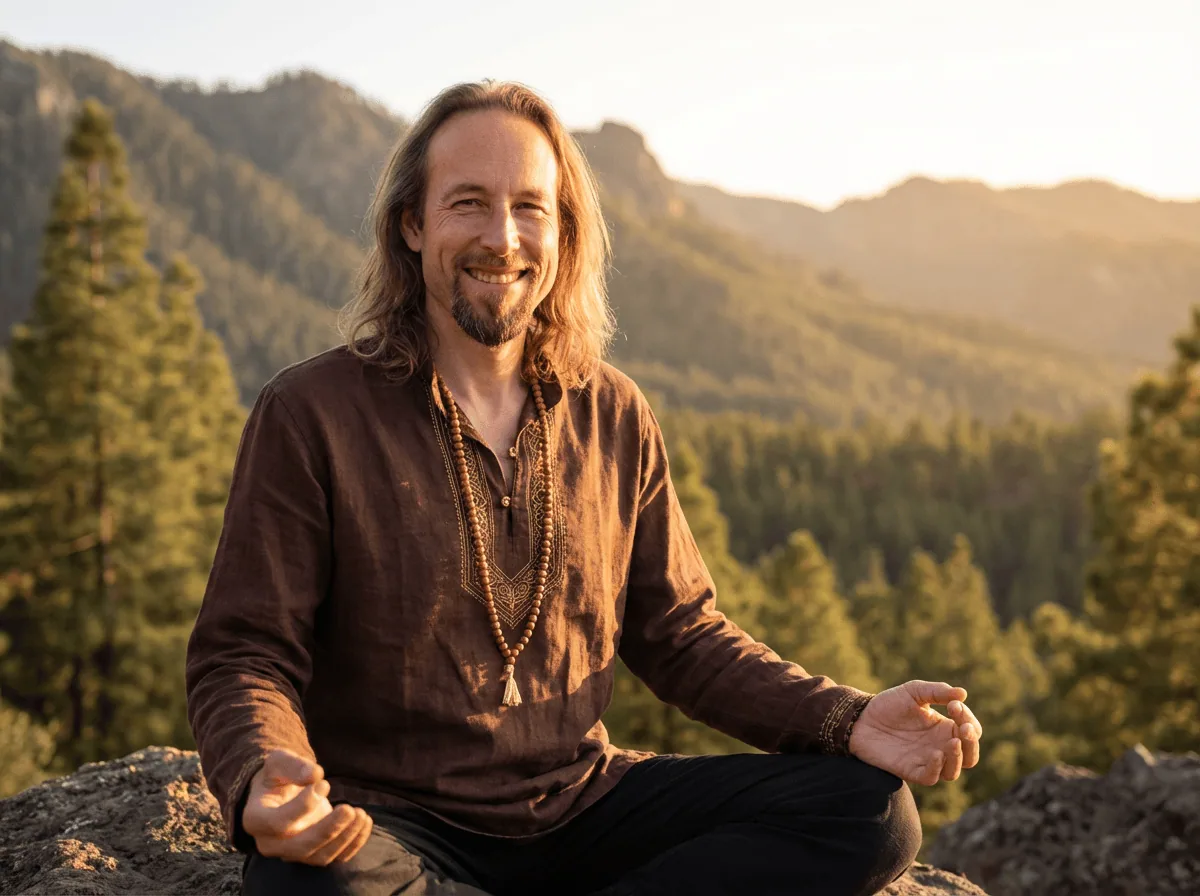
Johannes Huijbregts
Navy · Transformation coach 2016 · Breath coach 2021 · 1:1 €60
Johannes Huijbregts: navy officer → transformation coach → breath coach connected breathing. Online 1:1 breathwork €60, alongside care, not instead of it.
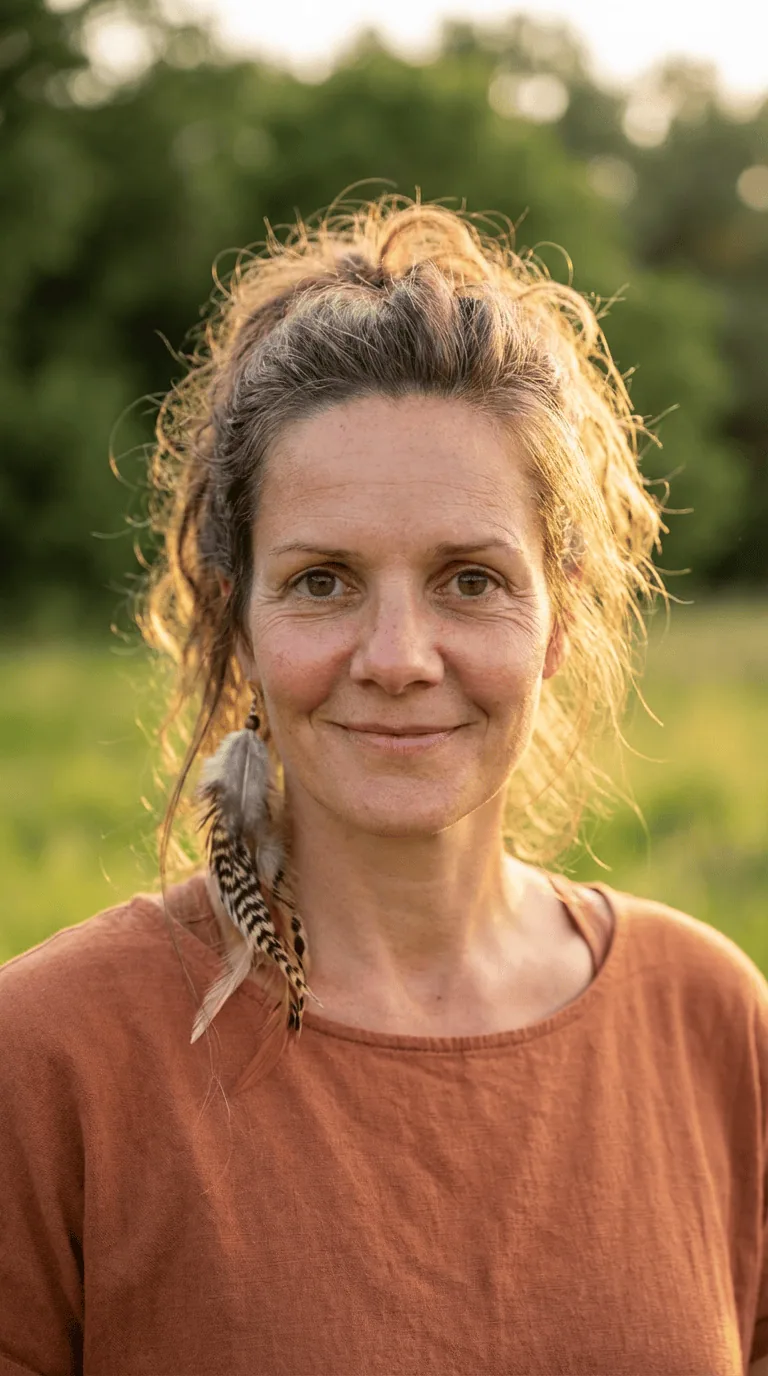
Tessa Frunt
Yin/Hatha/Vinyasa · ing. HBO Movement Technology · MRC Doorn · Adem en Stem · YinYoga.com
Tessa Frunt: Yin/Hatha/Vinyasa teacher and ing. in Movement Technology. Online yin 1:1 (€60): a full class or a focus on posture and ease. On YinYoga.com.
Sources & scientific authority
Michael Brown — The Presence Process: A Healing Journey into Present Moment Awareness (Namaste Publishing, 2009).
Eckhart Tolle — De Kracht van het Nu / The Power of Now (New World Library, 1997).
Eckhart Tolle — Een Nieuwe Aarde / A New Earth (Penguin, 2005).
Gay Hendricks — The Big Leap / Waag de Sprong (HarperOne, 2009).
Scientific evidence for breathwork: Little et al. (2025) — PubMed.
Meta-analysis mindfulness & stress: Fend et al. (2025) — PubMed.
Self-sabotage at success: Kim et al. (2019) — PubMed.
We only reference sources we have personally studied and that are relevant to the practice we teach.
Free Tools
Start today — no appointment needed
Free tools to start with breathwork and recovery right away. No account, no email needed.
Breathing Timer
Visual breathing timer with session goals and presets (Box Breathing, 4-7-8, Coherent breathing, Energize & more). Works offline.
Open the timer →Nomad Reset Calculator
Personal day-by-day plan for jet lag, sleep debt and screen stress. Includes breathing exercises.
Calculate your reset →Breathwork for Digital Nomads
Guide with 5 breathing exercises for jet lag, screen stress and on-the-road burnout.
Read the guide →Install as app
Add Spiriators to your home screen for fullscreen one-tap access.
Show me how →