
Breathwork · Digital nomads · On the road
Breathwork for Digital Nomads and Remote Workers
We've lived without a fixed address since 2022 — from Dharamshala to Karimunjawa. This is the guide we wished we'd had when we started: 5 breathing exercises against jet lag, screen stress and nomad burnout. Also suitable as breathwork for remote workers. Free timer included.
What is breathwork for digital nomads, in short?
On the road your rhythm shifts constantly: time zones, screens, poor sleep. Short breathing exercises (box breathing, 4-7-8, coherent breath) are location-independent and take 5–10 minutes — in a hostel or between calls. Practical support, not medical treatment.
Table of contents
At Spiriators
Here you find the exercises and explanations. Self-start with the free breathing timer or nomad-reset. For guidance: online 1:1 breathwork coaching with Johannes (€60) or nomadic co-travel with us — always check fit first, not a healthcare substitute.
Open the breathing timer →How are you feeling right now?
Pick what fits — we'll adjust the page. No right or wrong; choose ‘full experience’ for everything.
Your choice stays on this device for this visit (until you close the tab) — stored locally only.
Start today
You don't need to finish the whole guide first. Reset, feel the rhythm door, then take a real step.
- 01
Open the Nomad Reset Calculator
Just landed or burned out? Calculate a personal reset protocol in 30 seconds — jet lag, sleep, screen time.
- 02
Explore nomadic co-travel
Want rhythm with people? Travel with Tessa & Johannes — yin, breath and work on the road.
- 03
Book a free intro call
Ready for 1:1? Book a no-pressure intro call — online from any timezone.
Why Nomads Are Prone to Stress
The romantic image: laptop on a beach, coffee at sunrise, no boss. The reality: your nervous system is working overtime. Different timezones, different beds, different wifi, different languages — every change is a small alarm signal to your body.
- What is the circadian rhythm?
- The circadian rhythm is your internal 24-hour clock that steers sleep, cortisol and alertness via light and routine. Every timezone shift knocks that clock out of phase — breathwork doesn’t magically cure jet lag, but helps cortisol and vagal rest re-sync faster.
We noticed it ourselves after a year on the road. We slept fine, ate well, did yoga — yet felt chronically 'on'. A big factor: our breathing. Literally: shallow, high in the chest, often with unconscious pauses behind the screen. That doesn't have to be called burnout — it's often a nervous system that gets too little real rest.
Breathwork became our portable support. No mat needed, no cushion, no wifi. 2 minutes of Box Breathing in a plane seat often helps you land more than an hour scrolling Instagram. More context: our breathwork guide and the blog on early burnout warning signs.
5 Silent Stressors on the Road
Jet lag & timezone shifts
Every flight is a mini-shock to your circadian rhythm. Cortisol peaks at the wrong moment, melatonin falls out of phase. The result: 3 to 7 days of feeling like you're 'next to' your life.
Screen stress & shallow breathing
During deep work you average 5–8 shallow breaths per minute (instead of 12–16 relaxed). It's called 'email apnea' — you unconsciously hold your breath behind your laptop. Cumulative effect: chronic sympathetic activation.
No routine, no anchor
Different beds, different coffees, different wifi speeds. What was automatic at home (morning yoga, a regular walk) has to be reinvented on the road. Decision fatigue stacks up.
Loneliness in a crowded café
Coworkings are social, but shallow. Deep connection takes time — time you often don't have before flying to the next country. The body registers that as a chronic low-grade alarm state.
Poor sleep in unfamiliar rooms
The 'first night effect' (Tamaki et al., 2016): your left hemisphere sleeps lightly in a new environment — an evolutionary protective mechanism. With weekly moves, that becomes a chronic state.
- What is the first night effect?
- The first night effect is sleeping more lightly in a new environment — one hemisphere stays more alert as evolutionary protection. With frequent location changes (nomads) that becomes chronic; slow evening breath (like 4-7-8) still helps the system land.
5 Breathing Exercises for Nomads
1. Box Breathing (4-4-4-4) — before a call or flight
Inhale 4 sec, hold 4, exhale 4, hold empty 4. 3–5 minutes. Activates your parasympathetic nervous system invisibly — do it in a plane seat, before a client meeting, or in a tuktuk in traffic.
2. 4-7-8 — to fall asleep in a hostel
4 sec in (nose), 7 sec hold, 8 sec out (mouth). 4 cycles. The long exhale invites the vagus nerve and helps calm heart rate — often within a few minutes. Support for 'first night effect' in a new bed, not a sleep aid.
3. Coherence 5-5 — between meetings at a coworking
5 sec in, 5 sec out. 3 minutes. Helps heart, breath and attention into a calmer rhythm (HeartMath research on coherence). Practical reset between Zoom calls — invisible to others, often quickly felt by you.
- What is coherent breathing?
- Coherent breathing is an even rhythm (often ~5 seconds in, 5 seconds out, around 6 breaths per minute) that syncs heart, breath and brain. It’s a fast, invisible reset between calls — calming without intensive connected breathing.
4. Energizing breath (6-2-4) — when coffee is too much
6 sec strong inhale, 2 sec hold, 4 sec exhale. 2 minutes. Can support alertness without a caffeine crash. Ideal for short-sleep mornings or a 3pm jet-lag dip.
5. Connected breathing — weekly reset
Once a week, 20–45 min connected breathing (in and out without pause, through the mouth). Space to land what built up during a week of flying, screens and switching. Do this guided — not alone, not at an airport.
Try It Now — Free Timer
Pick a preset, hit start, follow the circle. Works offline — bookmark this page for the plane.
Heart coherence. Balance between sympathetic & parasympathetic.
Inhale
5
0:00 / 5:00
Breathing counter
0
completed rounds
Voice: Johannes — recorded cues, no AI
Before you start — please read this
Breathwork is powerful. Precisely for that reason: approach it with care. New to conscious breathing? Do your first sessions guided where possible — for example with a 1-on-1 breathwork coach or in the 30-Day Breath Challenge.
Feel light-headed, dizzy, tingling, nauseous or emotionally overwhelmed? Stop and return to normal nose breathing. Lie down or sit with support until it passes.
Not while driving, cycling or in water. Not recommended during pregnancy, epilepsy, serious heart conditions or recent surgery. When in doubt: consult your doctor. This tool does not replace medical advice.
A Daily Routine on the Road
Morning — 5 min after waking
Coherence 5-5 or Energize 6-2-4 (depending on how you feel). By a window, in sunlight if possible — combines circadian and breath reset.
Workday — Box Breathing every 90 min
Set a timer. 2 minutes Box 4-4-4-4 between focus blocks. Helps interrupt email apnea and pull your nervous system out of 'always on' for a moment.
Evening — 4-7-8 before sleep
In bed, after screens off. 4 cycles of 4-7-8. Often works within one cycle — especially useful in new environments where your body stays alert.
Total time investment: ~12 minutes per day. Many people notice more ease in sleep or mood within a few weeks — no hard per-person HRV guarantee.
When Technique Is No Longer Enough
Box Breathing and 4-7-8 are first aid. They regulate acute stress. But if you've felt for months that 'something is off' — a fatigue that won't lift, an emptiness between the beautiful photos, a restlessness that stays even in paradise — then technique isn't enough.
We see this often with nomads who reach out to us: the nomadic life is a powerful mirror. What you could hide at home (loneliness, relationship patterns, a feeling of 'living next to' yourself) surfaces hard on the road. No routine to hide behind. No friends to distract you.
Connected breathing (rebirthing) goes deeper than these 5 exercises. It discharges what has piled up — guided, in a safe setting. Online via 1:1 breathwork coaching from any country, or in-person during our nomadic retreats.
Deeper guidance
Book a free 30-minute introduction call with Johannes, or schedule a 1:1 breathwork coaching session directly (€60 / 60 min) — via video, from any timezone.
Ready for the next step?
Ready for a deeper reset on the road?
Technique helps acute stress. For deeper support with rhythm and overload: travel with us or book an intro — from any timezone.
"Lovely, kind people. They listen well and are honest even when it's not what you want to hear."
— Kayleigh Huijbregts
Deepen your knowledge — for the road
Practical guides on breathing, the nervous system and nomad life — written from lived experience:
Frequently Asked Questions
Guided by
The people behind this guide
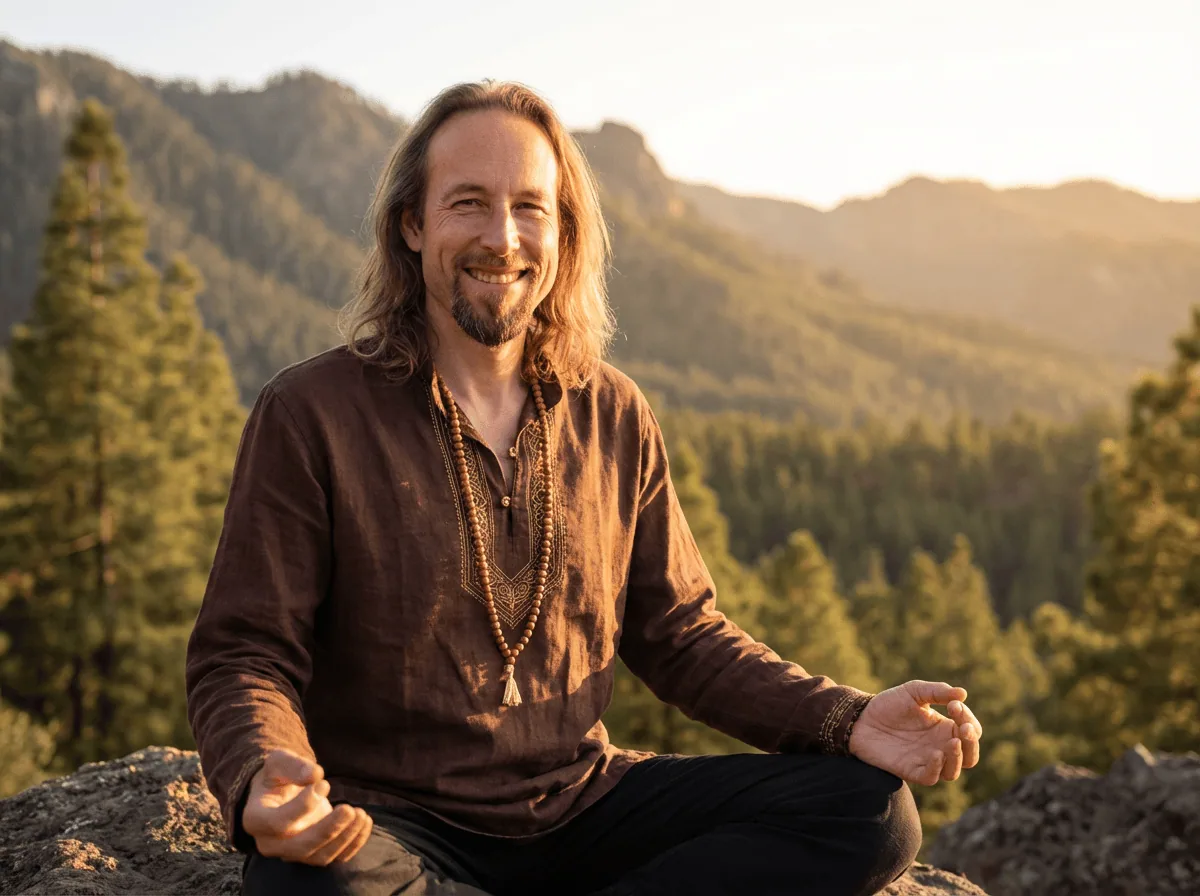
Johannes Huijbregts
Navy · Transformation coach 2016 · Breath coach 2021 · 1:1 €60
Johannes Huijbregts: navy officer → transformation coach → breath coach connected breathing. Online 1:1 breathwork €60 — alongside care, not instead of it. Trained with Tom van Heijstee.
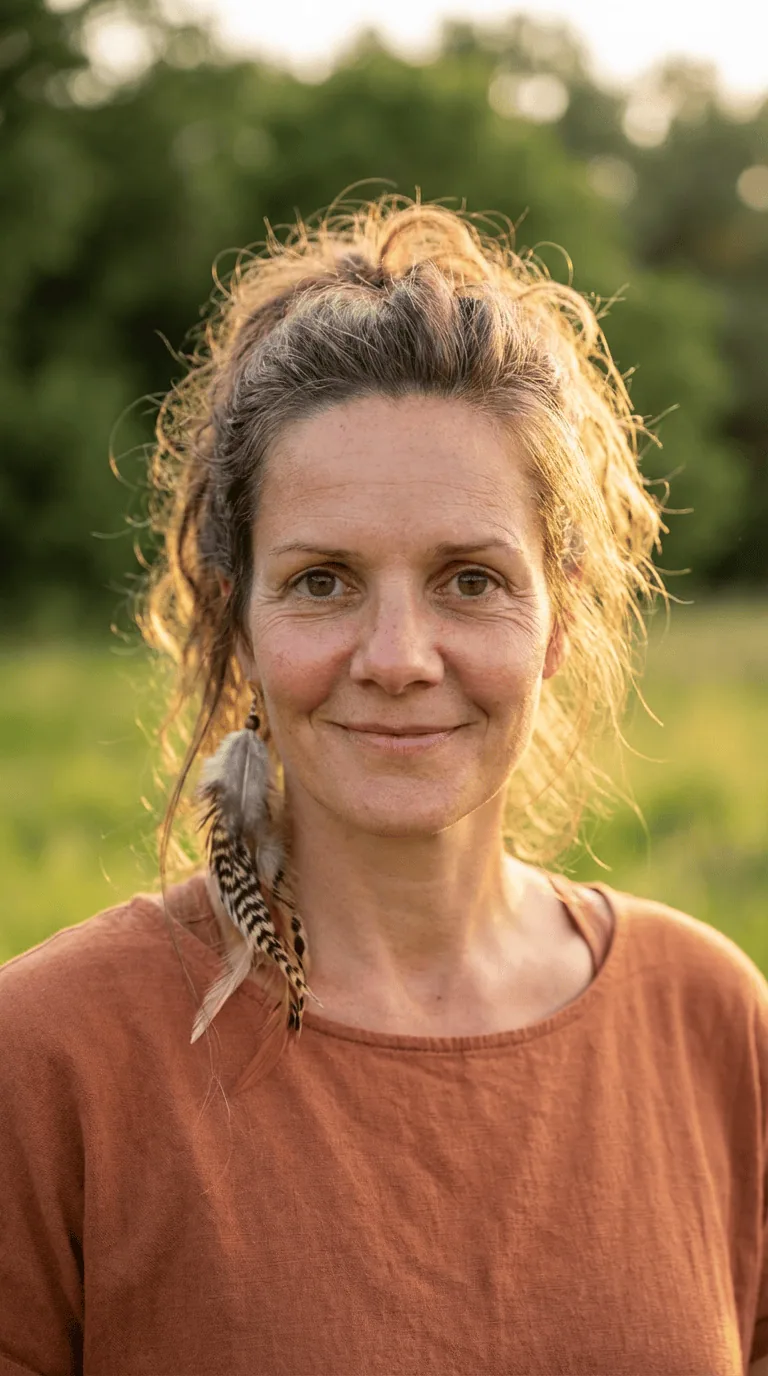
Tessa Frunt
BSc Movement Technology · MRC Doorn · New Nature Yoga · Adem en Stem · YinYoga.com
Tessa Frunt: BSc Movement Technology, rehab (MRC Doorn), Yin/Hatha/Vinyasa (New Nature Yoga), breath coach. Online yin 1:1 (€60), often + coaching. Listed in the YinYoga.com directory.
Sources & scientific authority
Meta-analysis: breathwork and stress/anxiety/depression: Fincham et al. (2023) — Scientific Reports / Nature.
Cyclic sighing reduces stress faster than mindfulness: Balban et al. (2023) — Cell Reports Medicine.
'First night effect' — why you sleep poorly in new rooms: Tamaki et al. (2016) — Current Biology.
Slow breathing & the autonomic nervous system: Zaccaro et al. (2018) — Frontiers in Human Neuroscience.
'Email apnea' — unconsciously holding breath behind the screen: Linda Stone (2008) — Huffington Post / NPR coverage.
Jet lag & circadian disruption — mechanisms and recovery: Sack (2010) — New England Journal of Medicine.
HRV biofeedback & vagal tone via slow breathing (~6/min): Lehrer & Gevirtz (2014) — Frontiers in Psychology.
Allostatic load — what chronic stress (and constant change) does to body and brain: McEwen (1998) — New England Journal of Medicine.
Cortisol response to acute psychosocial stress (basis for travel-stress models): Kirschbaum et al. (1993) — Neuropsychobiology.
Slow breathing modulates sympatho-vagal balance in healthy adults: Russo et al. (2017) — Breathe (ERS Journals).
We only reference sources we have personally studied and that are relevant to the practice we teach.
Free Tools
Reset on the road — free tools
Nomad Reset Calculator and breathing timer — no account, works offline where possible.
Nomad Reset Calculator
Personal day-by-day plan for jet lag, sleep debt and screen stress. Includes breathing exercises.
Calculate your reset →Breathing Timer
Visual breathing timer with session goals and presets (Box Breathing, 4-7-8, Coherent breathing, Energize & more). Works offline.
Open the timer →Install as app
Add Spiriators to your home screen for fullscreen one-tap access.
Show me how →What's your next step on the road?
Reset yourself first with the calculator — or book an intro if you want deeper guidance.