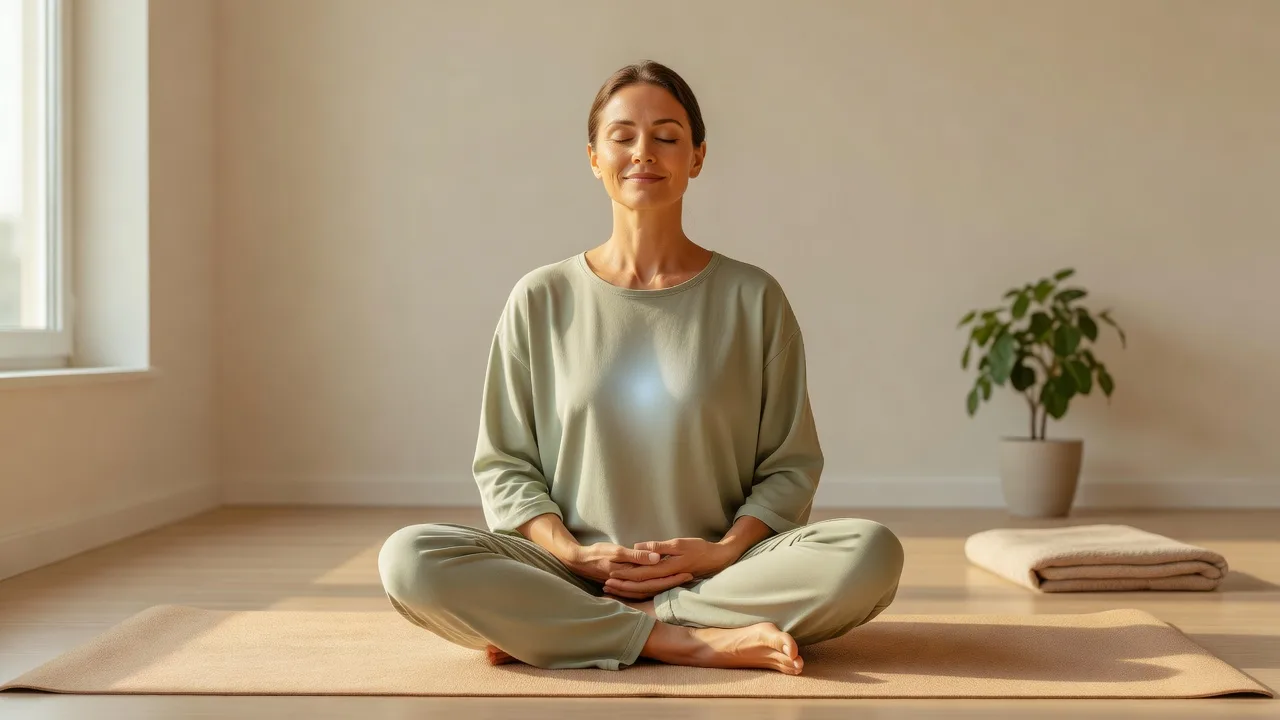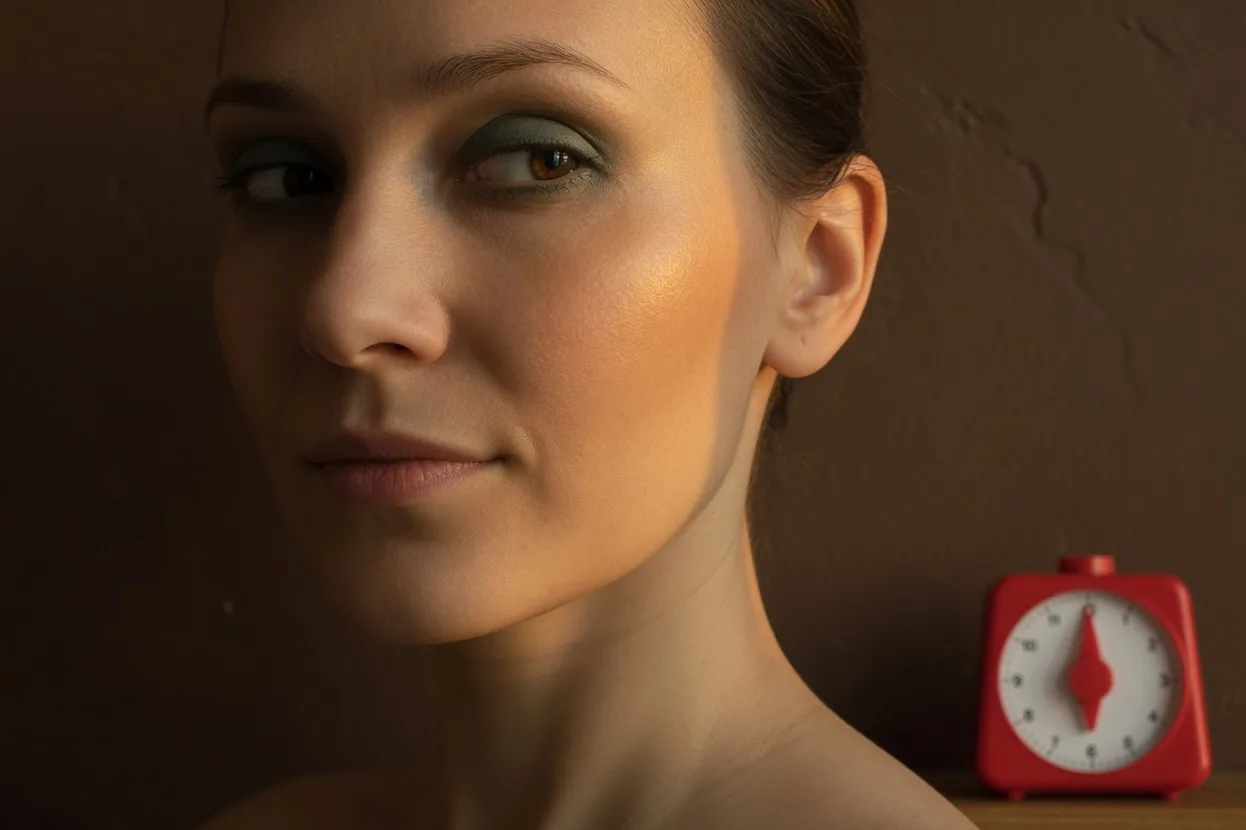
Your gaze sticks in the corner of the room, and your neck treats that corner like a hinge. The salamander exercise starts there. Not on a mat. Not with a device on your ear. Eyes sideways, head the same way, up to sixty seconds a side. Stanley Rosenberg put this posture in his work on the vagus nerve. A clean explanation of this one move was still thin. This is that explanation. A probe. Not a promise that your ventral vagus switches on afterward.
You know the hinge. A door that will not quite shut until you give it a thumb of help. The salamander exercise is that small give in your neck and in your gaze. Small. Concrete. Stop if it hurts.
What the salamander exercise does with your gaze
The salamander exercise is a seated posture from Stanley Rosenberg in which the eyes look sideways and the head tilts the same way, for up to sixty seconds a side.
- Salamander exercise
- The salamander exercise is a seated posture from Stanley Rosenberg: the eyes look sideways and the head tilts the same way, for up to sixty seconds a side.
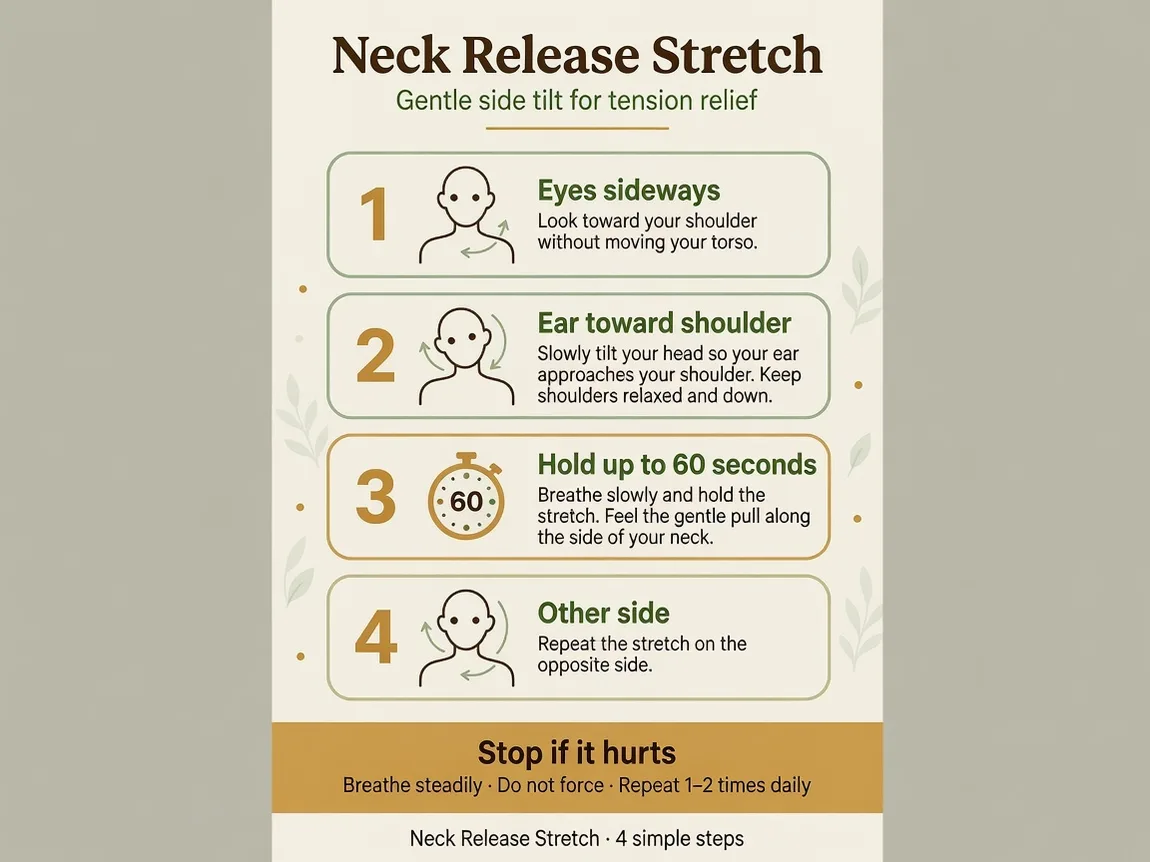
You sit. Feet on the floor. Shoulders can stay low without you relaxing them like homework. First, only the eyes move. To the right. The head waits one breath. Then the right ear drops toward the right shoulder. Do not pull. Do not park the ear on the bone. The hinge goes as far as the neck allows today.
Sometimes a sigh shows up. Sometimes a swallow. Sometimes a yawn you did not order. Those are stop signs, not a score. You do not have to hit the full minute for the posture to count. Sixty seconds is the ceiling, not an exam.
Why the eyes first, and the neck after? Because the gaze picks the direction and the neck only follows. Turn the head straight away and it becomes a stretch. Rosenberg let the eyes lead, the way a salamander aims the head and the body hinges after. You stay in the chair. No performance. No hands on the chest. Just that corner, and you looking into it until the outer edge of your eye feels it.
Ventral vagus, without the reset promise
The ventral vagus is the branch of the vagus nerve tied to face, voice, and a felt sense of safety, not a switch you flip with a glance.
- Ventral vagus
- The ventral vagus is the part of the vagus nerve linked to face, voice, and a sense of safety. A sideways glance does not prove that this part is on.
Online, this posture gets sold as a one-minute ventral vagus reset. Clean pitch. Too clean. A sigh in your throat is an experience. A looser turn after the second side is an experience too. Neither one is a reading of vagal tone. If you want the wider map of that nerve, without a second anatomy class here, read how the vagus nerve shows up in other exercises. This piece does not repeat that menu.
Polyvagal language works as a map, not a diagnosis. Polyvagal theory explained lays that map out. This blog stays with one hinge: gaze, ear, sixty seconds, other side.
Safety in the face can feel like a jaw that drops, or a voice that sits a little lower when you speak afterward. Sometimes you feel nothing. Nothing. The corner was only a corner. That is allowed. An empty minute is still a minute you did not force.
How to do the salamander exercise in 60 seconds
One protocol. Five moves, one side, then the other. No second technique in between. No cold shower, no humming, no mat.
- Sit upright. Feet on the floor, shoulders loose, gaze straight ahead.
- Eyes to the right. Eyes only. Head stays still. One breath.
- Ear toward the shoulder. Eyes stay right. Right ear drops toward the right shoulder. Do not push. Up to 60 seconds, or until a sigh, swallow, or yawn.
- Back to center. Head straight. One quiet breath. Shoulders stay low.
- Same to the left. Eyes left, left ear toward the left shoulder, same duration. Stop with pain, dizziness, a neck injury, or blurred vision.
The second side is not a bonus. People skip it because the first side already “did something.” Then the hinge stays crooked. Same duration. Same rule: do not push.
Pro-tip: Set an analog kitchen timer for sixty seconds and do not watch it. The beep is the ceiling. A sigh is allowed to win earlier.
After that, if the neck is quiet, one minute of nose breathing. In and out through the nose, without repeating the posture. The free breathing timer counts that minute so you are not counting in your head until you go tight again. One minute. Not four techniques in a row.
Breath and neck are neighbors, not twins. If you want the longer exhale in context, it lives in connected breathing and the nervous system. Here the breath is aftercare of about sixty seconds, not a second protocol.
What you might feel, and what that does not prove
A sigh, swallow, or yawn during the salamander exercise is a stop sign from your body, not a score you have to hit.
The first time, the outer corner of the eye often feels sharper than the neck. As if the muscles behind the eye protest first. That usually eases within a breath, if you do not force it. Force it, and it becomes a contest with your own gaze. Then you stop.
Some people hear a soft click. Not a goal. Not a trophy. A click with pain is a stop. A click without pain is a sound, nothing more. You do not have to repeat it until it clicks again.
| What you notice | What you do | What it does not mean |
|---|---|---|
| Sigh, swallow, or yawn | Return to center, then the other side if that still feels fine | Not proof that the ventral vagus is on |
| Neck feels a bit looser | Same limit on the other side, without pushing | Not a heart-rate variability reading |
| Pain, dizziness, or blurred vision | Stop, eyes forward, feel your feet | Not a reason to hold the second longer |
Afterward you can stay seated. Not straight to your phone. The corner of the room is still there. Look into it once, straight on, without taking your head along. Just to feel that straight ahead is a place too.
What 2024 and 2025 research does not say about this posture
No trial from 2024 to 2026 tests the salamander exercise itself. I would rather have put that sentence first, if search did not want the posture first. It belongs here, next to the claims.
Chen and colleagues (2024) found that an averted gaze does not by itself raise autonomic arousal, unless you feel watched. They measured looking at another person, or at a video. Not your own eyes-and-neck posture. It does not prove a ventral vagus reset. It does soften the fear that looking sideways is an alarm on its own.
A small neck study does not rescue Rosenberg either. Monteiro and colleagues (2025) found no between-condition difference in heart-rate variability or blood pressure for a neck thrust, a sham, and rest. Fifteen women, normal blood pressure, a morning lab, a high-speed move of the upper neck joints. That is not this seated hinge. A small group, and not people with neck pain. Inside the conditions, something still shifted, including during rest. A change after sitting still does not prove the technique.
Where vagal markers did move, it was with breathing. Ma and colleagues (2024) saw vagal markers rise during slow breathing in thirty healthy adults. Six breaths a minute, inhale and exhale about equal, was the strongest during the exercise in that comparison. Limit, in the same breath: this is breath, not the eyes-and-neck posture, and not a group with clinical anxiety. That is why the timer comes after the posture. Not as a stand-in, and not as proof that the salamander does the same thing.
A device is a different story. Alkhawajah and colleagues (2024) followed 102 people with chronic neck pain. Transcutaneous vagus stimulation plus physiotherapy improved heart-rate variability, pain, and neck limitation after six weeks more than biofeedback plus physiotherapy, or physiotherapy alone. That is a current on the skin. Not a glance. Not an ear toward a shoulder. If you are looking for a device, you are looking for something else than this blog.
Four studies. None of them is the salamander. I would rather keep that sharp than sell a reset the papers do not carry.
When you skip the posture
Skip the exercise with acute neck pain, after a whiplash that has not been checked, with dizziness, or if your eyes cannot look sideways comfortably. A hernia or a recent neck operation belongs with a doctor first, not with a blog.
In the middle of a panic attack, if you are already hyperventilating, a neck turn is not the first move either. A longer exhale comes before that. The corner of the room can wait. Your gaze can stay narrower, closer to your knees, until the breath has a floor again.
Blurred vision is not something you push through. It is a stop. Same for a stab behind the eye, or a spin that tilts the room. Stay seated until the room is still. Then stand up.
Pro-tip: If you cannot hold the eyes quietly sideways without pulling, the exercise is done for today. Do not invent a smaller version and force it until it works.
After the minute, when the neck is bigger than a hinge
One posture of about two minutes does not fix a neck that has been nagging for weeks. It does not fix anxiety that fills your day either. Then the hinge is an introduction. That is all.
If you want the posture inside longer breathwork, the frame is on the breathwork guide. Not a menu of five resets. The context where a minute of nose breathing can land, instead of floating loose in your calendar.
If neck, anxiety, or breath is bigger than that minute, a conversation fits better than another blog. Breathwork coaching is that conversation, one to one, without a fee invented here that the booking page does not show. A quick read on where your breath sits right now can start with the breath check, if you want to feel whether this theme fits before you book.
You plan a session through contact. Say what your neck does, and whether the sideways gaze already pulls before you begin. Then we know whether this posture belongs on the table at all, or whether we stay with the breath.
Key takeaways
- The salamander exercise is eyes sideways, then the ear toward the same shoulder, up to sixty seconds a side, without pushing.
- A sigh, swallow, or yawn is a stop sign. The timer beep is the ceiling, not a number you have to hit.
- A looser neck or a sigh does not prove your ventral vagus is on. No trial tests this posture itself.
- Skip it with acute neck pain, unchecked whiplash, dizziness, blurred vision, or in the middle of hyperventilation.
- Afterward, at most one minute of nose breathing on the timer. Do not stack other vagus techniques in the same quarter hour.
- If neck, anxiety, or breath stays bigger than that minute, a one-to-one through contact is more honest than another posture.
The corner of the room stays a corner. You can look into it, and you can also stay facing forward if your neck does not want to be a hinge today.