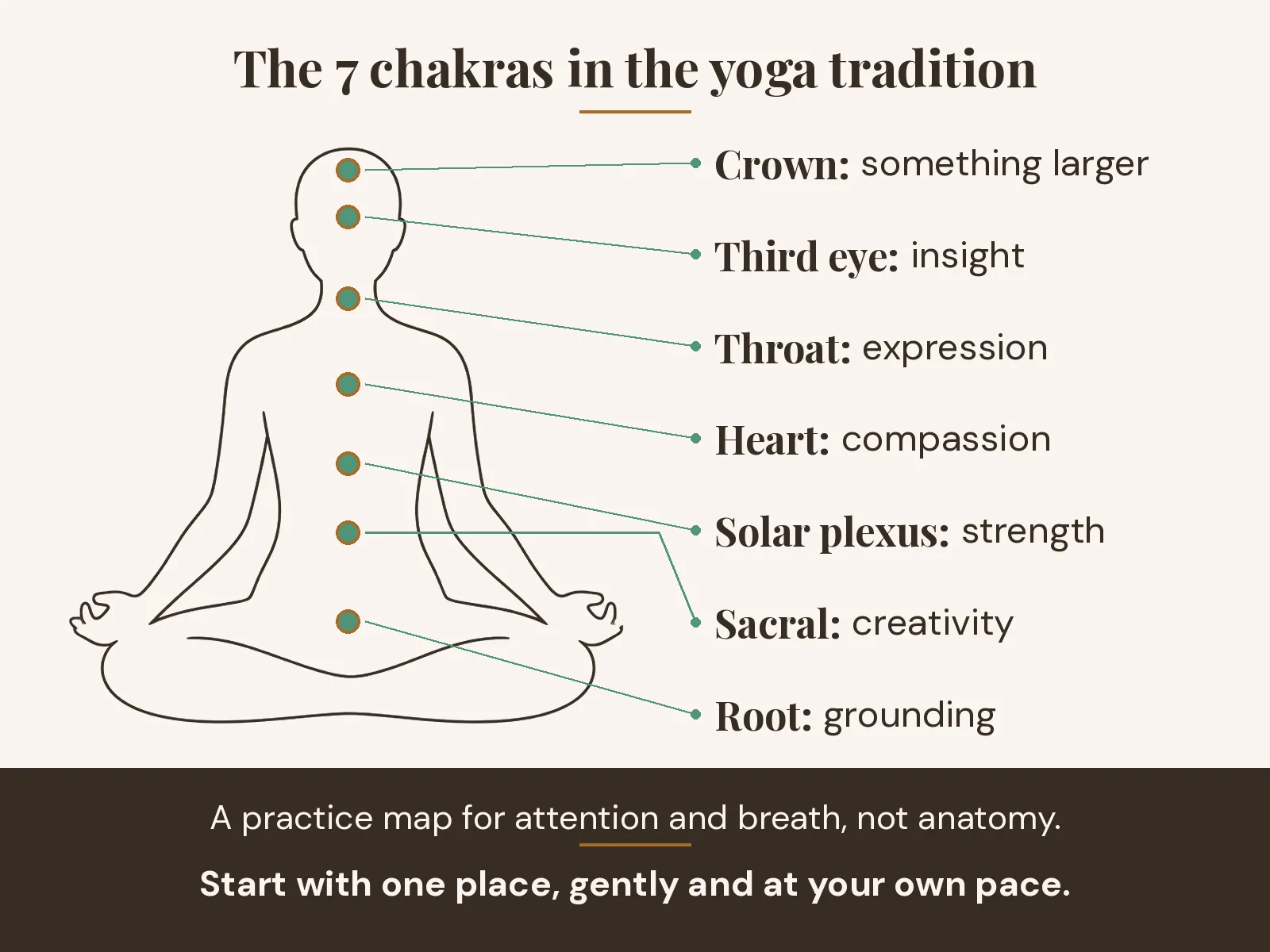
The 7 chakras are not hidden parts of your body that need fixing, but an old practice map from tantric yoga. When people first hear about chakra yoga, they are often shown a colourful picture with seven spheres along the spine and a list of qualities next to each one. That picture is younger than it looks, while its core does go back centuries. This overview puts the two side by side. You will read where the chakras come from, what each of the seven centres means in brief, and how to begin gently as a beginner, with attention and breath.
For each chakra you will find only the essentials here, with a link to a longer article with recognition and practices. That way you choose for yourself where to go deeper. Nothing needs to be broken open. You are already whole; the chakras simply help you notice what is already there.
What are chakras and where do they come from?
Chakra means wheel in Sanskrit. The concept comes from tantric yoga, a tradition that, according to the Sanskrit scholar Christopher Wallis, flourished from roughly 600 to 1300 and is still alive today. In that tradition, chakras are focal points for meditation: places in the body where you visualise a lotus or wheel of light and let a mantra sound within it. There was never one fixed system. From around the year 900, different lineages each described their own arrangement, with five, six, seven, nine, ten, twelve or even more centres (Wallis on the real story of the chakras).
The seven-centre model most people know today goes back mainly to a sixteenth-century text by Pūrṇānanda from Bengal: the Ṣaṭ-cakra-nirūpaṇa, literally the description of the six centres. It places six centres along the spine, with the crown as a seventh above them. In that text, the first five centres are linked to the five elements: earth, water, fire, wind and space. In 1919 the English translation by Arthur Avalon, the pen name of John Woodroffe, appeared, and you can still read it in the translation of the Ṣaṭ-cakra-nirūpaṇa on Wisdomlib. Through that translation, most yogis in the West came to know the seven-centre model.
After that, the system gained new layers in the West. Author Kurt Leland describes how Theosophists linked the chakras to nerve plexuses from the 1880s onwards, and how the link with the endocrine glands followed in the 1920s (Leland on how the Western chakra system came to be). In 1927 the Theosophist Charles Leadbeater published The Chakras, a book that has stayed in print ever since. According to Leland, the rainbow colours and the list of psychological qualities now attached to each chakra only came together in print in 1977, in the work of Ken Dychtwald. Wallis also points out that linking the chakras to psychological themes is modern and Western.
What does that mean for you? The fact that the chakras have a history does not make them less useful. It does mean they are a language of images, not anatomy. Wallis calls them conceptual structures that still correspond to places where people experience emotional or spiritual energy. So you do not need to believe in anything or fix anything. You can use the centres as places to rest your attention, and notice what you meet there.
Pro-tip: See the colours and qualities on a chakra chart as a later addition, not as a test you have to pass. If the theme of a chakra does not fit you, let it go and simply look at the place in your body: what do you feel there right now?
The 7 chakras in brief
Below you will find each chakra with its English and Sanskrit name, its location, the core theme as modern yoga classes usually describe it, and one core sentence. The themes come from the Western layer described above; the locations follow the traditional order from bottom to top. Recognition and practices for each chakra are in the deeper articles.
Root chakra (Muladhara)
Location: the pelvic floor area, at the base of the spine. Core theme: safety and grounding. Core sentence: here you may feel where you find support, in your body and in this moment. It is the lowest centre, the place where you can notice whether the ground beneath your feet feels steady enough. You can read more about signs of insecurity and ways to ground yourself in the article on the root chakra.
Sacral chakra (Svadhisthana)
Location: below the navel, in the lower belly and pelvis. Core theme: creativity and flow. Core sentence: here you may notice how feeling and creativity move, without it having to be perfect. It is the place of enjoying, making and letting things flow. How yin yoga and creativity meet here is the subject of the article on the sacral chakra.
Solar plexus chakra (Manipura)
Location: the upper belly, above the navel and below the breastbone. Core theme: strength and confidence. Core sentence: here you may feel what your own strength is and where you take up space. It is the place where you can notice what is yours and where your boundaries lie. The link with breath and confidence is explored in the article on the solar plexus chakra.
Heart chakra (Anahata)
Location: the centre of the chest. Core theme: connection and compassion. Core sentence: here you may make room for yourself and for others, without forcing anything. It is the place of softness, where openness may arise without having to. What you can do when your chest feels tight is described in the article on the heart chakra.
Throat chakra (Vishuddha)
Location: the throat. Core theme: expression and truth. Core sentence: here you may listen to what wants to be said, and feel what you would rather keep to yourself for a while. It is the place where you can notice whether there is room for your voice. Not saying what you feel is the subject of the article on the throat chakra.
Third-eye chakra (Ajna)
Location: between the eyebrows. Core theme: insight and intuition. Core sentence: here you may look at what you actually already know, without it having to be mysterious. It is the place of seeing clearly, without forcing anything. The article on the third-eye chakra makes intuition concrete.
Crown chakra (Sahasrara)
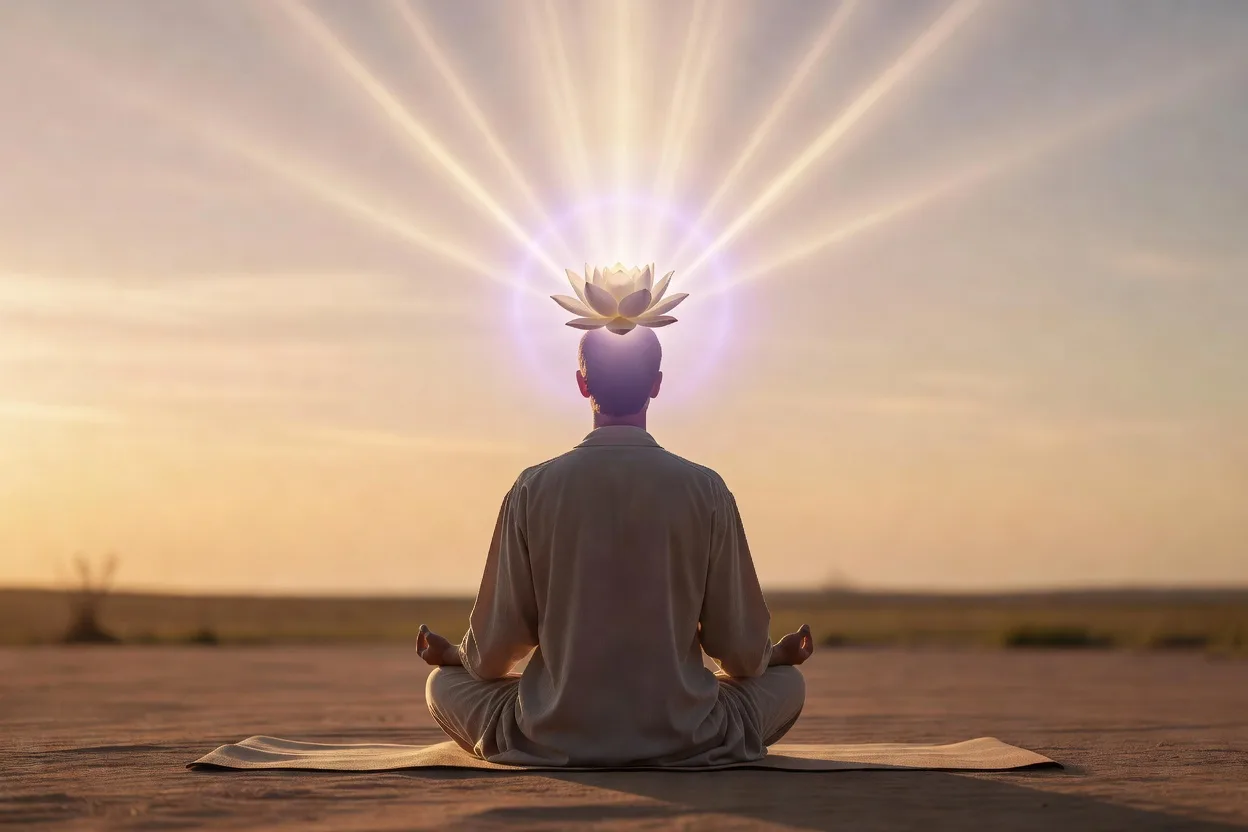
Location: the top of the head. Core theme: connection with something larger. Core sentence: here you may notice what remains when control loosens for a moment. In Pūrṇānanda's text this centre sits above the other six, as the seventh. You can read more about that connection in the article on the crown chakra.
Pro-tip: You do not need to explore all seven at once. Read the core sentences again slowly and see which one touches you first. Start with that one chakra, and only then read the deeper article, so that you have your own experience first.
The chakras at a glance
The table sets the seven centres side by side, with the location, the core theme and the article where you can read further.
| Chakra | Sanskrit | Location | Core theme | Deeper article |
|---|---|---|---|---|
| Root | Muladhara | Pelvic floor, base of the spine | Safety and grounding | Root chakra |
| Sacral | Svadhisthana | Lower belly, below the navel | Creativity and flow | Sacral chakra |
| Solar plexus | Manipura | Upper belly, above the navel | Strength and confidence | Solar plexus chakra |
| Heart | Anahata | Centre of the chest | Connection and compassion | Heart chakra |
| Throat | Vishuddha | Throat | Expression and truth | Throat chakra |
| Third eye | Ajna | Between the eyebrows | Insight and intuition | Third-eye chakra |
| Crown | Sahasrara | Top of the head | Connection with something larger | Crown chakra |
Pro-tip: Before you practise, choose one row from the table as your point of attention for the whole session. That way you do not need to look anything up along the way, and your attention can simply stay with the place you chose.
Chakra yoga for beginners: where do you start?
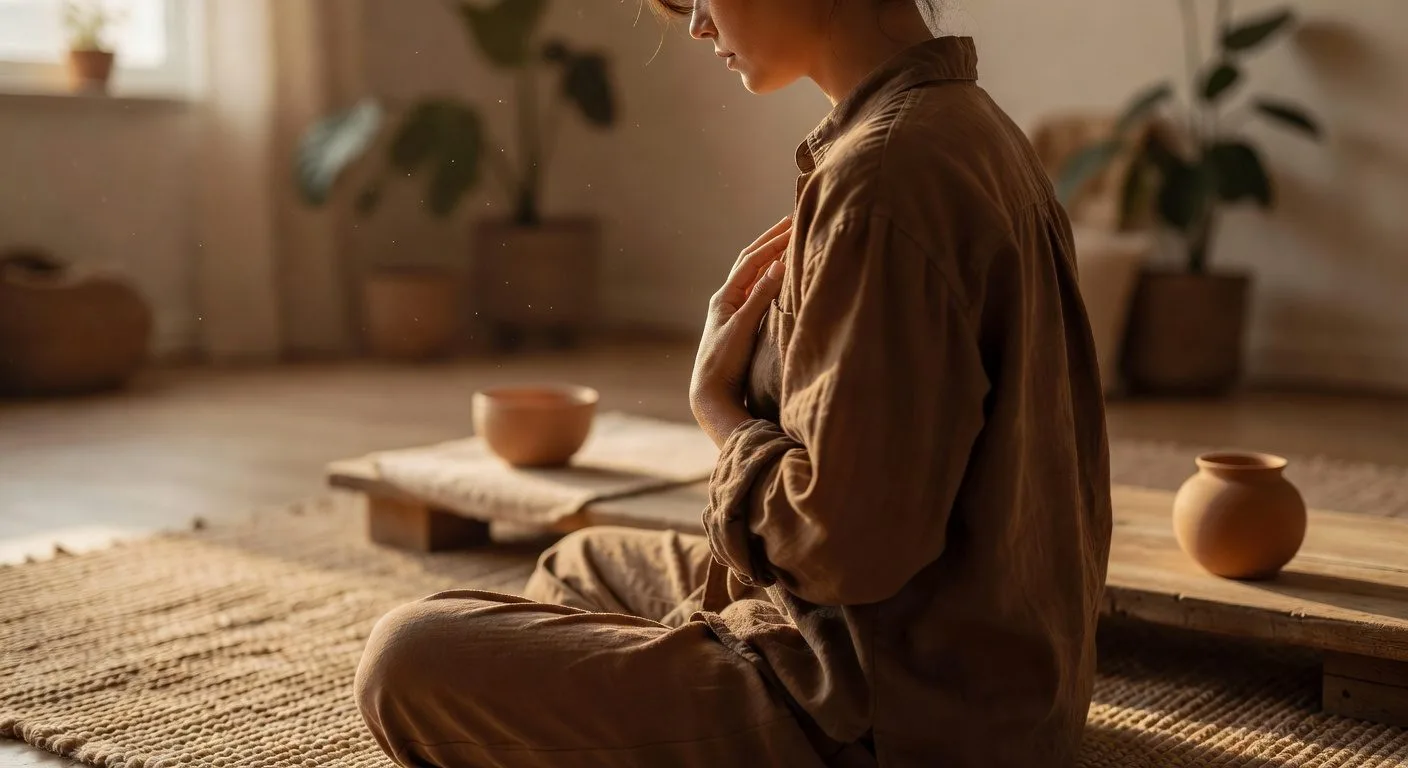
Chakra yoga may sound like a separate style, but in this article we mean something simple by it: you move or rest in a yoga posture and let your attention stay with one place in your body. Choose one chakra, place a hand there if you like, and breathe calmly at your own pace. Notice what you feel: warmth, tension, space, or perhaps nothing special at all. That last one is fine too. Nothing needs to open.
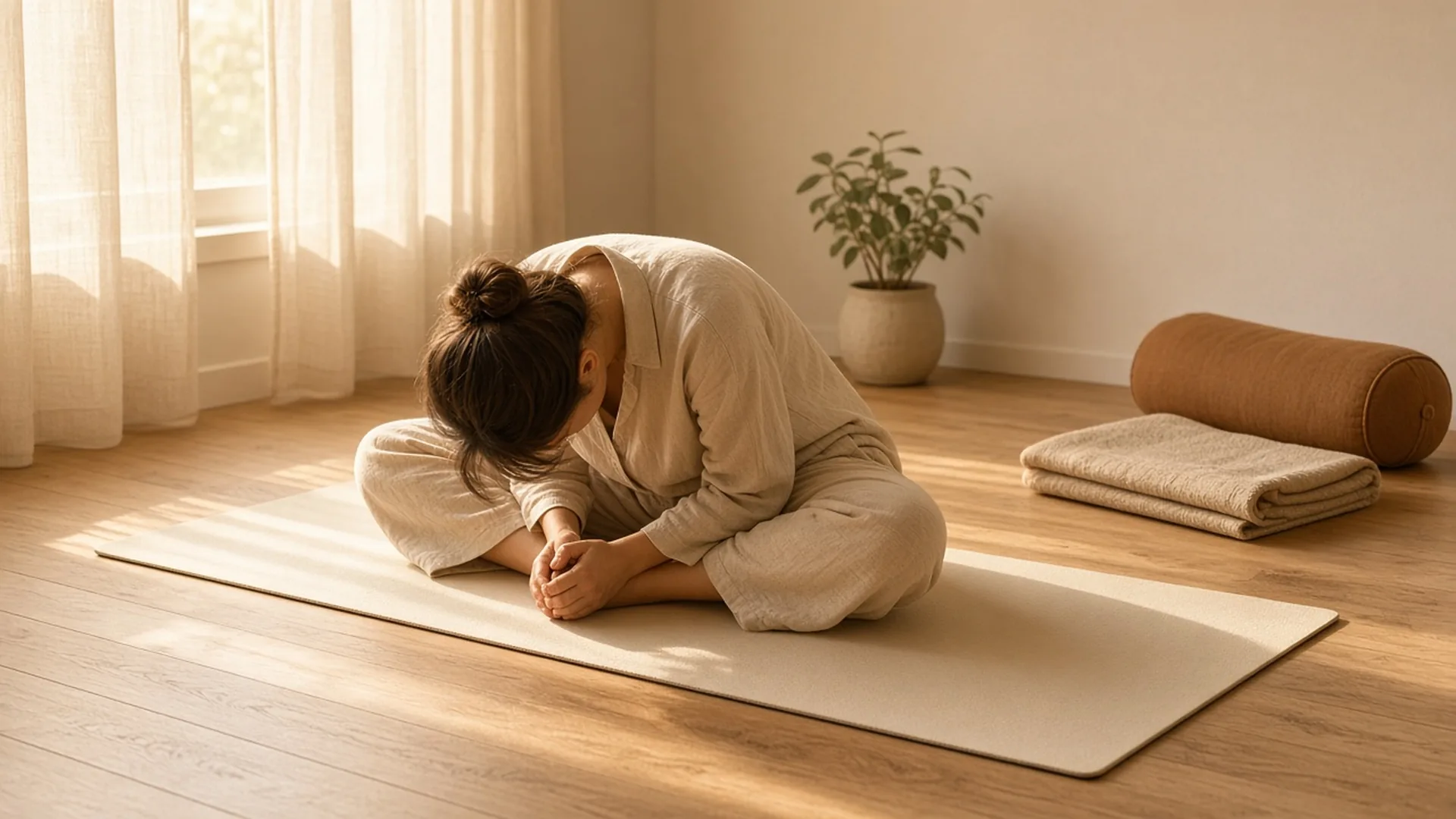
A quiet yin posture suits this well, because in yin you stay in a posture for a long time and in stillness. Think of the butterfly, a reclining twist or a simple seated posture. Stay as long as it feels good: a few minutes is enough, and shorter is always fine. There is no minimum time and no perfect form. You can read more about the differences between yoga styles on the page about types of yoga, and you will find background on conscious breathing on the page about breathwork.
You can also use the chakras as a common thread in a yin class. Choose one chakra beforehand and let your attention go to that place for a moment in every posture, even when the posture seems to have little to do with it. Or simply follow your breath without choosing a place. Both are a complete practice.
After an attention exercise it helps to land again: feel your feet on the floor, rest your hands on your thighs or breathe out calmly a few times. That way you close the practice before you carry on with your day.
Pro-tip: Link your practice to a moment that is already there, such as the first minutes after you get up or the moment you sit down on your mat in the evening. A fixed moment makes it easier to come back, even if you skip a day.
Is opening chakras dangerous? Starting gently and safely
An honest answer starts with what actually happens. In the practices in this article you are not opening anything: you direct your attention and breathe calmly. Gentle attention and breathing practices like these are accessible for most people. Intensive breathing techniques or long, intensive meditation can, however, cause strong reactions in some people.
A systematic review by Farias and colleagues from 2020 brought together 83 studies on meditation (abstract of Farias et al. 2020 on PubMed). Overall, the studies reported adverse effects in 8.3 percent of participants, with large differences between types of study: 3.7 percent in experimental studies and 33.2 percent in observational studies. The most common were anxiety, depression and cognitive anomalies, sometimes also in people with no previous mental health problems. The review was about meditation; physical yoga postures were excluded, and the research says nothing about chakras. So it is no reason to be afraid, but it is a reason to start gently.
If you have mental health complaints, experience with trauma, or any doubt, talk to your doctor or another professional first. Stop if you become dizzy, feel panic or become overwhelmed: open your eyes, feel your feet and breathe at your own pace. Stopping is not failure. It is listening to what your body is telling you.
Would you rather not explore this on your own? At Spiriators you can turn to one-to-one yin yoga and breathwork coaching, or read more about going on retreat. Guidance does not replace medical or psychological care.
Pro-tip: Keep your eyes half open the first few times, with a soft gaze on the floor in front of you. That way you stay in touch with the space around you and notice sooner when it is enough.
Whether you stay with one chakra or explore the whole sequence, it is not about achieving anything. The seven centres are places to return to, again and again, with the same kind attention. What you find there was already there.